


Global disease prevalence: Testicular cancer is one of the most common malignant tumors among young and middle-aged men worldwide; it generally has a relatively favorable prognosis and a high 5-year survival rate.
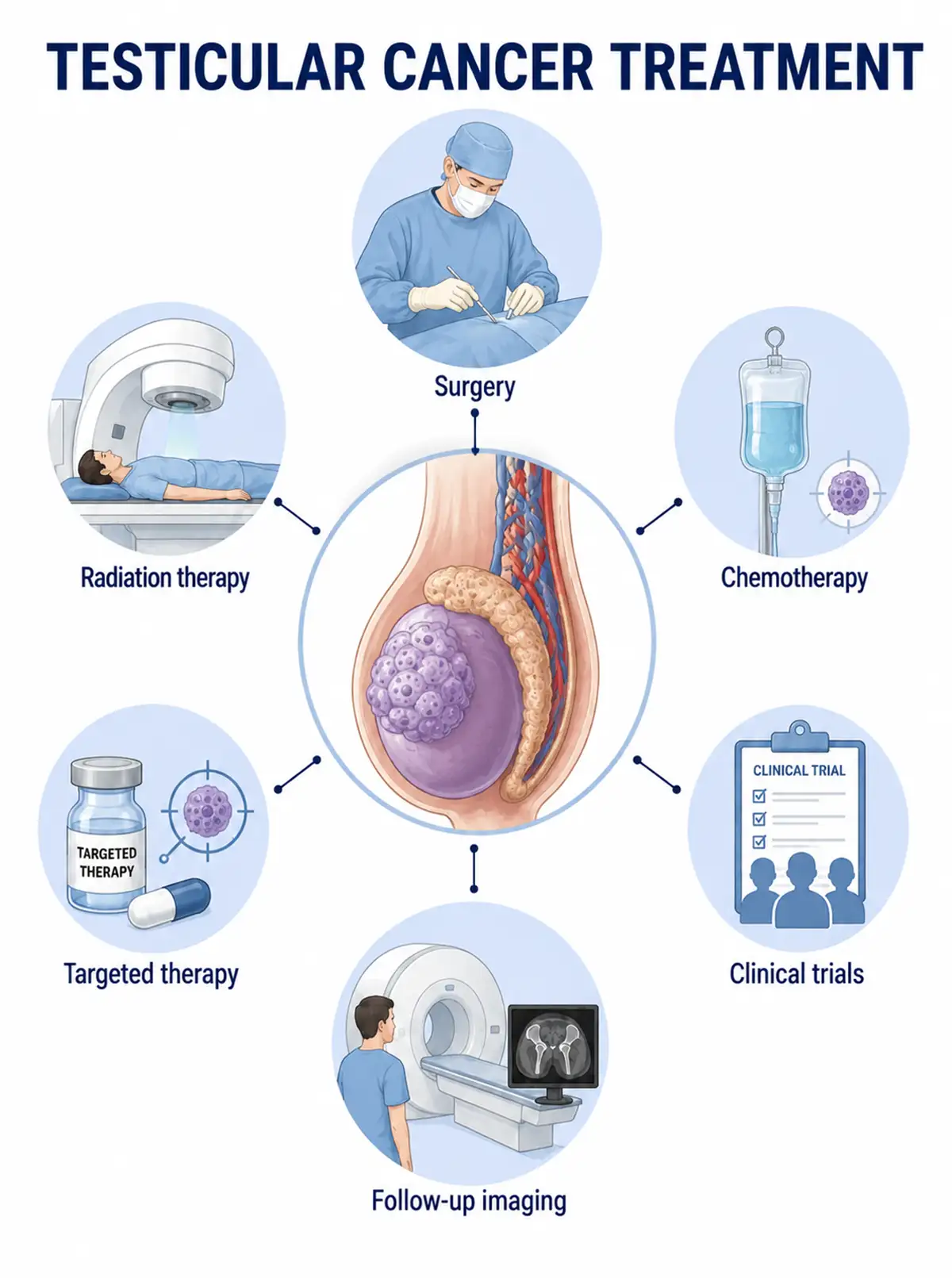
Treatment based on testicular cancer stage
Early treatment (involving localized tumors and tumor shrinkage with good outcomes)
utilizing radical orchiectomy combined with adjuvant therapy—can effectively control tumor progression, resulting in an excellent prognosis for patients in the early stages.
Intermediate-stage treatment (addressing local spread, inhibiting growth, and delaying progression)
employs a comprehensive approach—such as surgery combined with chemotherapy or radiotherapy—to control further tumor spread and slow the rate of disease deterioration.
Treatment for advanced disease (distant metastasis; aimed at symptom relief and survival prolongation)
primarily employs systemic therapies such as chemotherapy and others to alleviate clinical symptoms and extend patient survival as much as possible.
Why choose Fosun Health for testicular cancer treatment
Testicular cancer diagnosis and treatment at Fosun Health are managed by a specialized urologic oncology center; the team possesses extensive experience in radical orchiectomy, retroperitoneal lymph node dissection (RPLND), and high-dose chemotherapy.Leveraging a global medical network, patients have access to cutting-edge international treatment protocols, including radical orchiectomy, retroperitoneal lymph node dissection, standardized BEP/EP chemotherapy, CyberKnife M6 precision radiotherapy, and stem cell transplantation.
For complex cases such as advanced or recurrent testicular cancer, a multidisciplinary team (MDT)—comprising experts in urology, medical oncology, radiation oncology, and radiology—collaborates to formulate the optimal treatment plan; a cross-border consultation mechanism enables patients to obtain second opinions from leading international centers.
Foshan Fosun Chancheng Hospital is equipped with the CyberKnife M6 precision radiotherapy system and the VitalBeam linear accelerator, enabling the delivery of precision intensity-modulated radiotherapy (IMRT) for retroperitoneal metastases.The hospital possesses extensive experience in the standardized diagnosis and treatment of testicular cancer; by combining surgery, standard chemotherapy, and precision radiotherapy, cure rates exceed 95%, while a strong emphasis is placed on preserving fertility for young patients.
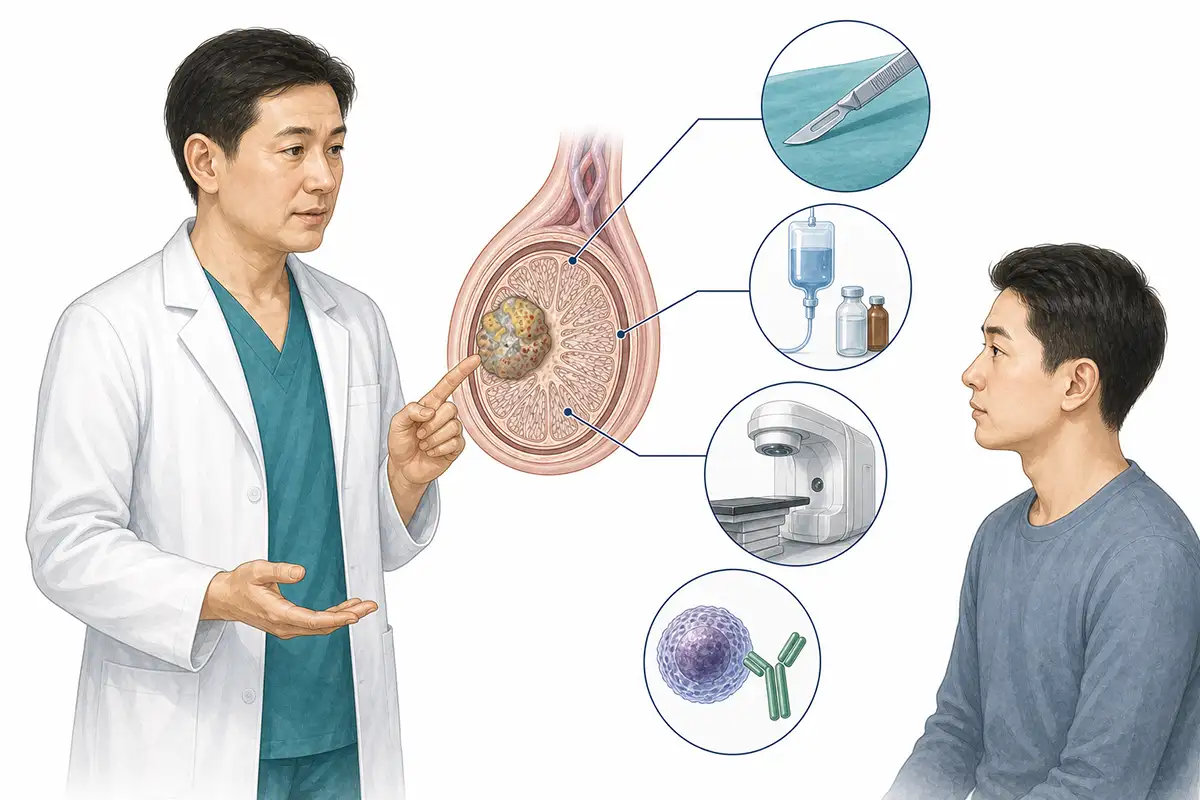
Testicular Cancer Treatment Methods
1.Radical orchiectomy
For patients with suspected malignant testicular tumors, radical inguinal orchiectomy is the primary initial treatment; further staging can be determined by integrating preoperative and postoperative tumor markers, imaging, and pathological findings.
Treatment advantages:
① Removal of primary tumor: Direct excision of the lesion in the affected testis.
② Clarify pathology: The specific pathological type of the germ cell tumor can be determined.
③ Basis for staging: Integrates tumor markers and imaging results to provide a foundation for subsequent treatment.
④ Facilitates treatment planning: Subsequent therapy is selected based on tumor type (e.g., seminoma vs. non-seminoma).
2.CyberKnife precision radiotherapy
For certain seminoma patients with localized recurrent lesions or specific oligometastatic lesions, CyberKnife precision radiotherapy may be evaluated based on lesion location in situations where conventional therapy is unsuitable or local control is required.
Treatment advantages:
① Precise focusing: High-precision irradiation targeting specific, localized lesions.
② Non-surgical treatment: Does not require traditional surgery for metastatic lesions.
③ Local control: Suitable for select cases of localized recurrence or specific metastatic lesions.
④ Dose optimization: Treatment plans can be formulated based on the spatial relationship between the lesion and surrounding critical organs.
3. VitalBeam linear accelerator precision radiotherapy
For specific localized lesions in certain seminoma cases, precision radiotherapy may be evaluated based on disease stage, the extent of the lesion, and prior treatment history.
Treatment advantages:
① Precision irradiation: Formulate an individualized radiotherapy plan based on the location and extent of the lesion.
② Local control: Targets specific localized lesions for treatment.
③ Dose optimization: Minimizes radiation exposure to surrounding normal tissues while meeting treatment requirements.
④ Personalized selection: Determine suitability by considering disease stage, risk of recurrence, and history of prior treatment.
5.Chemotherapy
Combination regimens such as BEP are used to kill cancer cells; testicular cancer is highly sensitive to chemotherapy, which effectively controls tumor progression and enhances therapeutic efficacy.
4.Radiotherapy
Uses high-energy radiation to precisely kill cancer cells;commonly used for adjuvant therapy following seminoma surgery or to control lymph node metastasis, achieving effective therapeutic results.
5.Immunotherapy
Activates the body's immune system to recognize and attack cancer cells, providing a new treatment option for patients with advanced testicular cancer.Helps improve therapeutic efficacy.
6.Retroperitoneal lymph node dissection
Surgical resection of retroperitoneal metastatic lymph nodes controls regional tumor spread and guides subsequent treatment plans;it is an important therapeutic modality.
7.Salvage surgery
Resection of residual retroperitoneal tumors following chemotherapy can effectively control residual lesions and prolong patient survival, achieving favorable therapeutic outcomes.
8.Comprehensive therapy
Formulate an individualized comprehensive treatment plan—combining surgery, chemotherapy, radiotherapy, and other modalities based on the patient's specific condition—to enhance therapeutic efficacy.
9.Supportive care
Approaches such as nutritional support, psychological counseling, and symptom management can comprehensively improve the patient's physical condition and quality of life.
Post-treatment care
Maintain a regular daily routine and a balanced diet; avoid strenuous exercise; attend scheduled follow-up appointments and actively cooperate with subsequent treatment as advised.
Post-treatment examinations
Regular tumor marker testing, abdominal CT scans, and follow-up imaging are required after treatment to detect tumor recurrence or metastasis in a timely manner.
Conclusion
Although testicular cancer poses a serious threat, it is highly sensitive to chemotherapy; successful treatment hinges on early detection, diagnosis, and intervention, as well as selecting the appropriate treatment plan and adhering to follow-up care.


