


What is endometrial cancer
Endometrial cancer arises from malignant proliferation of the endometrial glandular epithelium. The endometrium is the mucosal lining of the uterine cavity, cyclically thickening and shedding under estrogen and progesterone regulation.
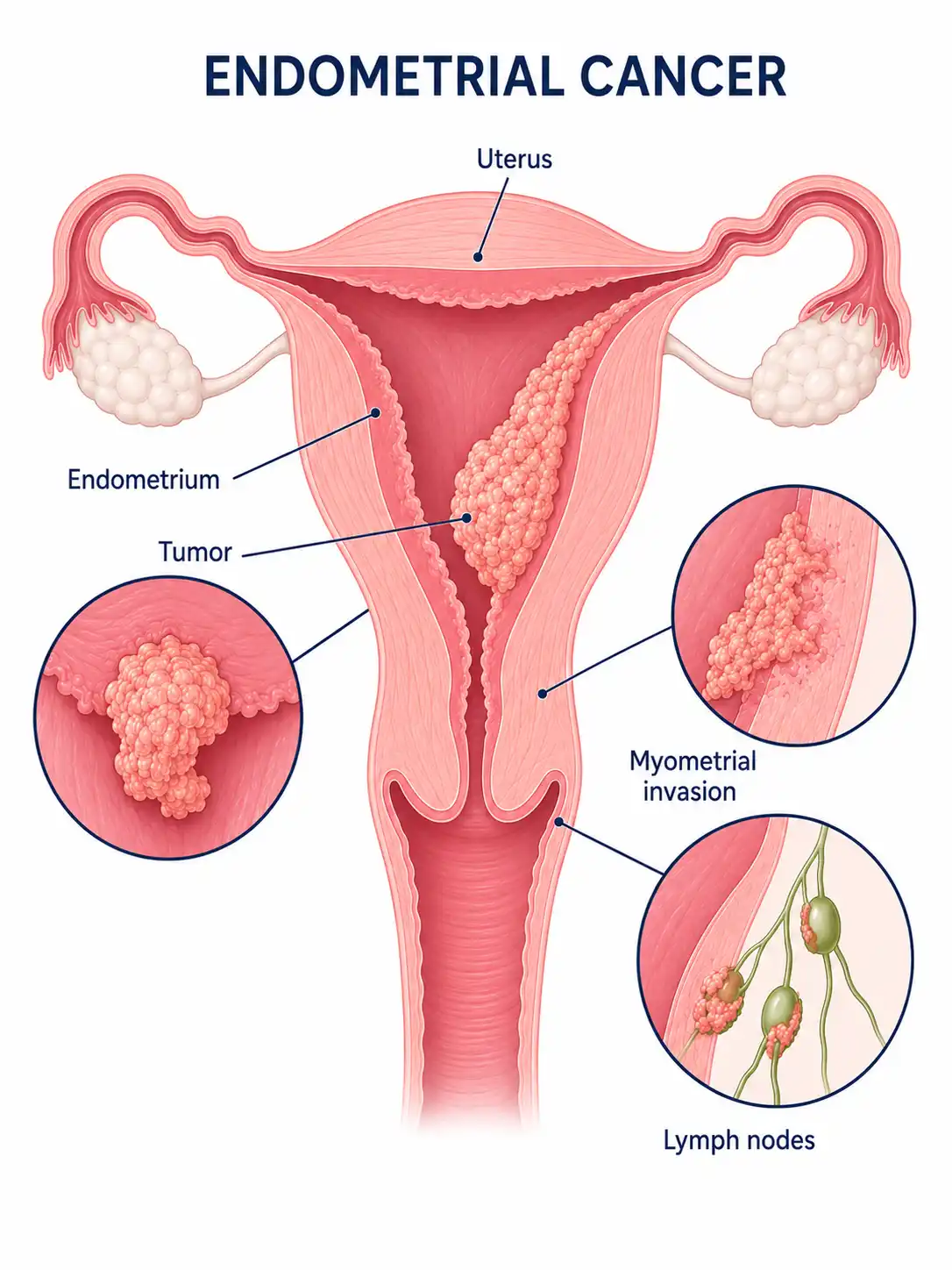
The global situation regarding endometrial cancer
Endometrial cancer ranks among the most common female reproductive malignancies in developed countries. Its incidence has risen annually in recent years with population aging and increasing obesity.
Consult a doctor regarding cancer-related issues
Women with abnormal vaginal bleeding, especially postmenopausal bleeding, menstrual irregularities, vaginal discharge, or lower abdominal pain should promptly consult a gynecologic oncologist for examination.
Main types of endometrial cancer
1. Endometrioid adenocarcinoma
The most common pathological type is closely associated with prolonged unopposed estrogen stimulation and is classified as well, moderately, or poorly differentiated.
2. Serous carcinoma
This type II endometrial cancer is largely unrelated to estrogen, commonly affects older postmenopausal women, and is aggressive with a relatively poor prognosis.
3. Clear-cell carcinoma
This relatively uncommon type has distinctive morphological features and also belongs to type II cancer. It responds poorly to conventional chemotherapy and has a high recurrence risk.
4. Mucinous carcinoma
This rare type resembles cervical mucinous adenocarcinoma pathologically and must be distinguished from primary cervical cancer.
5. Dedifferentiated carcinoma
Composed of mixed well-differentiated endometrioid and undifferentiated components, it is highly malignant and prone to early distant metastasis.
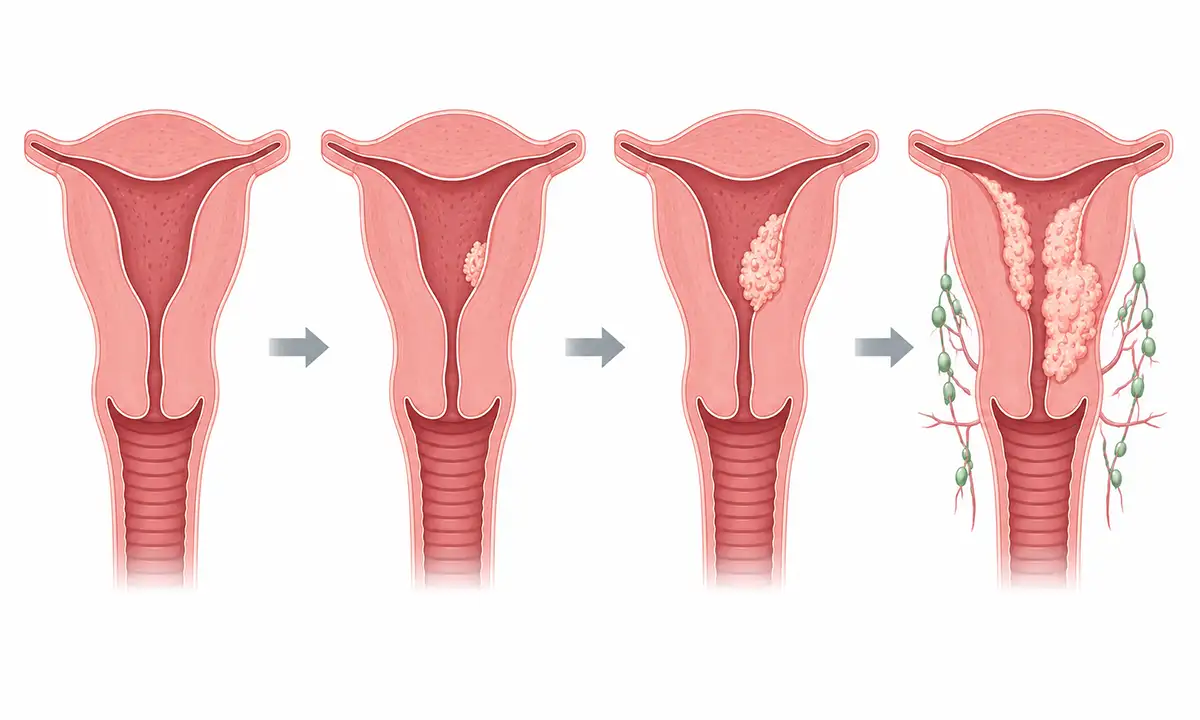
Typical symptoms and signs of endometrial cancer
1. Postmenopausal bleeding
Renewed vaginal bleeding after menopause is the most typical warning sign of endometrial cancer. Any amount requires serious attention and prompt consultation.
2. Menstrual irregularities
Premenopausal women may have heavier or prolonged periods or irregular intermenstrual bleeding. Menstrual changes lasting over three months require vigilance.
3. Abnormal vaginal discharge
Early disease may cause slight serous or bloody discharge. Advanced disease with infection can produce foul-smelling, blood-stained purulent discharge.
4. Lower abdominal pain
Tumor enlargement compressing nearby tissues or pus within the uterine cavity can cause lower abdominal dragging and cramping pain, worsening in advanced disease.
5. Abdominal mass
A large advanced tumor may be palpable as a hard lower abdominal mass. Associated large-volume ascites causes marked distension.
6. Systemic symptoms
Advanced patients develop anemia, weight loss, fatigue, and other wasting symptoms. Lung metastases may cause cough and breathlessness.
How is endometrial cancer diagnosed
1. Ultrasound examination
Transvaginal ultrasound measures endometrial thickness and is the preferred screening method. Postmenopausal thickness exceeding 4-5 millimeters requires further investigation.
2. Diagnostic curettage
Curettage obtains endometrial tissue for pathology, the diagnostic gold standard, identifying pathological type and differentiation.
3. Hysteroscopy
Hysteroscopy directly shows the location, size, and shape of intrauterine lesions and allows precisely targeted biopsy to improve diagnostic accuracy.
4. Pelvic MRI
MRI assesses the depth of myometrial invasion, cervical involvement, and relationships with surrounding tissues, supporting preoperative staging.
5. Tumor markers
Elevated CA125 may indicate extrauterine spread or advanced disease and can support preoperative assessment and postoperative follow-up.
6. Chest CT scan
Chest CT checks for lung metastases and is an important component of routine preoperative staging.
What treatments are available for endometrial cancer
1. Surgical treatment
Total hysterectomy with bilateral salpingo-oophorectomy is standard surgery. Pathological risk factors determine whether pelvic and para-aortic lymph node dissection is required.
2. Radiation therapy
Postoperative adjuvant radiotherapy is suitable for high-risk patients to reduce pelvic recurrence and includes vaginal brachytherapy and external beam radiation.
3. Chemotherapy
Advanced or high-risk patients need postoperative adjuvant chemotherapy, commonly carboplatin with paclitaxel. This can also be used for recurrent or metastatic disease.
4. Endocrine therapy
High-dose progestogens can be used in early patients seeking fertility preservation and for palliation in advanced recurrent disease.
5. Targeted therapy
Drugs directed at specific molecular targets, such as pembrolizumab, may be used in advanced disease with high microsatellite instability.
6. Immunotherapy
Immune checkpoint inhibitors show activity in selected advanced and recurrent endometrial cancers and may be a treatment option.
7. Fertility preservation
Young patients with very early, well-differentiated disease and a strong wish to conceive may consider conservative high-dose progestogen treatment after strict assessment.
Conclusion
Postmenopausal vaginal bleeding is the main manifestation of endometrial cancer. Early detection and surgery can achieve a favorable prognosis. Attention to abnormal bleeding, prompt consultation, and standardized treatment are key to improving quality of life.


