


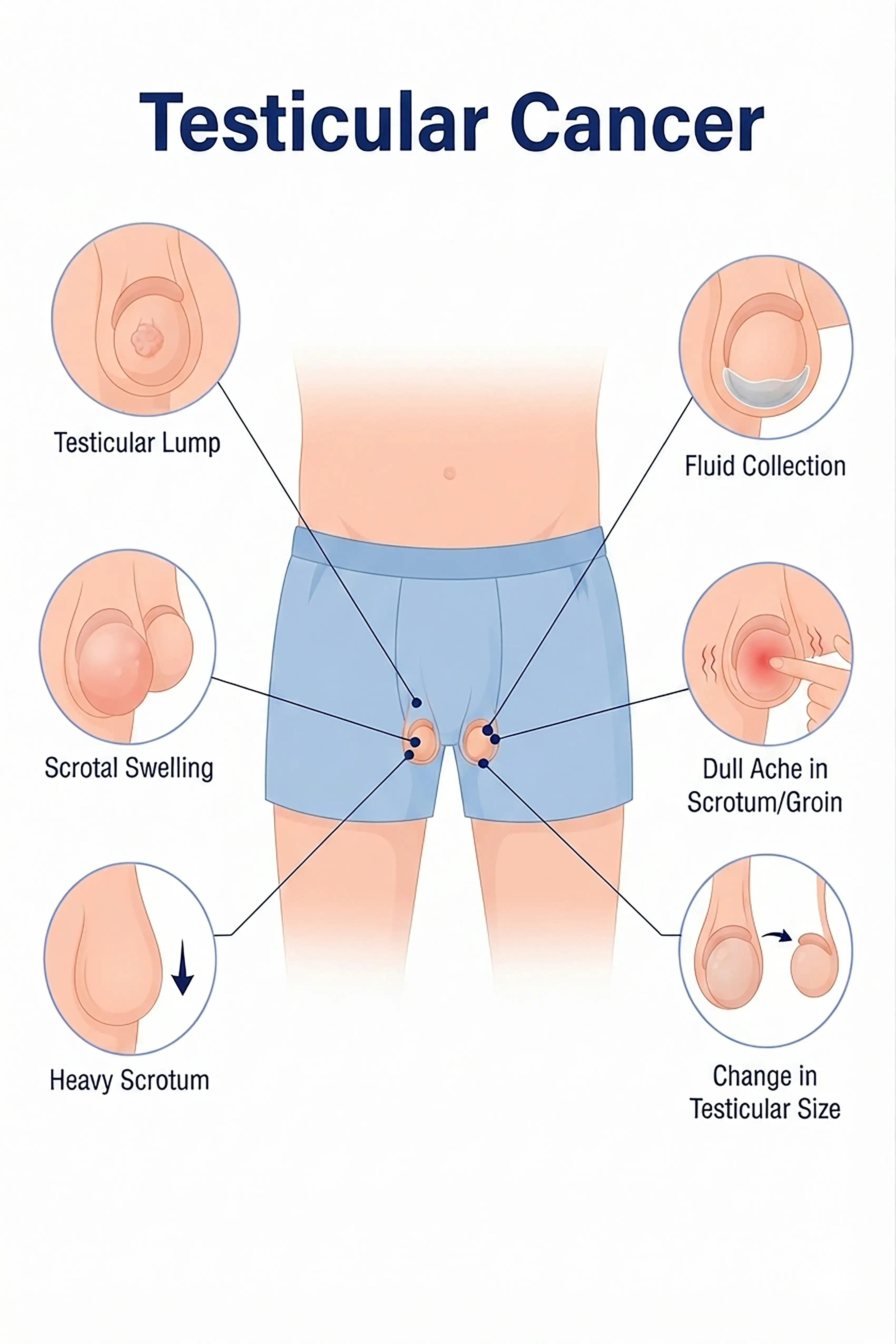
Testicular cancer is a tumor arising from the malignant transformation of testicular germ cells. Although it accounts for only 1% of all cancers in men, it is the most common solid malignant tumor among men aged 15–35.A painless lump in the testicle is the most typical initial symptom.
Global incidence of testicular cancer
Testicular cancer is the most common solid malignancy in men aged 15–35; it has a 5-year survival rate of approximately 95%, making it one of the solid tumors with the highest cure rates.About 95% of cases are germ cell tumors, categorized into two main types: seminomas and non-seminomas.It typically affects only one testicle.
Symptoms associated with testicular cancer stages
1.Early symptoms of testicular cancer
A small, painless lump or enlargement appears in one testis; the mass is firm with a smooth or irregular surface, and patients often discover it accidentally while bathing or performing a self-examination.
2.Symptoms of intermediate-stage testicular cancer
The testicle becomes significantly enlarged and firm; symptoms include a sensation of scrotal heaviness and dull pain in the lower abdomen or groin, and some patients may experience breast enlargement.
3.Symptoms of advanced testicular cancer
Tumor metastasis to retroperitoneal lymph nodes, lungs, bones, and liver; presents with lower back pain, cough, bone pain, and severe weight loss.
When to Seek Medical Attention
Early signs of testicular cancer include a lump in the testicle, testicular enlargement, and a sensation of heaviness in the scrotum.Please consult a doctor via the "Chat with a Doctor" feature to facilitate early detection.During the online consultation, the doctor will ask about changes in your testicles and guide you regarding a scrotal ultrasound.
Staging of testicular cancer
Stage 0 testicular cancer
Cancer cells are confined within the testis; this is classified as carcinoma in situ. It manifests as a microscopic testicular lesion and is typically asymptomatic.
Stage I testicular cancer
The tumor is confined to the testis and epididymis with no lymph node metastasis, presenting as a painless testicular mass.
Stage II testicular cancer
The tumor is associated with retroperitoneal lymph node metastasis, presenting with lower back pain and an abdominal mass.
Stage III testicular cancer
The tumor is associated with supradiaphragmatic lymph node metastasis or distant metastasis, presenting with cough, bone pain, and systemic symptoms.
Stage IV testicular cancer
Tumor metastasizes extensively to the lungs, liver, bones, and brain, resulting in corresponding organ dysfunction and systemic wasting.
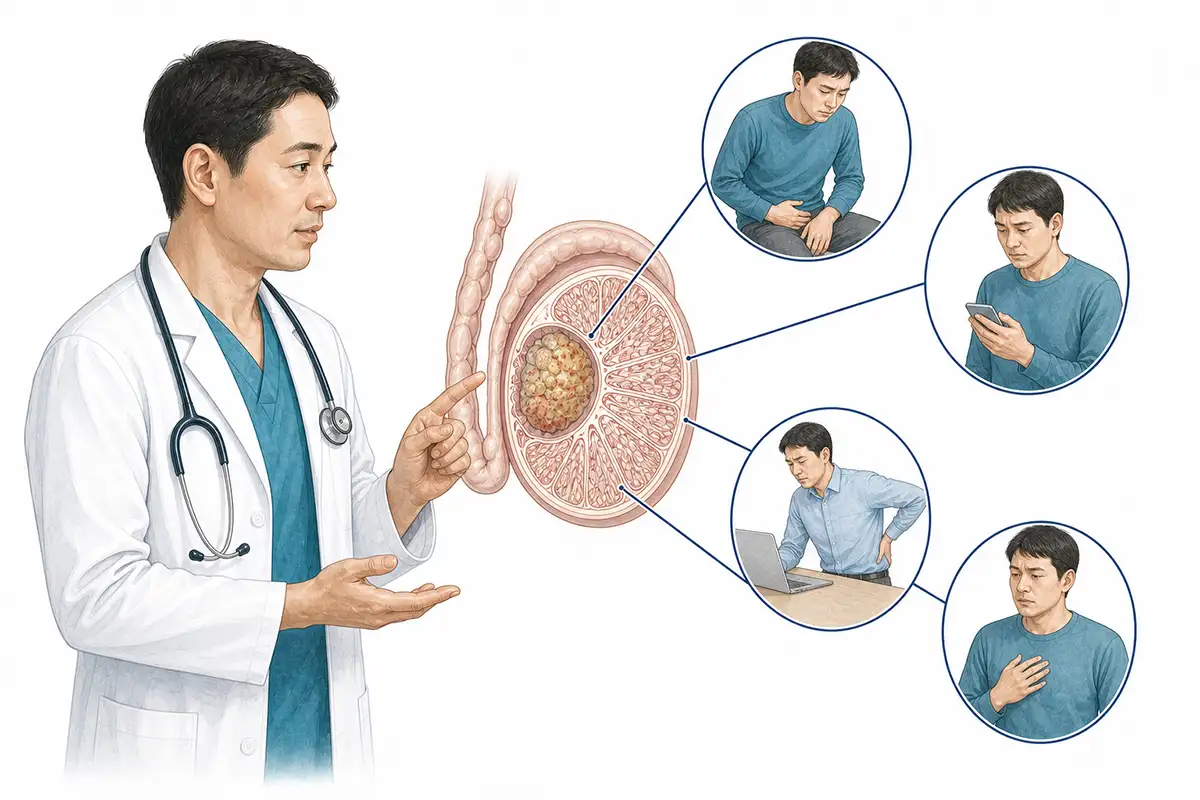
Detailed Symptoms of Testicular Cancer
1.Testicular lump
The most common initial symptom is a painless mass or nodule in one testis; it is hard in texture and lacks a clear boundary with normal testicular tissue.
2.Testicular enlargement
The affected testis undergoes progressive enlargement, becoming significantly larger in volume than the contralateral testis; it becomes firm in texture, with a surface that may be smooth or irregular.
3.Sensation of scrotal heaviness
A sensation of heaviness or a dragging feeling occurs in the scrotum on the affected side—especially noticeable after prolonged standing or physical activity—associated with the increased weight of the testis.
4.Onset of dull lower abdominal pain
Approximately 30%–40% of patients complain of dull pain or a sensation of heaviness in the lower abdomen, groin, or scrotum, while about 10% experience acute pain.
5.Breast enlargement
Tumor secretion of HCG causes gynecomastia, breast tenderness, and nipple hypersensitivity; this is a characteristic manifestation of certain testicular cancers.
6Lower back pain present
Compression of nerves by retroperitoneal lymph node metastasis causes persistent lower back pain that may radiate to the abdomen.
7.Pulmonary symptoms
Lung metastases—manifesting as persistent coughing, chest pain, and difficulty breathing—are a common sign of metastasis in advanced-stage disease.
8.Scrotal edema
Obstruction of lymphatic drainage by the tumor leads to scrotal effusion and edema, with the scrotal skin appearing taut and shiny.
9.Systemic symptoms
In the advanced stage, systemic wasting symptoms such as weight loss, fatigue, loss of appetite, and anemia appear.
Conclusion
Testicular cancer is one of the most curable solid malignant tumors.Men are advised to perform monthly testicular self-examinations and seek medical attention promptly if any abnormalities are detected.Early treatment leads to an excellent prognosis.


