


What is laryngeal cancer
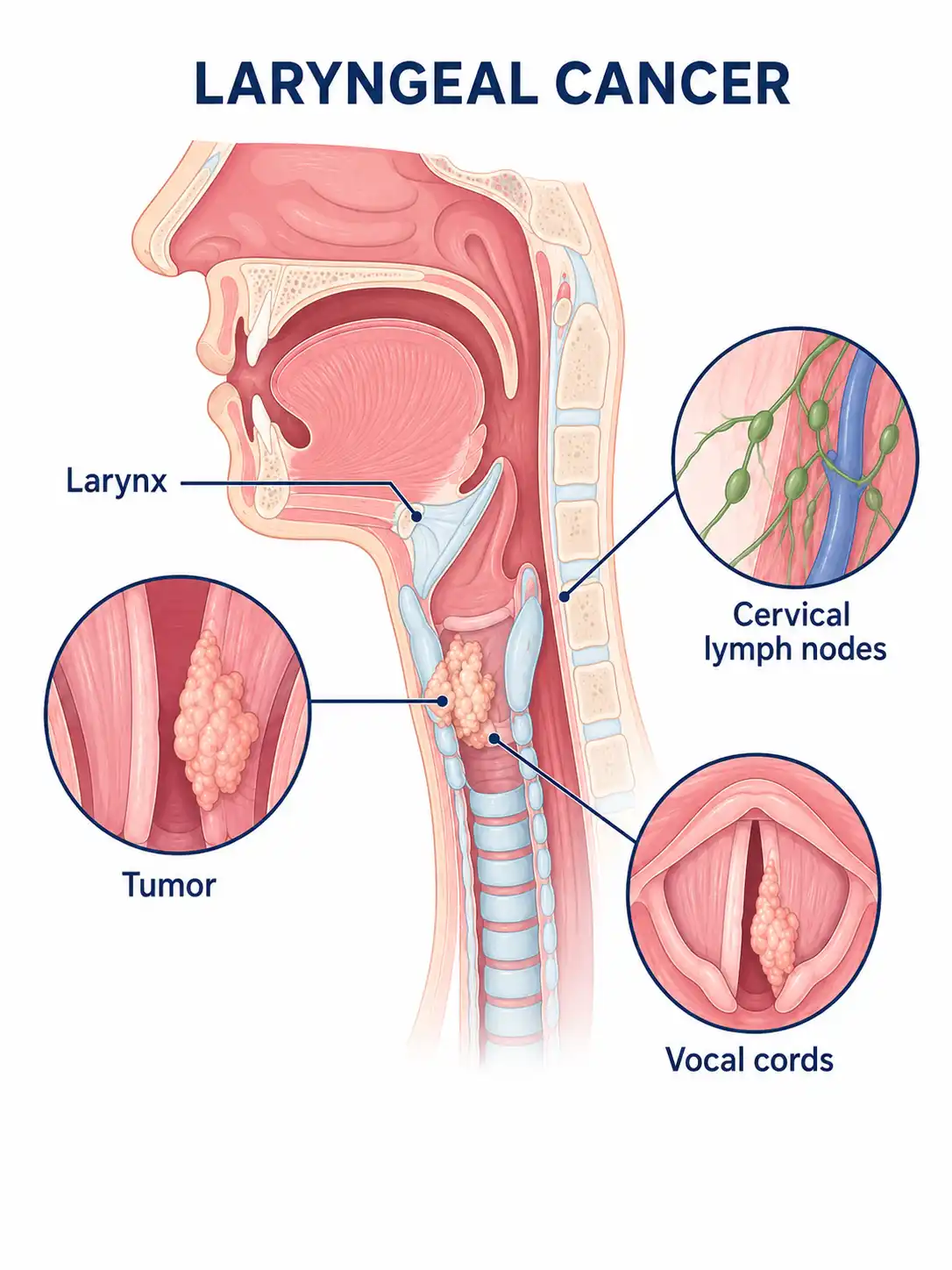
Laryngeal cancer is a tumor formed by malignant proliferation of laryngeal mucosal epithelial cells. The larynx, located at the front of the neck, is essential for breathing and voice production and consists of the supraglottis, glottis, and subglottis.
The global situation regarding laryngeal cancer
Laryngeal cancer accounts for a share of head and neck malignancies and is significantly more common in men. Closely associated with smoking and alcohol consumption, its incidence has declined somewhat in recent years as tobacco control measures advance.
Consult a doctor regarding cancer-related issues
Anyone with persistent hoarseness lasting more than two weeks, a foreign body sensation in the throat, painful swallowing, or blood-stained sputum should promptly consult an ENT specialist, especially long-term smokers and drinkers.
Main types of laryngeal cancer
1. Glottic laryngeal cancer
Arising from the vocal cords, this is the most common type. Hoarseness occurs early, facilitating early detection and a relatively favorable prognosis.
2. Supraglottic type
It arises from supraglottic structures such as the epiglottis and false vocal cords. Early symptoms are nonspecific, cervical lymph node metastasis occurs readily, and prognosis is poorer than for glottic cancer.
3. Subglottic type
This relatively rare type arises in the subglottis. Early symptoms are subtle, most cases are advanced at diagnosis, and prognosis is poor.
4. Transglottic type
The tumor involves both the supraglottis and glottis and readily invades the thyroid and cricoid cartilages, making treatment relatively complex.
5. Carcinoma in situ
Cancer cells are confined to the mucosal epithelial layer without crossing the basement membrane. This is the earliest stage, and timely detection can achieve good disease control.
Typical symptoms and signs of laryngeal cancer
1. Hoarseness
Tumor invasion of the vocal cords impairs voice production, causing persistent and progressively worsening hoarseness, the most typical initial symptom of glottic laryngeal cancer.
2. Foreign body sensation in the throat
Early supraglottic cancer often causes a foreign body sensation in the throat, swallowing discomfort, and mild pain. Fluctuating symptoms are easily overlooked.
3. Painful swallowing
As the tumor enlarges and invades surrounding tissue, swallowing becomes difficult or painful, with pain radiating to the ear. In severe cases, even drinking water is difficult.
4. Blood-stained sputum
Ulceration or friction on the tumor surface causes bleeding, seen as blood streaks in sputum coughed up on waking. Recurrent small amounts warrant vigilance.
5. Difficulty breathing
Tumor enlargement blocks the laryngeal cavity, or vocal cord fixation narrows the airway, causing inspiratory breathing difficulty that can be life-threatening in severe cases.
6. Neck lump
Laryngeal cancer readily spreads to cervical lymph nodes. Hard, progressively enlarging lumps may be palpable on the side of the neck, indicating disease progression.
How is laryngeal cancer diagnosed
1. Indirect laryngoscopy
Indirect laryngoscopy provides an initial assessment of laryngeal mucosal growths, ulcers, and vocal cord movement and is commonly used for outpatient screening.
2. Electronic laryngoscopy
Electronic laryngoscopy clearly shows the location, shape, and extent of laryngeal lesions and allows biopsy under direct visualization, making it an important diagnostic method.
3. Laryngeal CT or MRI
Contrast-enhanced CT or MRI assesses invasion of laryngeal cartilage and the extent of cervical lymph node metastasis, supporting clinical staging.
4. Pathological biopsy
Pathological examination of tissue obtained by laryngoscopic biopsy is the sole gold standard for diagnosing laryngeal cancer and determines pathological type and differentiation.
5. Neck ultrasound
Ultrasound assesses the size, shape, and internal structure of cervical lymph nodes, helping with staging and treatment planning.
6. Chest CT scan
Chest CT excludes lung metastases and is an essential part of routine preoperative staging.
What treatments are available for laryngeal cancer
1. Surgical treatment
Surgery is the main treatment for laryngeal cancer, including laser surgery, partial laryngectomy, and total laryngectomy. Early-stage patients may choose surgery that preserves laryngeal function.
2. Radiation therapy
Radiotherapy alone for early glottic cancer can achieve outcomes comparable to surgery while preserving voice, making it an important option for functional preservation.
3. Chemotherapy
Chemotherapy is mainly used for palliation in advanced disease or as part of preoperative neoadjuvant treatment and concurrent chemoradiotherapy.
4. Concurrent chemoradiotherapy
Concurrent chemoradiotherapy is an important strategy for locally advanced laryngeal cancer, helping preserve laryngeal function and improve local control.
5. Immunotherapy
PD-1 inhibitors can treat recurrent or metastatic laryngeal cancer, providing a new treatment option.
6. Targeted therapy
Anti-EGFR targeted drugs such as cetuximab can treat advanced laryngeal cancer and improve efficacy when combined with chemotherapy.
7. Voice rehabilitation
After total laryngectomy, communication can be restored through esophageal speech, an electrolarynx, or a tracheoesophageal voice prosthesis.
Conclusion
Laryngeal cancer mainly presents with hoarseness and is closely associated with smoking and alcohol consumption. Quitting smoking, limiting alcohol, seeking prompt care for persistent hoarseness, and early detection followed by comprehensive treatment preserving laryngeal function help maintain quality of life while controlling the tumor.


