


What is cervical cancer
Cervical cancer arises from malignant proliferation of cervical epithelial cells. The cervix connects the uterine body to the vagina, and the junction of squamous and columnar epithelium is a common site of malignant transformation.
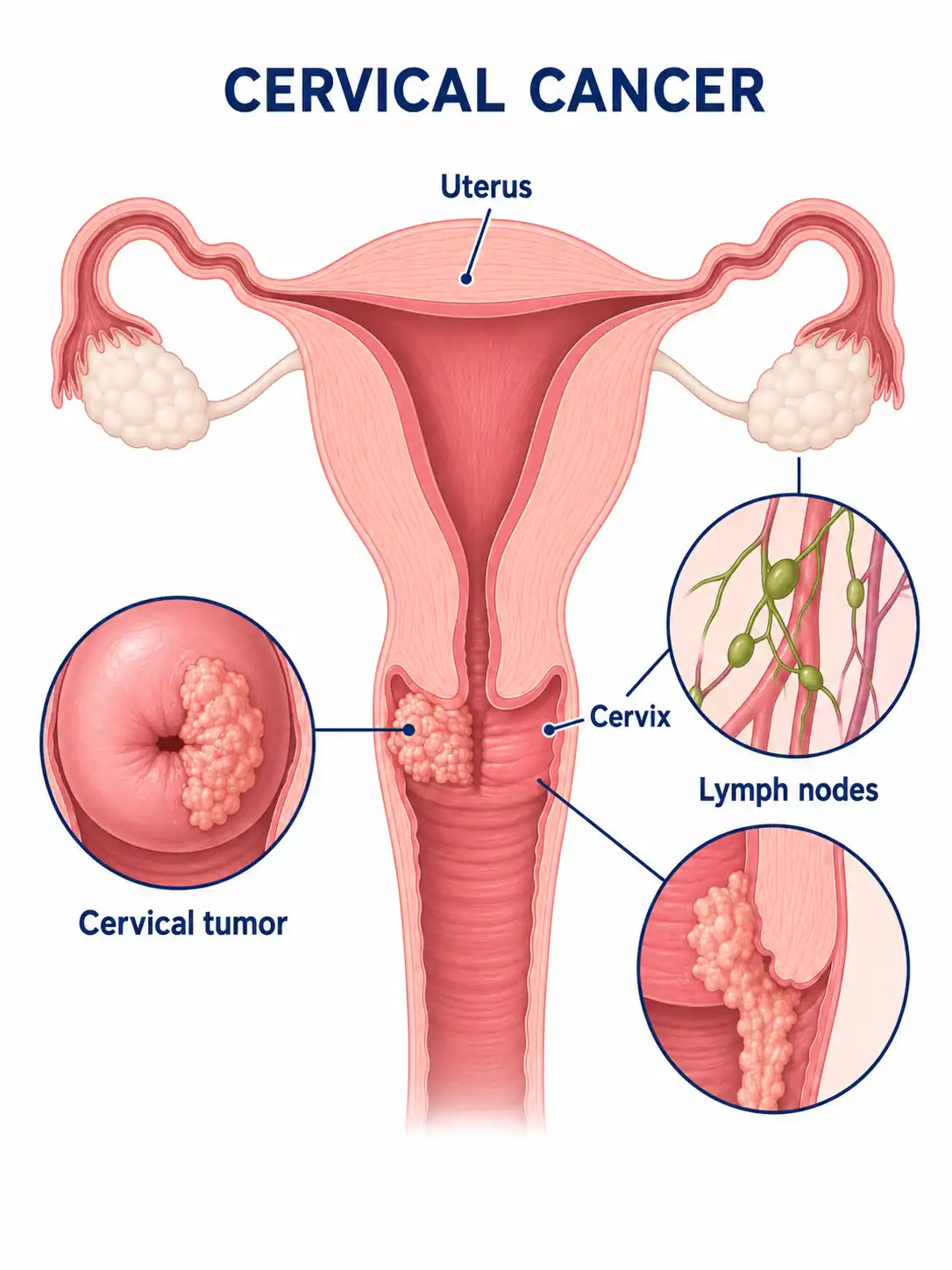
The global situation regarding cervical cancer
Cervical cancer ranks among the most common female malignancies worldwide, with a greater burden in developing countries. Incidence is inversely associated with screening coverage.
Consult a doctor regarding cancer-related issues
Any woman with contact vaginal bleeding, abnormal discharge, intermenstrual bleeding, or postmenopausal bleeding should promptly consult a gynecologic oncologist.
Main types of cervical cancer
1. Squamous cell carcinoma
This accounts for most cervical cancers and is closely associated with persistent high-risk HPV infection. It commonly arises in the transformation zone at the squamocolumnar junction.
2. Types of adenocarcinoma
Arising from endocervical columnar epithelium, it is often located deep within the cervical canal, making early diagnosis difficult. Its incidence has increased in recent years.
3. Mixed adenosquamous carcinoma
The tumor contains both malignant glandular and squamous epithelial components. It is relatively uncommon, with biological behavior and prognosis differing from pure adenocarcinoma or squamous carcinoma.
4. Microinvasive carcinoma
Both stromal invasion depth and horizontal spread are limited. This is early invasive cancer, and timely treatment can achieve favorable disease control.
5. Neuroendocrine carcinoma
Including small-cell and large-cell neuroendocrine carcinoma, these highly malignant tumors grow rapidly and metastasize early, requiring combined treatment.
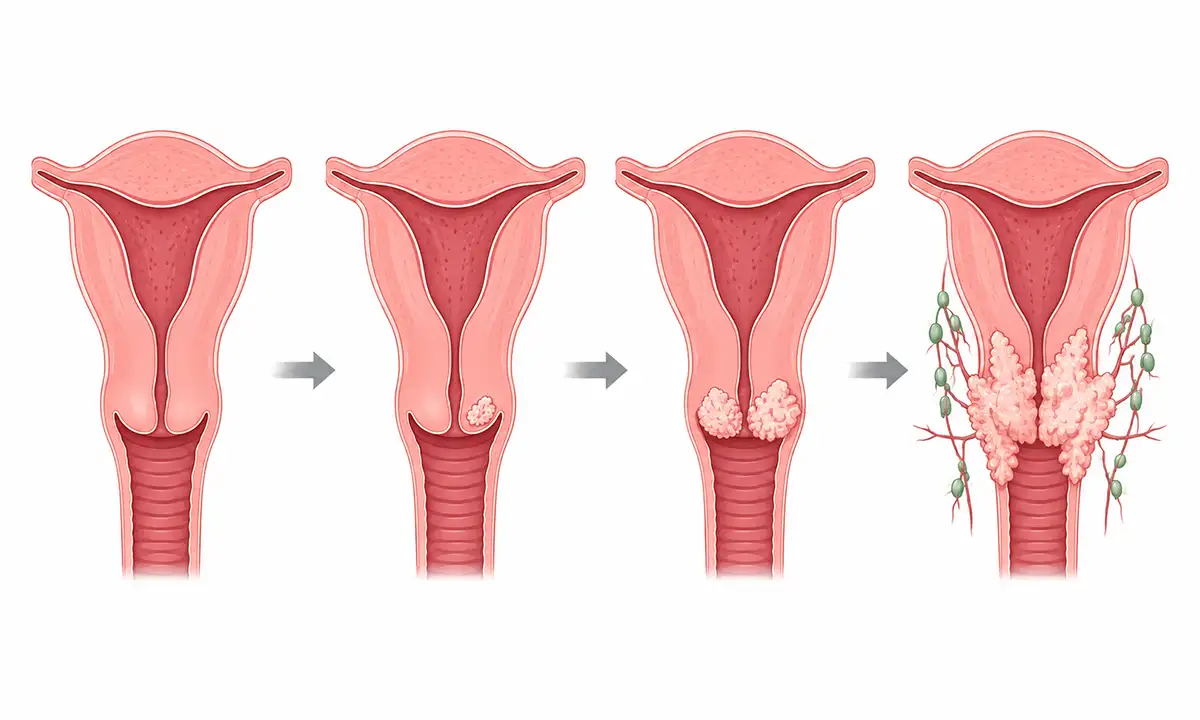
Typical symptoms and signs of cervical cancer
1. Contact bleeding
A small amount of bright or dark red vaginal bleeding after intercourse or a gynecological examination requires close attention and prompt medical investigation.
2. Abnormal vaginal discharge
Early discharge may be white or blood-tinged and watery. Advanced tumor necrosis and infection may cause copious rice-water-like or purulent, foul-smelling discharge, requiring prompt care.
3. Intermenstrual bleeding
Vaginal bleeding outside menstruation, markedly increased menstrual flow, or irregular cycles may occur. Renewed vaginal bleeding after menopause requires particular vigilance.
4. Persistent lower abdominal pain
Cancer infiltration into surrounding tissues and compression of pelvic wall nerves cause persistent pain that may radiate to the legs. Advanced pain can be severe and interfere with daily activities.
5. Urinary symptoms
Anterior invasion into the bladder causes urinary symptoms. Ureteric compression may cause obstruction and hydronephrosis, with difficulty urinating and distending lower back pain.
6. Signs of rectal compression
Posterior invasion of the rectal wall causes altered bowel habits, tenesmus, and rectal bleeding. Severe cases may develop a rectovaginal fistula and require prompt treatment.
How is cervical cancer diagnosed
1. Cervical cytology
Exfoliated cervical cells are collected for Papanicolaou staining or thin-layer liquid-based cytology. Abnormal cells indicate a need for further colposcopy and biopsy.
2. HPV testing
Testing detects high-risk human papillomavirus DNA or RNA. Combined with cytology, it significantly improves detection of precancerous lesions and is suitable for women over thirty.
3. Colposcopy
Magnified inspection of the cervical surface with acetic acid and iodine tests identifies abnormal transformation zones and guides targeted biopsy of suspicious sites to improve diagnostic accuracy.
4. Cervical biopsy and pathology
Suspicious cervical tissue is sampled under colposcopic guidance for pathological examination. Determination of the pathological type and differentiation is the diagnostic gold standard.
5. Pelvic magnetic resonance imaging
MRI provides high soft-tissue resolution and clearly shows cervical invasion depth, parametrial involvement, and relationships to the bladder and rectum.
6. Chest CT scan
Contrast-enhanced CT checks for lung metastases. Whole-body bone scanning or PET-CT may be performed when needed to establish distant metastasis and clinical stage.
What treatments are available for cervical cancer
1. Surgical treatment
Surgery is the main treatment for early cervical cancer, including cervical conization and radical hysterectomy. Early-stage patients can achieve favorable outcomes with surgery.
2. Radiation therapy
Radiotherapy is suitable for all stages of cervical cancer and includes external beam radiation and brachytherapy. It may be used alone or combined with chemotherapy to improve efficacy.
3. Chemotherapy
Chemotherapy uses drugs such as cisplatin to destroy cancer cells. It is often given concurrently with radiotherapy to improve efficacy and can also provide systemic control in advanced disease.
4. Concurrent chemoradiotherapy
Concurrent chemoradiotherapy is standard treatment for intermediate and advanced cervical cancer. Chemotherapy increases radiosensitivity and significantly improves local control.
5. Targeted therapy
Targeted drugs such as bevacizumab inhibit tumor angiogenesis. Combined with chemotherapy, they can prolong survival in advanced or recurrent disease.
6. Immunotherapy
PD-1 immune checkpoint inhibitors can be used for recurrent or metastatic cervical cancer, activating the immune system to recognize and attack cancer cells.
7. Brachytherapy
Brachytherapy places a radiation source directly near the tumor, delivering precise high-dose radiation to cervical lesions while protecting surrounding normal tissues.
Conclusion
Cervical cancer seriously threatens women's health and may invade nearby organs and metastasize in advanced disease. Early detection through standardized screening and timely individualized treatment help control progression and improve quality of life.


