


What is breast cancer
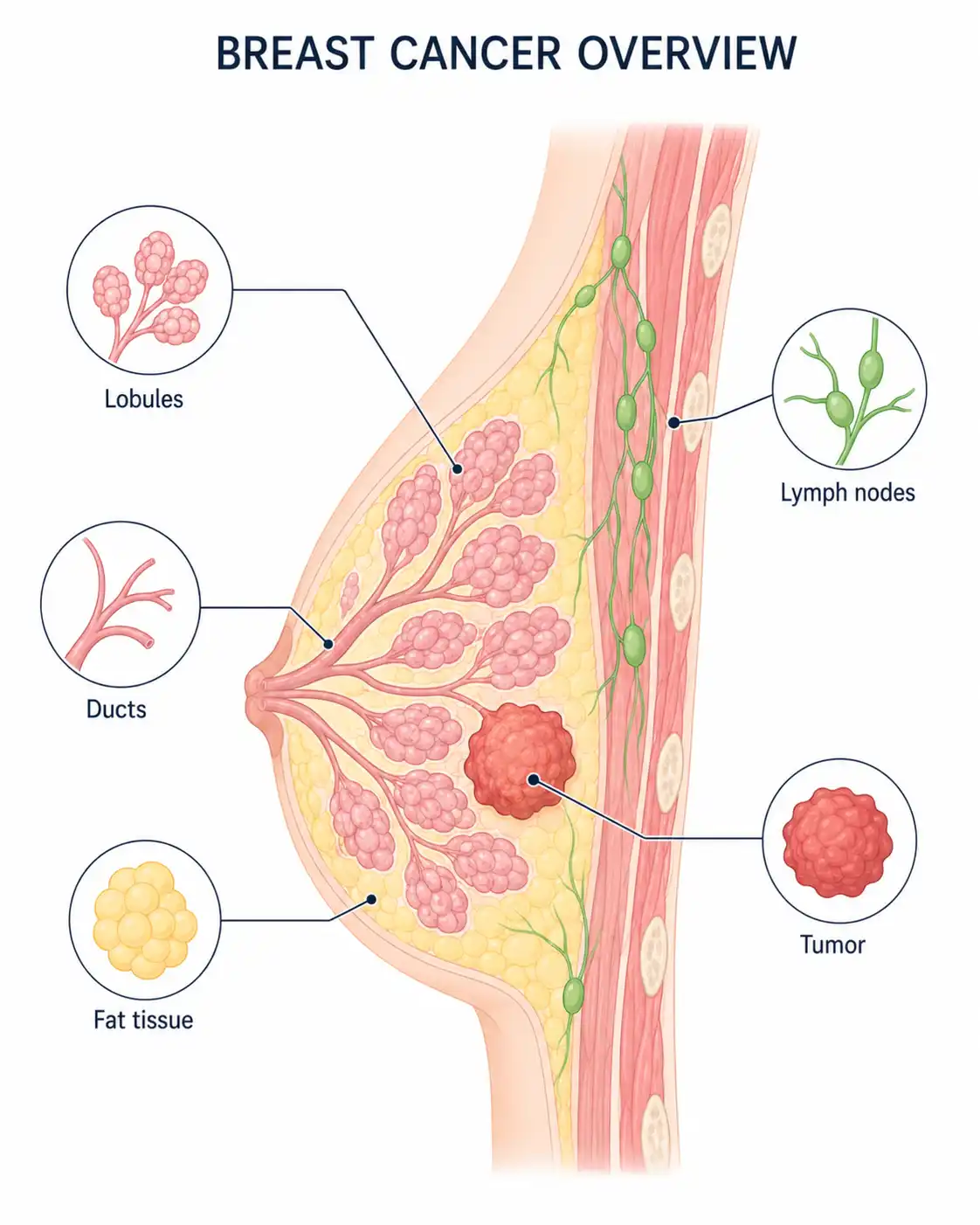
Breast cancer is a malignancy arising in the mammary epithelium. The breast consists mainly of ducts, lobules, and stromal components. Once cancer cells breach the basement membrane, they can invade surrounding tissues and spread through the lymphatic or blood circulation to other parts of the body.
What is the global situation regarding breast cancer
Breast cancer ranks among the most common malignancies in women worldwide, with relatively high incidence in developed countries. Wider use of early screening and increased public health awareness have accompanied a gradual decline in mortality in recent years.
Consult a doctor regarding cancer-related issues
If you notice a painless breast lump, bloody nipple discharge, orange-peel changes in breast skin, or enlarged lymph nodes in the armpit, consult a breast surgeon promptly for professional assessment and the necessary examinations.
What are the main types of breast cancer
1. Ductal carcinoma in situ
Tumor cells remain within the mammary ducts without penetrating the basement membrane into the stroma. This represents the earliest precancerous stage, and timely intervention can effectively control disease progression.
2. Invasive ductal carcinoma
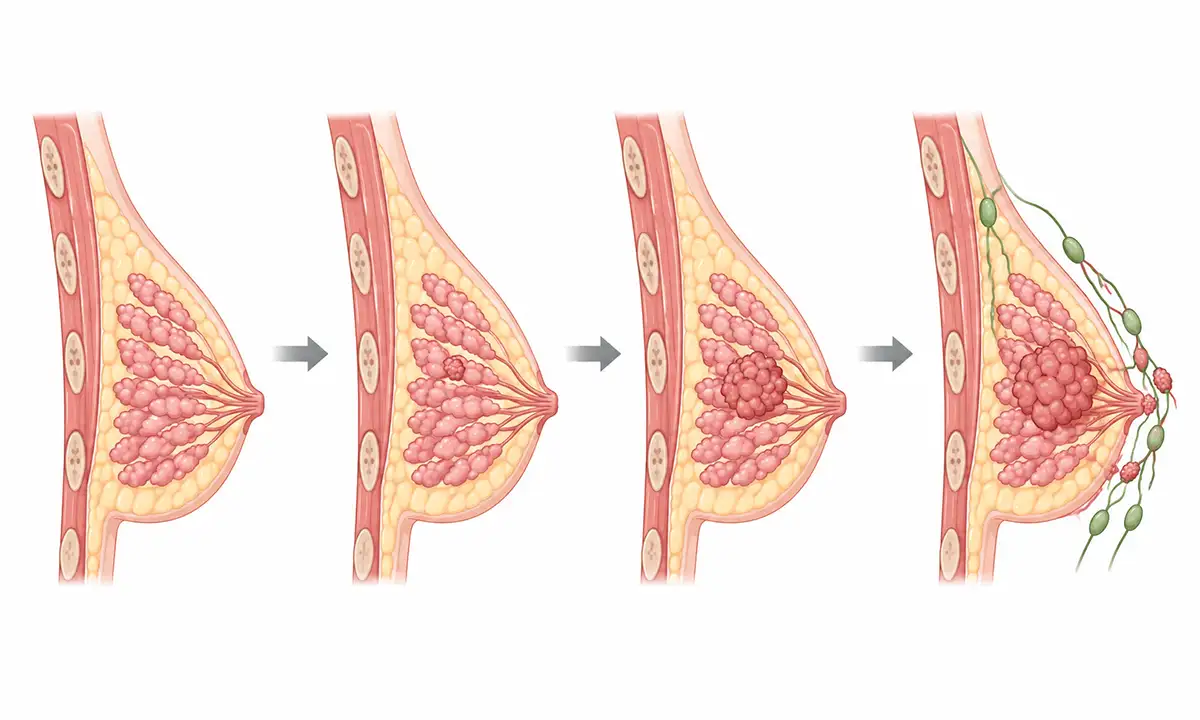
Cancer cells have breached the ductal basement membrane and invaded the surrounding stroma. This is the most common pathological subtype and can spread through the lymphatic system or bloodstream to regional lymph nodes and distant organs.
3. Invasive lobular carcinoma
Cancer cells show a characteristic single-file arrangement and tend to infiltrate spaces around nerves and blood vessels. After one breast is affected, the risk of a tumor in the opposite breast is higher than with other types.
4. Inflammatory breast cancer
Cancer cells invade subcutaneous lymphatic vessels and obstruct lymphatic drainage, causing inflammatory-looking redness, swelling, and thickening of breast skin. The disease progresses rapidly and has a relatively unfavorable prognosis.
5. Triple-negative breast cancer
Immunohistochemistry shows negative expression of estrogen receptors, progesterone receptors, and HER2 protein. Because these targets are absent, chemotherapy is currently the main systemic treatment option.
What are the typical symptoms and signs of breast cancer
1. Painless breast lump
Most patients incidentally feel a firm nodule or mass while bathing or examining their breasts. It has indistinct borders and limited mobility and usually causes no obvious pain or discomfort.
2. Bloody nipple discharge
Spontaneous abnormal discharge from one nipple outside breastfeeding may be bright red, dark red, or brown. It often suggests a papilloma or another space-occupying lesion within a mammary duct.
3. Orange-peel skin changes
Tumor invasion causes the suspensory ligaments of the breast to contract and shorten, pulling the skin inward and creating dimpling. Obstructed subcutaneous lymphatic drainage produces an orange-peel appearance.
4. Nipple retraction or inversion
The nipple gradually retracts toward the areola or deviates to one side. A firm nodule may be felt beneath the areola. Eczema-like changes in the nipple and areolar skin should raise suspicion of Paget disease.
5. Enlarged axillary lymph nodes
Hard, enlarged lymph nodes that may be matted together can be felt in the affected armpit. Advanced disease may spread further to the supraclavicular region. The extent of nodal involvement directly affects clinical staging and prognosis.
6. Changes in breast shape
Asymmetry of the breasts, persistent localized redness, and increased skin temperature that do not resolve within several weeks should raise concern for inflammatory breast cancer or another malignancy.
How is breast cancer diagnosed
1. Breast palpation
The doctor visually assesses breast shape and skin changes and palpates the lump to evaluate its location, size, texture, and associated axillary lymph nodes, forming an initial clinical judgment about the lesion.
2. Breast ultrasound
A high-frequency ultrasound probe examines internal breast structures, clearly showing lesion shape, margins, internal echoes, and blood flow. It is particularly useful in younger women and those with dense breasts.
3. Mammography
Mammography detects early signs such as tiny calcifications and architectural distortion. It is an indispensable imaging method for population screening and early detection of breast cancer. Regular examinations are recommended for women over forty.
4. Breast magnetic resonance imaging
Magnetic resonance imaging offers excellent soft-tissue contrast and multiplanar reconstruction. It is mainly used for high-risk screening and precise preoperative assessment of tumor extent and the distribution of multicentric lesions.
5. Core needle biopsy
Under ultrasound or mammographic guidance, a core needle removes strips of tumor tissue. Sections are stained and examined microscopically by the pathology department to establish the pathological type and degree of differentiation. This is the sole gold standard for definitive diagnosis.
6. Immunohistochemistry
Tissue sections are tested for estrogen receptors, progesterone receptors, and HER2 protein expression. The results determine molecular subtype and provide key evidence for precise, individualized treatment planning.
What treatments are available for breast cancer
1. Surgical treatment
Surgery is the principal local treatment for breast cancer, mainly involving breast-conserving surgery or total mastectomy. Breast-conserving surgery is suitable for early-stage patients and removes the tumor while maintaining breast appearance.
2. Radiation therapy
Postoperative adjuvant radiotherapy uses high-energy radiation to destroy potentially remaining tumor cells. Patients undergoing breast-conserving surgery usually require postoperative radiotherapy, which helps significantly reduce local recurrence.
3. Chemotherapy
Chemotherapy uses cytotoxic drugs to kill cancer cells. It can shrink tumors before surgery or eliminate micrometastases afterward, reducing the risk of spread to distant organs.
4. Endocrine therapy
For patients with estrogen receptor-positive or progesterone receptor-positive disease, endocrine drugs block estrogen stimulation of the tumor and inhibit progression. Medication usually continues for several years or longer.
5. Targeted therapy
For HER2-positive breast cancer, molecularly targeted drugs such as trastuzumab act specifically on HER2 targets in cancer cells to deliver precise treatment.
6. Immunotherapy
Immune checkpoint inhibitors such as pembrolizumab are used in triple-negative breast cancer. They activate and enhance the body's own immune system to recognize and kill cancer cells.
7. Neoadjuvant therapy
Chemotherapy or targeted therapy before definitive surgery reduces tumor size and may downstage the disease, making initially inoperable patients eligible for surgery and improving the likelihood of breast preservation.
8. Comprehensive therapy
A multidisciplinary team jointly develops an individualized, combined treatment plan based on each patient's tumor stage, molecular subtype, and physical condition, aiming for optimal efficacy and improved quality of life.
Conclusion
Breast cancer poses a major threat to women's lives and health, and distant metastases in advanced cases can be life-threatening. Greater prevention awareness supports early detection. Standardized, multidisciplinary combined treatment helps prolong survival and improve overall quality of life.


