


What is ovarian cancer
Ovarian cancer arises from malignant proliferation of ovarian epithelial or germ cells. The paired ovaries lie deep in the pelvis and have both reproductive and endocrine functions.
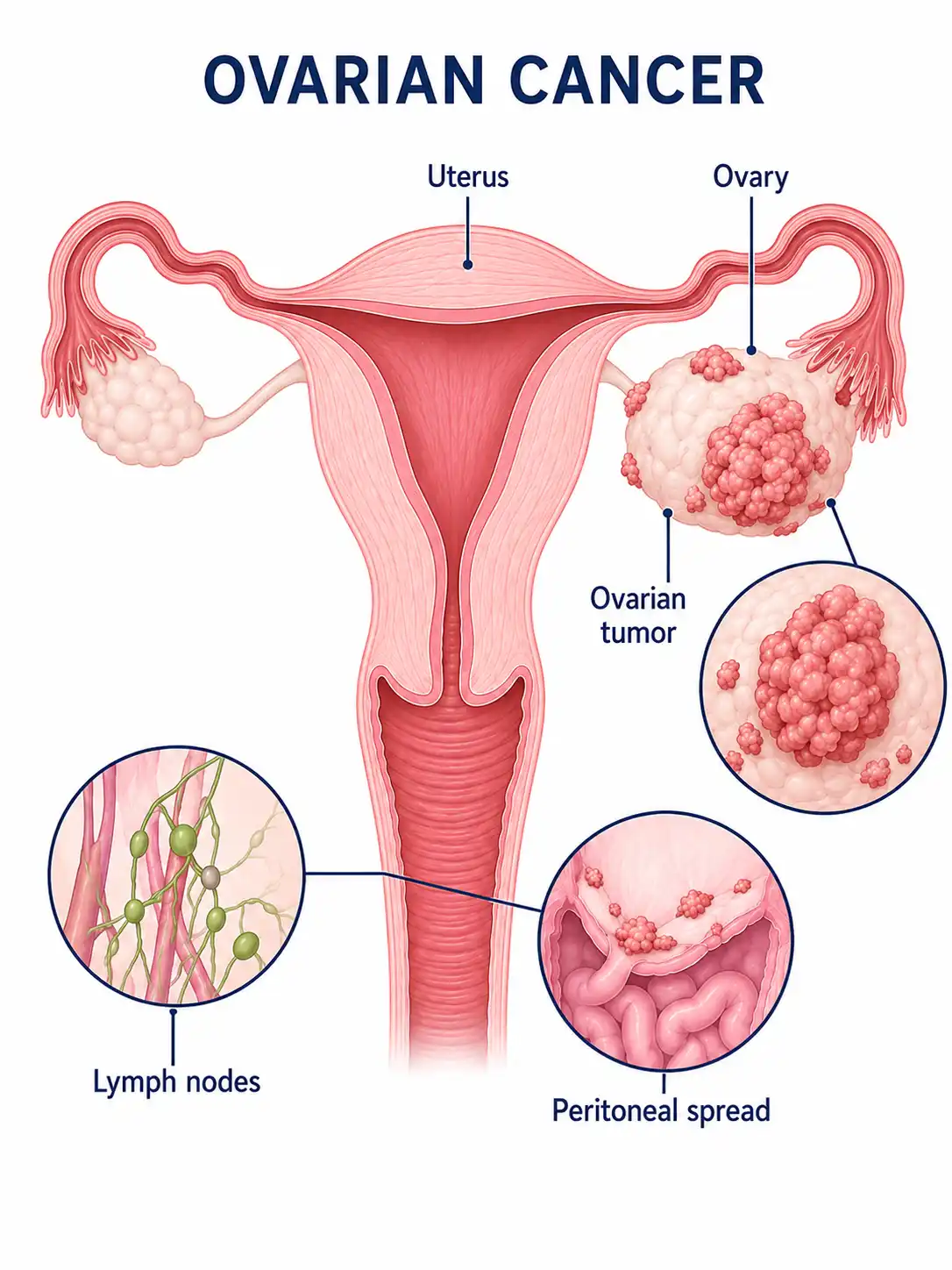
The global situation regarding ovarian cancer
Ovarian cancer ranks among the most common female malignancies worldwide. Because early diagnosis is difficult, it has the highest mortality among gynecological tumors and seriously threatens women's lives and health.
Consult a doctor regarding cancer-related issues
Women with persistent bloating, an abdominal mass, indigestion, urinary frequency, or menstrual irregularities, especially those with a family history, should promptly consult a gynecologic oncologist for assessment.
Main types of ovarian cancer
1. High-grade serous carcinoma
Arising from fallopian tube or ovarian surface epithelium, this is the most common pathological type, accounting for most ovarian cancers. It is usually advanced at diagnosis and relatively sensitive to platinum chemotherapy.
2. Endometrioid carcinoma
Its pathological appearance resembles endometrial cancer, often with a history of endometriosis. Prognosis is relatively favorable, and some cases are detected early.
3. Clear-cell carcinoma
Arising from malignant transformation of ovarian endometriotic cysts, it has relatively low sensitivity to conventional chemotherapy. Early detection is essential to improving prognosis.
4. Mucinous carcinoma
The tumor is usually large and unilateral and must be distinguished from metastatic mucinous carcinoma of gastrointestinal origin.
5. Germ cell tumors
These arise from ovarian germ cells and mainly affect younger women. They grow rapidly but are mostly chemotherapy-sensitive, and early treatment can achieve favorable disease control.
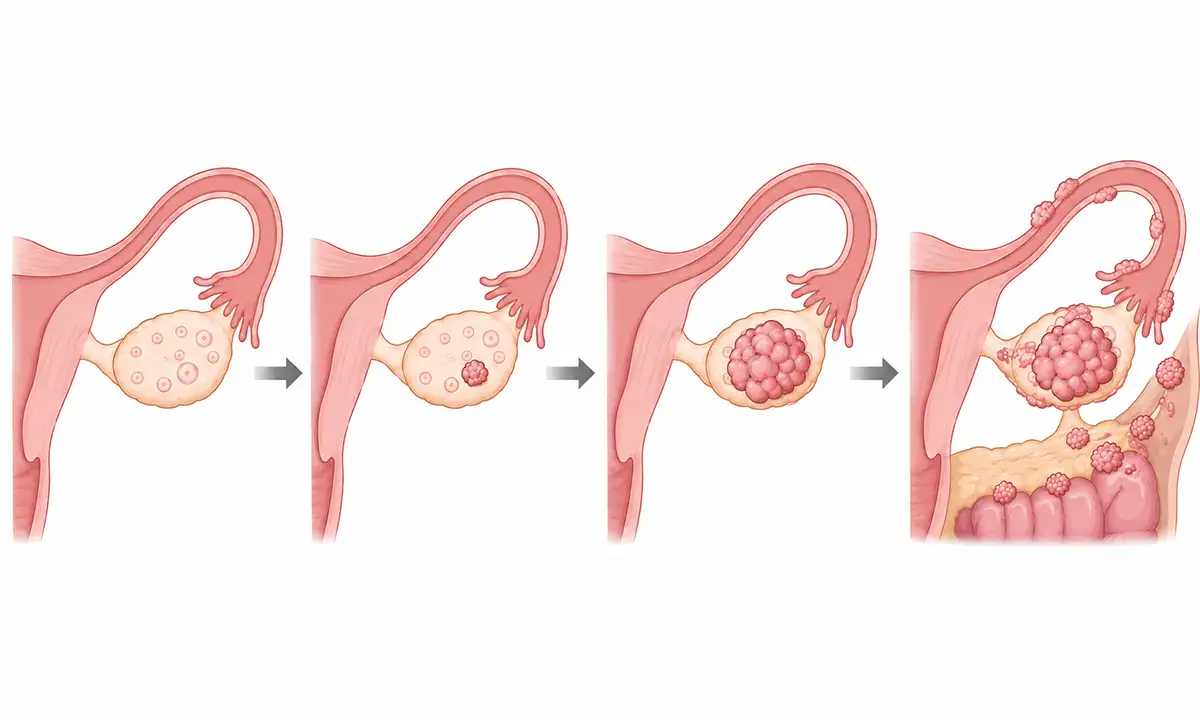
Typical symptoms and signs of ovarian cancer
1. Abdominal bloating, pain, and discomfort
Early manifestations often include persistent abdominal fullness, dull pain, or discomfort. Mild, nonspecific symptoms may be mistaken for gastrointestinal disease, delaying consultation.
2. Abdominal mass
As the tumor grows, a hard, irregular, poorly mobile lower abdominal mass may become palpable. Some patients notice an increased abdominal circumference.
3. Gastrointestinal symptoms
Tumor compression or abdominal implantation can cause appetite loss, early satiety, nausea, vomiting, and constipation. Bowel dysfunction caused by ascites requires attention.
4. Urinary symptoms
Bladder compression may cause urinary frequency and urgency. Ureteric compression can cause hydronephrosis, difficulty urinating, and distending lower back pain.
5. Menstrual irregularities
Functioning tumors may secrete hormones that disrupt menstruation, causing heavier flow, prolonged periods, or postmenopausal vaginal bleeding.
6. Weight loss and ascites
Advanced patients develop unexplained weight loss, fatigue, anemia, and large-volume ascites, with marked abdominal distension and possible pressure symptoms such as breathlessness.
How is ovarian cancer diagnosed
1. Pelvic ultrasound
Transvaginal or transabdominal ultrasound is the first-choice imaging examination, assessing ovarian mass size, shape, internal structure, and blood flow.
2. Tumor marker testing
CA125 is a commonly used serum marker. HE4 and the ROMA score help distinguish benign from malignant ovarian masses, although specificity is limited.
3. Pelvic magnetic resonance imaging
MRI provides high soft-tissue resolution and clearly shows the tumor's relationship with surrounding tissues, helping assess resectability before surgery.
4. Abdominal CT scan
Contrast-enhanced CT assesses intra-abdominal metastases, lymph node involvement, and ascites volume, supporting clinical staging and treatment planning.
5. Exploratory laparotomy or laparoscopy
Surgical exploration obtains tissue for pathology, the diagnostic gold standard, while comprehensively assessing intra-abdominal metastases.
6. Cytology
Ascitic fluid or peritoneal washings are examined for cancer cells. A positive result indicates that the tumor has breached its capsule and is important for staging.
What treatments are available for ovarian cancer
1. Surgical treatment
Surgery is the main treatment for ovarian cancer, including comprehensive staging and cytoreductive surgery. The goal is to remove all visible disease whenever possible.
2. Chemotherapy
Platinum- and paclitaxel-based combination chemotherapy is standard postoperative adjuvant treatment. Neoadjuvant chemotherapy can shrink advanced tumors to facilitate surgery.
3. Targeted therapy
PARP inhibitors such as olaparib are used for maintenance in BRCA-mutated or homologous recombination-deficient disease. Antiangiogenic drugs may be used for recurrent disease.
4. Maintenance therapy
After initial treatment achieves remission, maintenance with PARP inhibitors or bevacizumab can significantly prolong progression-free survival.
5. Immunotherapy
Immune checkpoint inhibitors have shown some efficacy in selected ovarian cancer patients, and related clinical studies are actively underway.
6. Treatment of recurrence
Repeat surgery, platinum-based chemotherapy, or targeted therapy is selected according to the platinum-free interval. Multidisciplinary discussion establishes an individualized plan.
7. Palliative treatment
For patients with incurable advanced disease, combined treatment aimed at symptom control, relief of suffering, and improved quality of life remains important.
Conclusion
Because early symptoms are subtle and effective screening is lacking, most ovarian cancers are advanced at diagnosis. Greater public awareness, attention to unexplained bloating, prompt consultation, and standardized combined treatment help improve prognosis and quality of life.


