


Testicular cancer is a tumor resulting from the malignant proliferation of testicular germ cells.The testes are male reproductive organs located within the scrotum; their primary functions are sperm production and androgen secretion. Testicular cancer most often originates from germ cells.
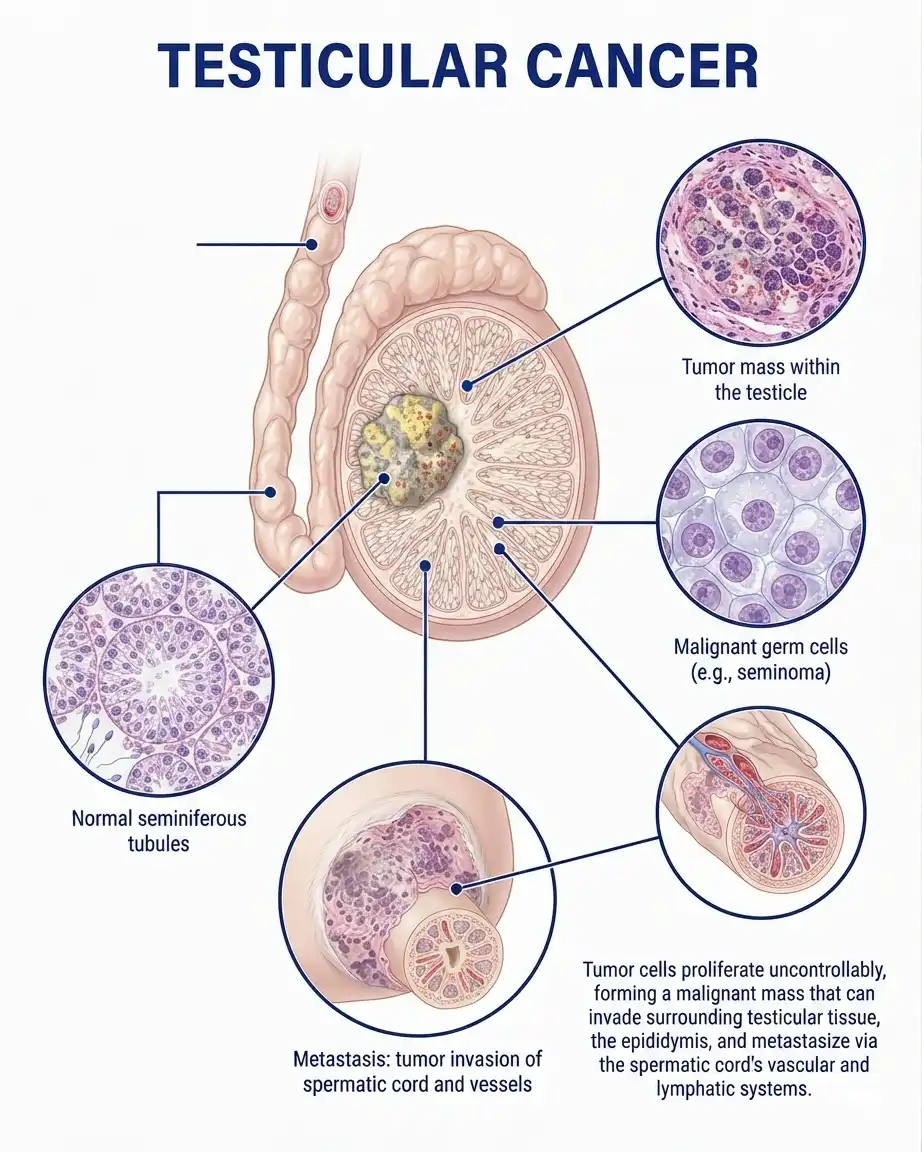
Global overview of testicular cancer
While testicular cancer accounts for a small proportion of malignancies in men overall, it is the most common solid tumor among young men aged 15–35.Incidence rates have been rising in recent years, with higher rates observed in white populations compared to other racial groups.
Consult a doctor regarding cancer-related issues
Patients presenting with painless testicular enlargement, a testicular mass, or testicular pain—particularly young men—should promptly consult a urologist.
Main types of testicular cancer
1. Seminoma
The most common type, accounting for approximately 50% of testicular cancers; it is highly sensitive to radiotherapy and chemotherapy and carries a favorable prognosis.
2. Embryonal carcinoma
The most common component of non-seminomatous germ cell tumors; it is highly aggressive and prone to early metastasis.
3. Yolk sac tumor
This is the most common testicular tumor in infants and young children but is rare in adults; it can secrete alpha-fetoprotein (AFP).
4. Choriocarcinoma
Highly malignant; it secretes HCG, metastasizes early to the lungs via the bloodstream, and is sensitive to chemotherapy but prone to developing drug resistance.
5. Teratoma
Contains tissue components derived from all three germ layers; may be of the mature or immature type.
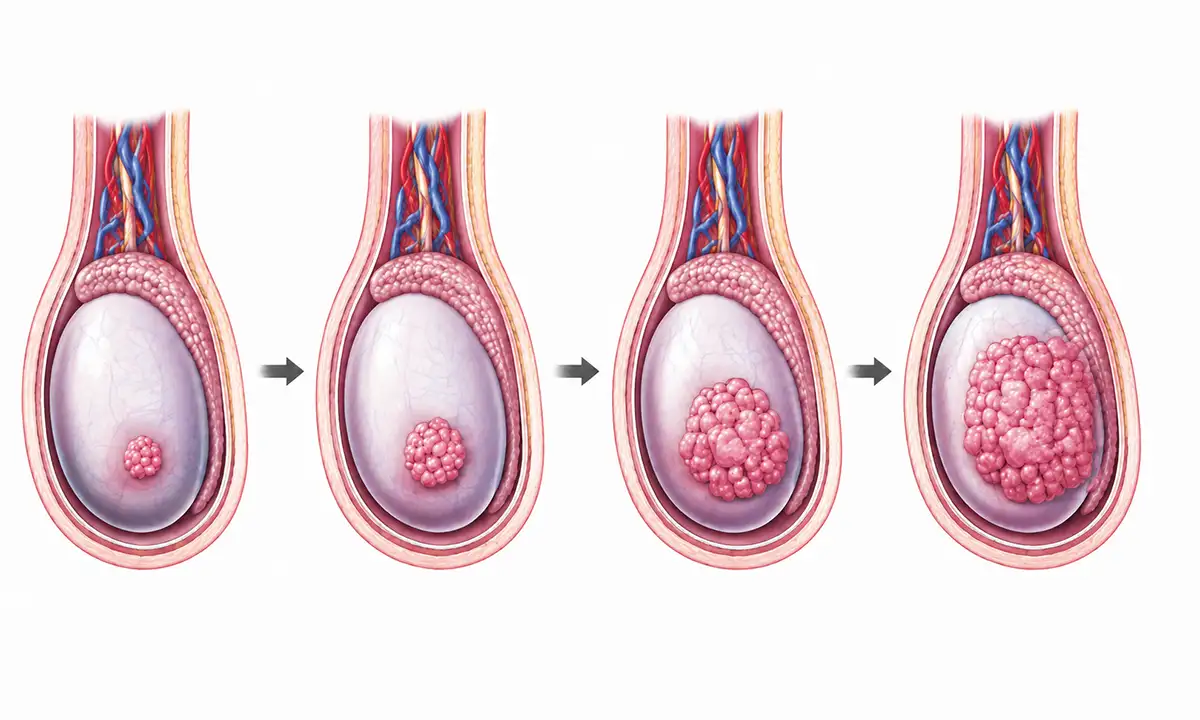
Typical symptoms and signs of testicular cancer
1. Testicular lump
Painless testicular enlargement or a testicular mass is the most common symptom; the mass is firm in texture with a smooth or irregular surface.
2. Testicular pain
Approximately 10% of patients experience testicular pain or a sensation of heaviness; differential diagnosis is required to distinguish this from orchitis and epididymitis.
3. Sense of heaviness
A sensation of heaviness or a dragging feeling occurs in the affected testis, which is particularly noticeable when standing.
4. Breast development
Tumor secretion of HCG can lead to gynecomastia and nipple tenderness.
5. Lower back pain
Compression of nerves by retroperitoneal lymph node metastasis can cause lower back pain.
6. Dyspnea (shortness of breath)
Lung metastases can cause coughing, chest pain, and difficulty breathing.
What are the diagnostic methods for testicular cancer
1. Physical examination
Carefully palpate the testes to assess size, texture, and the presence of nodules or tenderness, and evaluate other intrascrotal structures.
2. Testicular ultrasound
Ultrasound is the preferred method for evaluating testicular masses; it can distinguish between solid and cystic lesions and assess tumor size and extent.
3. Tumor markers
AFP, HCG, and LDH are the most important markers for testicular cancer, aiding in diagnosis, staging, and monitoring treatment efficacy.
4. Chest CT
Chest CT is used to assess pulmonary metastasis and is an important component of staging examinations.
5. Abdominal CT scan
Abdominal CT is used to evaluate retroperitoneal lymph node metastasis and serves as a key basis for staging.
6. Pathological diagnosis
Pathological examination following radical orchiectomy is the gold standard for definitive diagnosis, requiring clear identification of the pathological type.
Testicular Cancer Treatment Methods
1. Radical orchiectomy
Radical orchiectomy via the inguinal approach is the initial step in both diagnosis and treatment.
2. Retroperitoneal lymph node dissection
For patients with high-risk non-seminoma or those showing residual retroperitoneal lymph nodes on imaging, retroperitoneal lymph node dissection may be performed.
3. Chemotherapy
The platinum-based BEP regimen (bleomycin + etoposide + cisplatin) is the standard chemotherapy for testicular cancer and offers a high cure rate.
4. Radiotherapy
Seminoma is sensitive to radiotherapy, which can be used as postoperative adjuvant therapy for patients with stage I or II disease.
5. Fertility preservation
Sperm cryopreservation is recommended prior to treatment, and sperm recovery should be monitored postoperatively.
6. Nerve-sparing lymph node dissection
Modified lymph node dissection that preserves the sympathetic nerve chain can reduce the risk of postoperative ejaculatory dysfunction.
7.Salvage therapy
Patients with recurrent disease may undergo salvage therapies, such as high-dose chemotherapy combined with autologous stem cell transplantation.
8. Follow-up monitoring
Long-term follow-up—including regular physical examinations, tumor marker testing, and imaging studies—is crucial for monitoring recurrence.
Conclusion
Testicular cancer is the most common solid tumor in young and middle-aged men and is highly sensitive to chemotherapy.Through a comprehensive treatment approach involving surgery, chemotherapy, and radiotherapy, the vast majority of patients achieve long-term survival.


