


Indications
1. Applicable conditions
• Tumor lesions that are highly vascular, large in volume, or difficult to ablate completely in a single session
• Patients ineligible for surgical resection or those at high surgical risk.
• Patients requiring treatment to facilitate subsequent comprehensive therapy, reduce recurrence risk, or delay disease progression
2. Common indications
• Primary liver cancer and hepatic metastases (e.g., from colorectal cancer)
• Hypervascular tumors in organs such as the kidney or lung.
• Other regional solid tumors unsuitable for surgery.
Core Strengths
1. Minimally invasive: Transarterial puncture via a tiny incision; enables rapid postoperative recovery, shortens hospital stays, and reduces the physical burden on the patient.
2. Precise targeting: Precisely acts on the tumor's blood-supplying arteries, enhancing local tumor control while maximizing the protection of normal tissue.
3. Low systemic side effects: Localized drug action reduces systemic distribution, leading to better patient tolerance.
4. Strong technical synergy: Can be combined with ablation, radiotherapy, systemic therapy, etc., to optimize comprehensive treatment strategies.
5. Personalized treatment plans: Flexible selection of techniques such as TACE and D-TACE based on tumor blood supply and the patient's physical condition
6. Creating a window for subsequent treatment: Effectively controls tumor growth, establishing favorable conditions for follow-up treatments.
Technical advantages
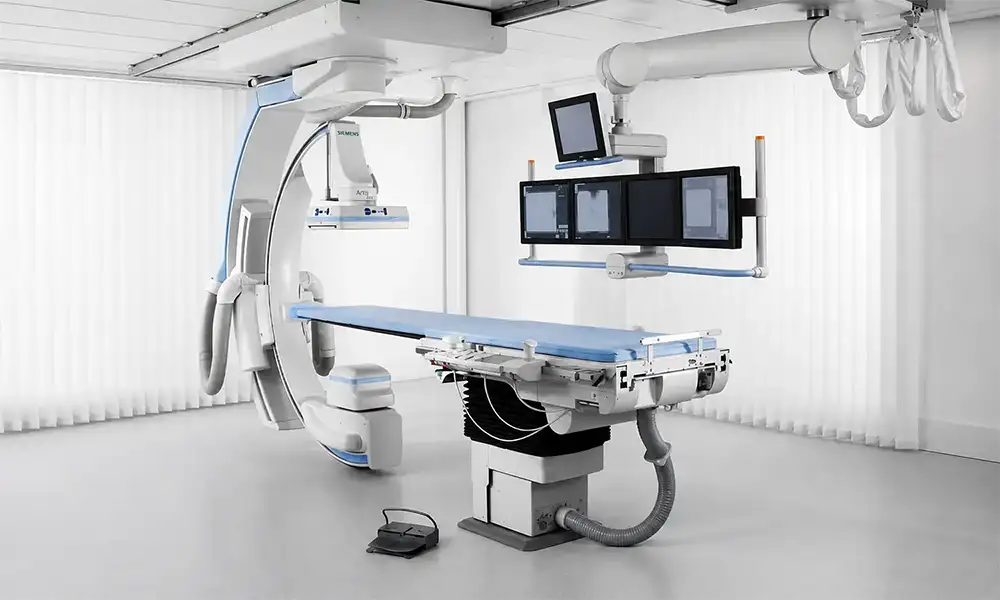
Institutions under the Fosun Health Group—such as Shenzhen Hengsheng Hospital and Foshan Fosun Chancheng Hospital—possess mature systems for minimally invasive interventional oncology and extensive clinical experience.Led by senior experts and utilizing a multidisciplinary team (MDT) approach combined with advanced DSA image-guided technology, the interventional team achieves super-selective catheterization of tumor-feeding arteries for the precise delivery of drugs and embolic agents.Personalized treatment plans are formulated through MDT discussions prior to the procedure, while post-operative follow-up and efficacy assessments allow for the dynamic optimization of treatment strategies, helping patients achieve more stable local tumor control within a manageable risk profile.
Technical definition
Minimally invasive interventional oncology (TACE/D-TACE) is a technique that uses imaging guidance (such as DSA) to precisely navigate a catheter through the arteries to the tumor's blood supply, achieving local tumor control through targeted drug delivery or embolization.TACE involves arterial perfusion chemotherapy combined with embolization; D-TACE (drug-eluting bead embolization) utilizes microspheres loaded with chemotherapy drugs to achieve the dual effects of embolization and sustained drug release.
Working principle
1. TACI: Local "perfusion-type" drug delivery
Delivers chemotherapy drugs via catheter directly into the arteries supplying the tumor, creating high-concentration exposure in the lesion area to control tumor growth and shrink the lesion.
2. TACE: A "dual-hit" approach combining drug administration and embolization
Following local drug administration, embolic agents are used to block the tumor's blood supply, inducing a state of ischemia and hypoxia; this prolongs the drug's local retention time, thereby enhancing local tumor-killing and shrinkage effects.
3. D-TACE: "Durable embolization + slow drug release"
Chemotherapy drugs are loaded onto embolic microspheres and delivered to the tumor's vascular bed under DSA guidance. The microspheres embolize the blood-supplying vessels while simultaneously releasing the drug locally in a controlled manner. This achieves a sustained dual effect of local "blood supply cutoff" and "drug delivery," thereby enhancing long-term control over tumor cells.
Treatment process
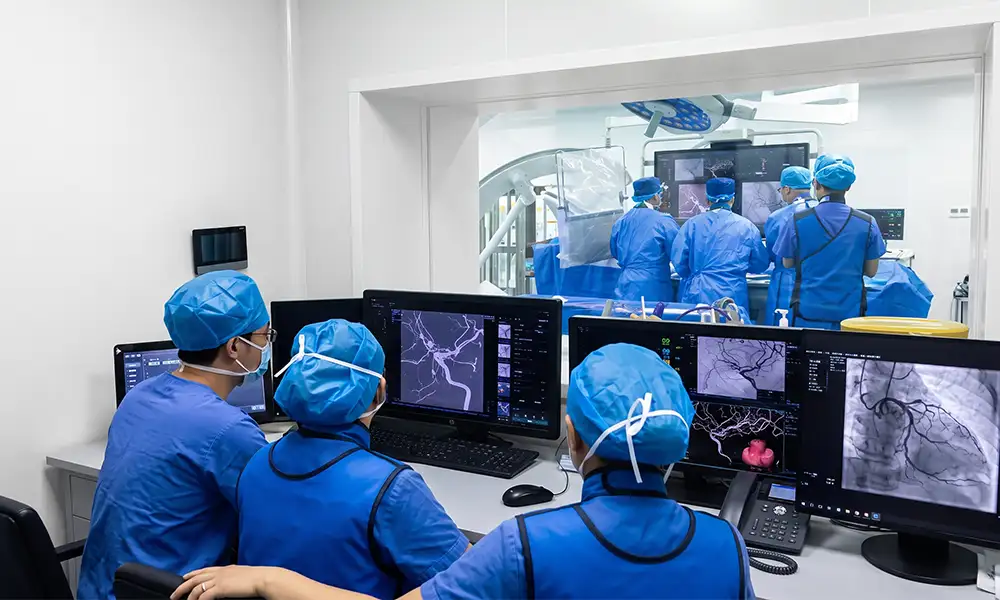
1. Preoperative assessment: Complete imaging studies and assessments of liver/kidney function and coagulation status; the MDT team discusses and determines an individualized treatment plan.
2. DSA angiography: Identifies tumor-feeding arteries, communicating branches, and at-risk vessels, providing a basis for precise intervention.
3. Super-selective catheterization: precisely guides the catheter into the tumor's primary blood-supplying branches to minimize impact on normal tissue
4. Treatment implementation:
• TACI: Transarterial drug perfusion performed according to the protocol;
• TACE: Combined embolization following drug perfusion;
• D-TACE: Delivery of drug-loaded microspheres to achieve embolization and localized sustained drug release.
5. Postoperative observation and follow-up: Monitor the patient's vital signs and changes in liver function; conduct scheduled imaging assessments to evaluate treatment efficacy and formulate a follow-up treatment plan.
Safety and Precautions
1. Preoperative MDT assessment: Systematically evaluate liver function, tumor burden, vascular anatomy, etc.; select the appropriate technique and treatment scope; and ensure treatment safety.
2. Precision image guidance: Continuous DSA guidance emphasizing super-selective procedures to reduce the risk of damage to normal tissue.
3. Common post-operative reactions: Some patients may experience fatigue, loss of appetite, mild fever, or discomfort in the liver region; these are mostly short-term reactions and require only observation as advised by the doctor.
4. Management of abnormal conditions: Seek immediate medical attention if symptoms such as persistent high fever, severe abdominal pain, worsening jaundice, or a tendency to bleed occur.
5. Puncture site care: Follow medical orders regarding bed rest and immobilization post-procedure; keep the puncture site clean and dry;and avoid strenuous exercise in the short term.
6. Regular follow-up and re-evaluation: Scheduled re-examination of liver function and imaging studies to assess local disease control and dynamically adjust the treatment plan.
7. Coordination of combination therapy: When interventional therapy is combined with other treatments, the MDT team coordinates the treatment schedule; do not alter the plan on your own.
FAQs
1. What is minimally invasive interventional therapy for tumors?
This type of treatment is typically performed under DSA image guidance; a fine catheter is inserted via an artery in the wrist or groin to reach the tumor's blood supply, allowing for local drug delivery or vascular embolization.It is not equivalent to surgical resection but rather serves as a method for local disease control.
2. What are the differences between TACI, TACE, and drug-eluting microsphere embolization?
TACI primarily involves the local arterial infusion of drugs; TACE involves embolizing the tumor's blood supply vessels while simultaneously administering drugs; Drug-eluting bead TACE (often abbreviated as DEB-TACE) utilizes microspheres capable of carrying and slowly releasing drugs to perform embolization.Specific treatment plans are selected based on the tumor's blood supply and organ function.
3. Which patients may be suitable for interventional therapy?
Commonly used for liver cancer cases that are not amenable to direct surgery or require local control; also applicable to certain hypervascular tumors, metastatic lesions, or tumor-related bleeding.Not all tumors are suitable candidates; specifically, liver and kidney function, coagulation status, and vascular conditions require assessment.
4. How does the catheter locate the tumor's blood supply vessels?
Physicians first perform angiography to identify the tumor's primary feeding arteries and normal branches that must be avoided, then super-selectively navigate a microcatheter to the target vessel for treatment, thereby minimizing the impact on normal tissue.
5. Why do some patients require multiple treatments?
Interventional therapy is typically a staged, repeatable form of local treatment.Decisions regarding repeat treatments depend on follow-up imaging, residual tumor blood supply, organ function, and the overall treatment plan; more treatments do not necessarily equate to better outcomes.
6. Is post-operative fever or pain normal?
Some patients may experience fever, fatigue, nausea, loss of appetite, or pain in the treatment area; this is known as post-embolization syndrome.Seek medical attention promptly if you experience persistent high fever, severe pain, worsening jaundice, altered consciousness, or continuous bleeding at the puncture site.


