


What is gastric cancer
Gastric cancer is a tumor formed by malignant proliferation of gastric mucosal epithelial cells. The stomach stores food, secretes gastric juice, and begins digestion. Cancer can develop in any part of it.
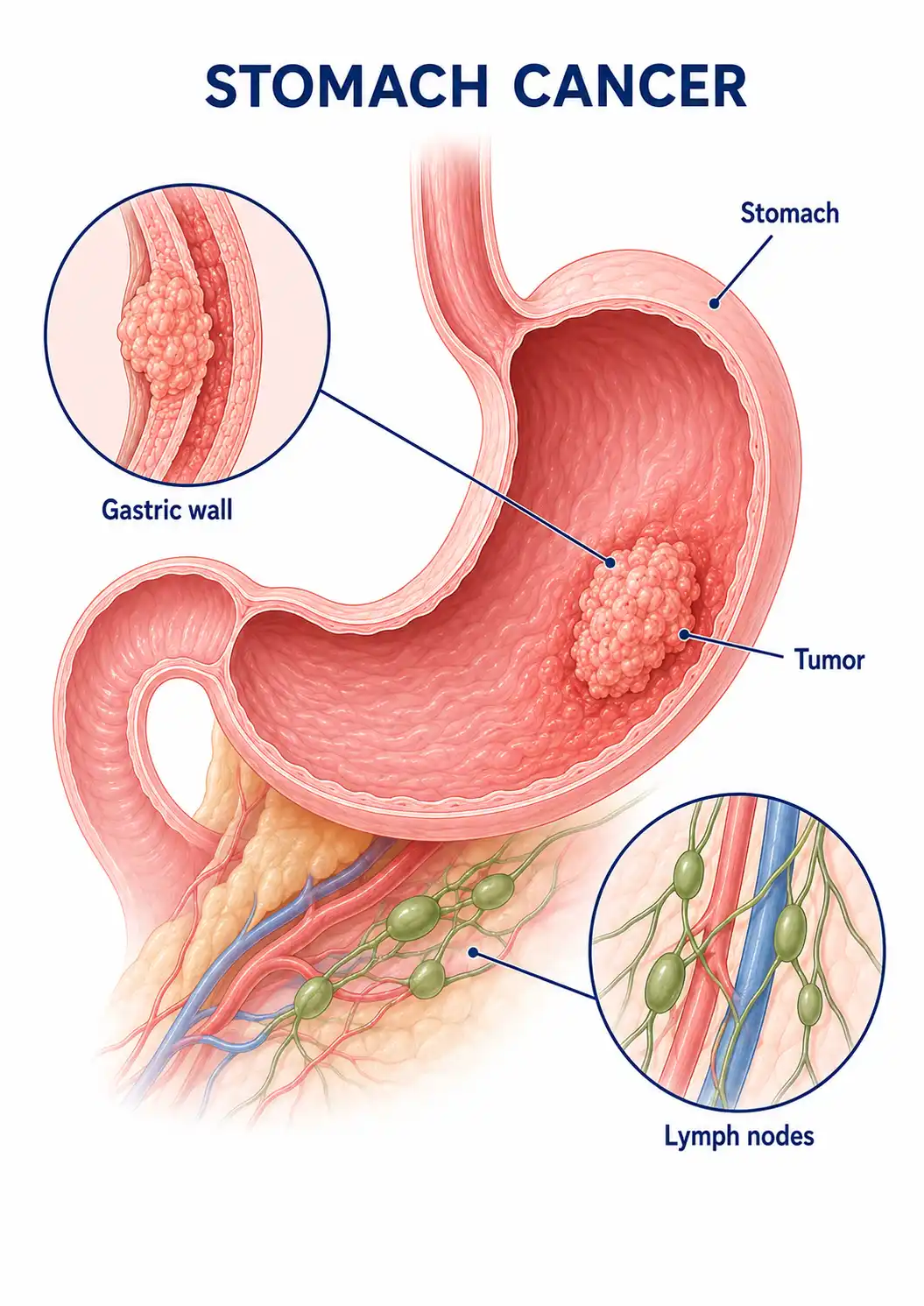
The global situation regarding gastric cancer
Gastric cancer remains a leading cancer worldwide for incidence and mortality, with about one million new cases each year. Rates are higher in parts of East Asia, Eastern Europe, and South America. Helicobacter pylori infection, tobacco, and diets high in salt or preserved foods are important risk factors.
Consult a doctor regarding cancer-related issues
Anyone with upper abdominal fullness or discomfort, reduced appetite, weight loss, black stools, or vomiting blood should promptly consult a gastroenterologist or gastrointestinal surgeon, especially those with a family history of gastric cancer or chronic gastric disease.
Main types of gastric cancer
1. Gastric adenocarcinoma
The most common pathological type, accounting for over 95%, includes papillary, tubular, poorly differentiated, and signet-ring cell adenocarcinoma.
2. Gastroesophageal junction cancer
A malignancy at the junction of the stomach and esophagus, its incidence has risen recently. Its biological behavior and treatment strategies overlap with both gastric and esophageal cancer.
3. Signet-ring cell carcinoma
A special type of poorly differentiated adenocarcinoma, its mucus-filled cells push the nucleus to one side, creating a signet-ring appearance. It is more common in younger patients and is highly invasive.
4. Gastric hepatoid adenocarcinoma
This gastric cancer shows hepatocellular carcinoma-like differentiation and may secrete alpha-fetoprotein. Liver and lymph node metastases occur readily, and prognosis is poor.
5. Gastric neuroendocrine carcinoma
Arising from gastric endocrine cells, these include well-differentiated neuroendocrine tumors and poorly differentiated neuroendocrine carcinomas. The latter are highly malignant with a poor prognosis.
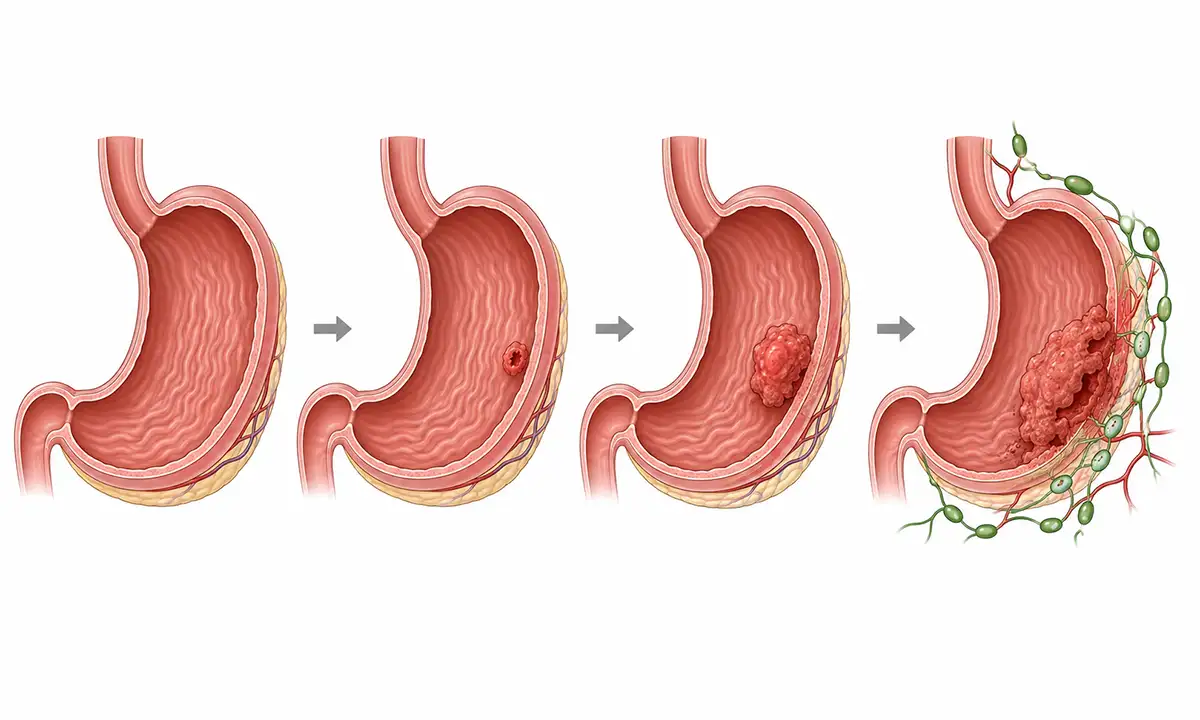
Typical symptoms and signs of gastric cancer
1. Upper abdominal fullness
Early gastric cancer often lacks specific symptoms. Upper abdominal fullness, discomfort, or dull pain may worsen after meals and be mistaken for gastritis or indigestion, delaying care.
2. Reduced appetite
Unexplained loss of appetite, belching, acid reflux, and nausea reduce food intake, with weakness and weight loss.
3. Gastrointestinal bleeding
Ulceration and bleeding of the tumor surface cause black stools or vomiting blood. Chronic blood loss causes anemia, with pallor, dizziness, and weakness.
4. Weight loss
Marked short-term weight loss with anemia and weakness is an important manifestation of progressive gastric cancer, indicating inadequate nutrition and tumor-related consumption.
5. Abdominal pain
Persistent worsening stomach pain radiating to the back suggests possible pancreatic and abdominal nerve plexus invasion and is an important sign of progression.
6. Nausea and vomiting
Tumor-related narrowing or obstruction of the stomach causes nausea and vomiting. Cardia cancer may cause progressively worsening swallowing difficulty.
How is gastric cancer diagnosed
1. Gastroscopy
Gastroscopy is the gold standard for diagnosing gastric cancer. It directly shows lesion location, shape, and extent and allows biopsy of suspicious areas for pathological diagnosis.
2. Upper gastrointestinal contrast imaging
Double-contrast air-barium imaging shows filling defects, ulcer niches, and changes in gastric mucosal folds, helping assess lesion extent.
3. Contrast-enhanced CT scan
Contrast-enhanced abdominal CT is the preferred clinical staging method, assessing invasion depth, lymph node metastasis, and distant organ metastasis.
4. Tumor marker
CEA and CA19-9 are commonly used serological markers; the extent of their elevation correlates with tumor burden, and they can be used for auxiliary diagnosis and postoperative monitoring.
5. Endoscopic ultrasound
Endoscopic ultrasound clearly shows the layers and depth of tumor invasion in the gastric wall and surrounding lymph node metastasis, supporting preoperative staging.
6. Laparoscopic exploration
For peritoneal metastasis unclear on imaging, diagnostic laparoscopy directly examines the abdominal cavity and obtains biopsy samples for confirmation.
What treatments are available for gastric cancer
1. Surgical treatment
Radical surgery is the main treatment, including partial or total gastrectomy with lymph node dissection. Early-stage patients can achieve good surgical outcomes.
2. Laparoscopic surgery
Laparoscopic gastric cancer resection causes less trauma and faster recovery, suitable for early and selected advanced cases, and is an important direction in minimally invasive surgery.
3. Chemotherapy
Postoperative adjuvant chemotherapy reduces recurrence risk, while neoadjuvant chemotherapy shrinks tumors to facilitate surgery. Platinum and fluoropyrimidine drugs are commonly used.
4. Targeted therapy
Trastuzumab treats HER2-positive advanced gastric cancer. Antiangiogenic drugs such as apatinib may be used as second-line treatment in advanced disease.
5. Immunotherapy
PD-1 inhibitors with chemotherapy have been approved for first-line treatment of advanced gastric cancer, offering new hope.
6. Radiotherapy
Postoperative adjuvant radiotherapy reduces local recurrence, while palliative radiotherapy relieves bleeding, pain, and obstruction.
7. Nutritional support
Nutritional support continues throughout treatment. Better nutrition improves treatment tolerance and outcomes. Dietary adjustments are needed after gastrectomy.
8. Follow-up monitoring
Regular postoperative gastroscopy, abdominal CT, and tumor marker testing monitor recurrence and metastasis. Long-term follow-up is essential.
Conclusion
Gastric cancer is a common digestive malignancy worldwide. Early symptoms are often nonspecific and may include upper abdominal discomfort, reduced appetite, or mild anemia. Endoscopy with pathological assessment supports early diagnosis, while standardized multidisciplinary treatment can improve outcomes.


