


What is buccal mucosal cancer
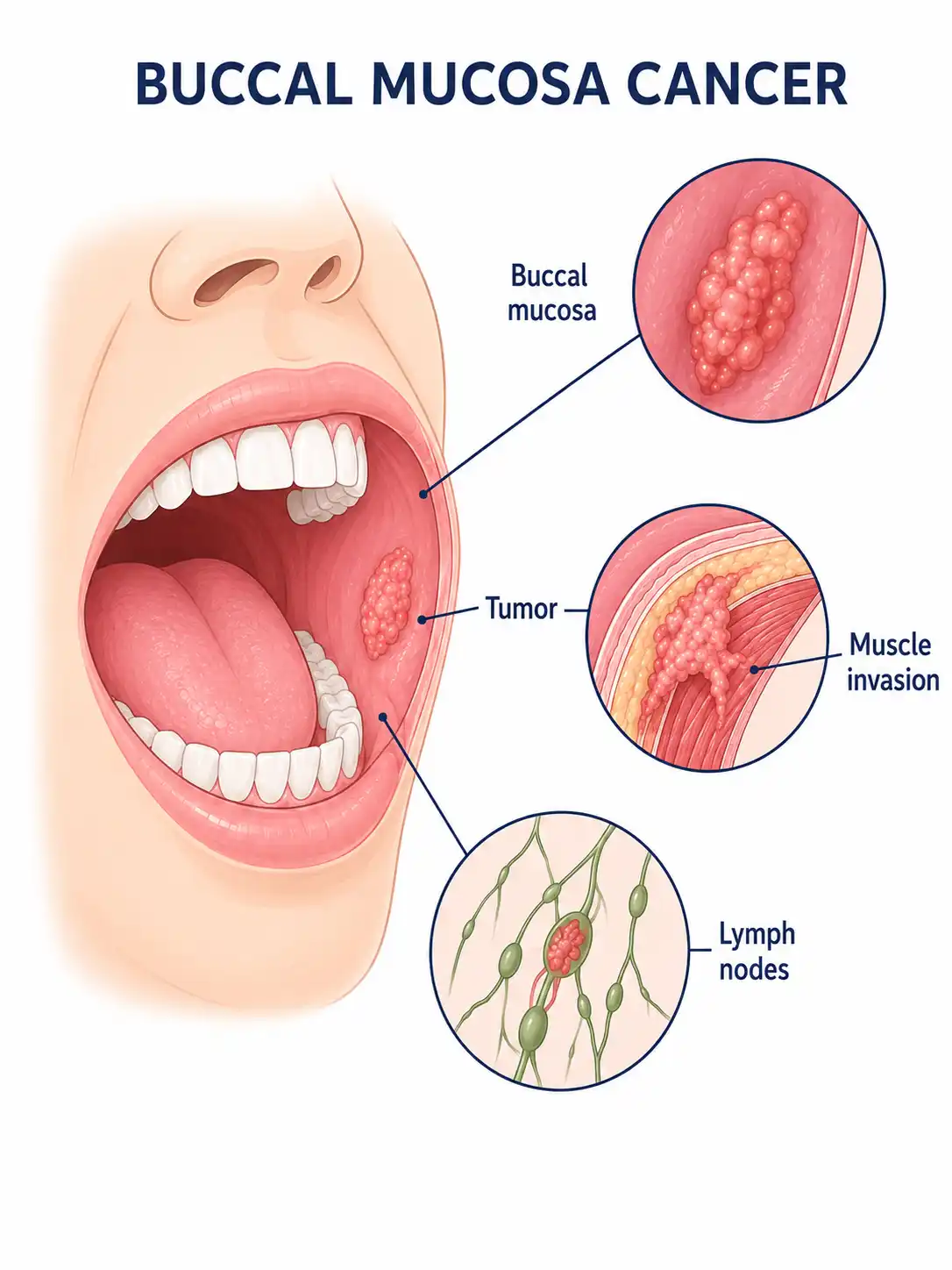
Buccal mucosal cancer is a tumor formed by malignant proliferation of epithelial cells in the oral mucosa of the cheek. The buccal mucosa covers the inner cheek, with the occlusal line dividing its upper and lower portions.
The global situation regarding buccal mucosal cancer
Buccal mucosal cancer is a form of oral cancer with a higher burden in parts of South and Southeast Asia. It is strongly associated with betel-quid chewing, smokeless tobacco, smoking, and alcohol use and is generally more common in men.
Consult a doctor regarding cancer-related issues
Anyone with white or red patches on the cheek mucosa, persistent ulcers, cheek lumps, or restricted mouth opening should promptly consult an oral and maxillofacial surgeon, especially habitual betel nut chewers.
Main types of buccal mucosal cancer
1. Squamous cell carcinoma
This is the most common pathological type, accounting for the vast majority of buccal mucosal cancers. It is closely associated with betel nut and tobacco irritation and may grow as a cauliflower-like or ulcerative lesion.
2. Verrucous carcinoma
A very well-differentiated squamous cell carcinoma with exophytic papillary or warty growth, it is locally invasive but has a low metastatic rate.
3. Adenocarcinoma types
Arising from minor salivary glands in the buccal mucosa, it is relatively rare, with diverse pathological types and biological behavior differing from squamous cell carcinoma.
4. Carcinoma in situ
Cancer cells are confined to the epithelial layer without crossing the basement membrane. This is the earliest stage, and prompt removal can achieve good disease control.
5. Basaloid squamous cell carcinoma
This relatively rare type consists of basaloid and squamous cell components. It is highly invasive and has a poorer prognosis than conventional squamous cell carcinoma.
Typical symptoms and signs of buccal mucosal cancer
1. White and red patches on the cheek
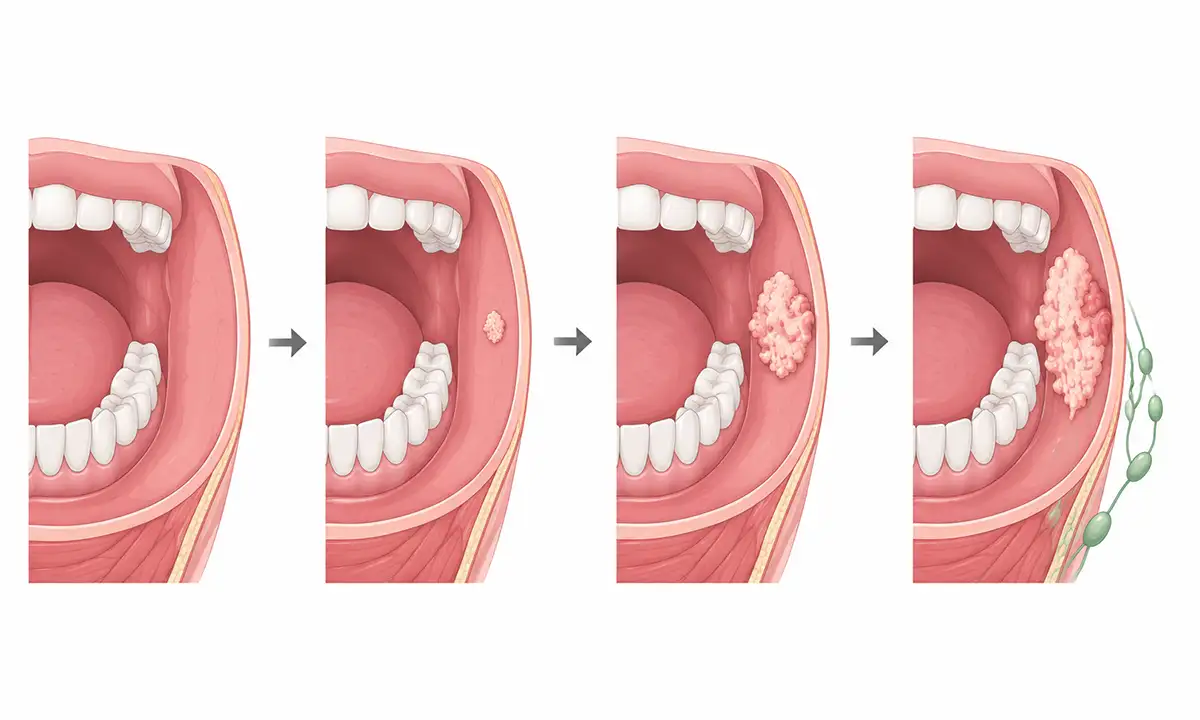
Early disease may present as well-defined white or red patches on the cheek mucosa that persist without fading, indicating abnormal mucosal epithelial proliferation.
2. Non-healing ulcer
An ulcerative cheek lesion that does not heal within two weeks, with raised edges, an uneven base, and easy bleeding on contact, is a typical manifestation of oral cancer.
3. Cheek lump
The enlarging tumor forms a relatively hard lump that may protrude from the surface or infiltrate deeply, sometimes with pain and numbness.
4. Restricted mouth opening
Invasion of the masseter or temporalis muscle can cause difficulty opening the mouth, affecting eating and speech. In severe cases, mouth opening is less than one finger-width.
5. Loose teeth
Invasion of the gums and alveolar bone can cause tooth loosening, displacement, or loss, with persistently unhealed extraction wounds.
6. Neck lump
Buccal mucosal cancer readily spreads to cervical lymph nodes, producing palpable hard, enlarged nodes below the mandibular angle or in the neck.
How is buccal mucosal cancer diagnosed
1. Oral examination
The doctor visually examines and palpates the cheek mucosa to assess color, consistency, and lumps, and observes ulcer shape and edge characteristics.
2. Biopsy pathology
Pathological examination of an incisional tissue sample is the gold standard for diagnosing buccal mucosal cancer and determines pathological type and differentiation.
3. Contrast-enhanced CT or MRI
CT or MRI assesses tumor invasion depth, its relationship to surrounding tissues, and cervical lymph node metastasis.
4. Neck ultrasound
Ultrasound assesses the size, shape, and internal structure of cervical lymph nodes, helping with staging and treatment planning.
5. Chest CT scan
Chest CT is used to rule out pulmonary metastasis and is an essential component of routine preoperative staging examinations.
6. Panoramic radiography
A panoramic dental radiograph assesses the tumor's relationship to the jaw and whether bone invasion is present.
What treatments are available for buccal mucosal cancer
1. Surgical treatment
Wide local excision is the main treatment for buccal mucosal cancer, requiring adequate safe margins and, when necessary, partial jaw resection and neck dissection.
2. Repair and reconstruction
Extensive resection requires free-flap reconstruction to restore cheek contour and tissue continuity and improve mouth opening and chewing.
3. Radiotherapy
Small early tumors may be treated with radiotherapy alone. Postoperative adjuvant radiotherapy reduces local recurrence in intermediate and advanced disease.
4. Chemotherapy
Chemotherapy is mainly used for palliation in advanced disease or as part of preoperative neoadjuvant treatment and concurrent chemoradiotherapy.
5. Concurrent chemoradiotherapy
Concurrent chemoradiotherapy is suitable for unresectable locally advanced disease or as adjuvant treatment for high-risk postoperative patients.
6. Targeted therapy
Anti-EGFR targeted drugs such as cetuximab can treat advanced buccal mucosal cancer and improve efficacy when combined with chemotherapy.
7. Functional exercises
Postoperative mouth-opening and chewing exercises help improve mouth opening and prevent scar contracture.
Conclusion
Buccal mucosal cancer is closely associated with betel nut chewing and smoking and mainly presents as cheek ulcers and lumps. Giving up harmful habits, promptly seeking care for oral abnormalities, and early detection followed by surgery help achieve better treatment outcomes.


