


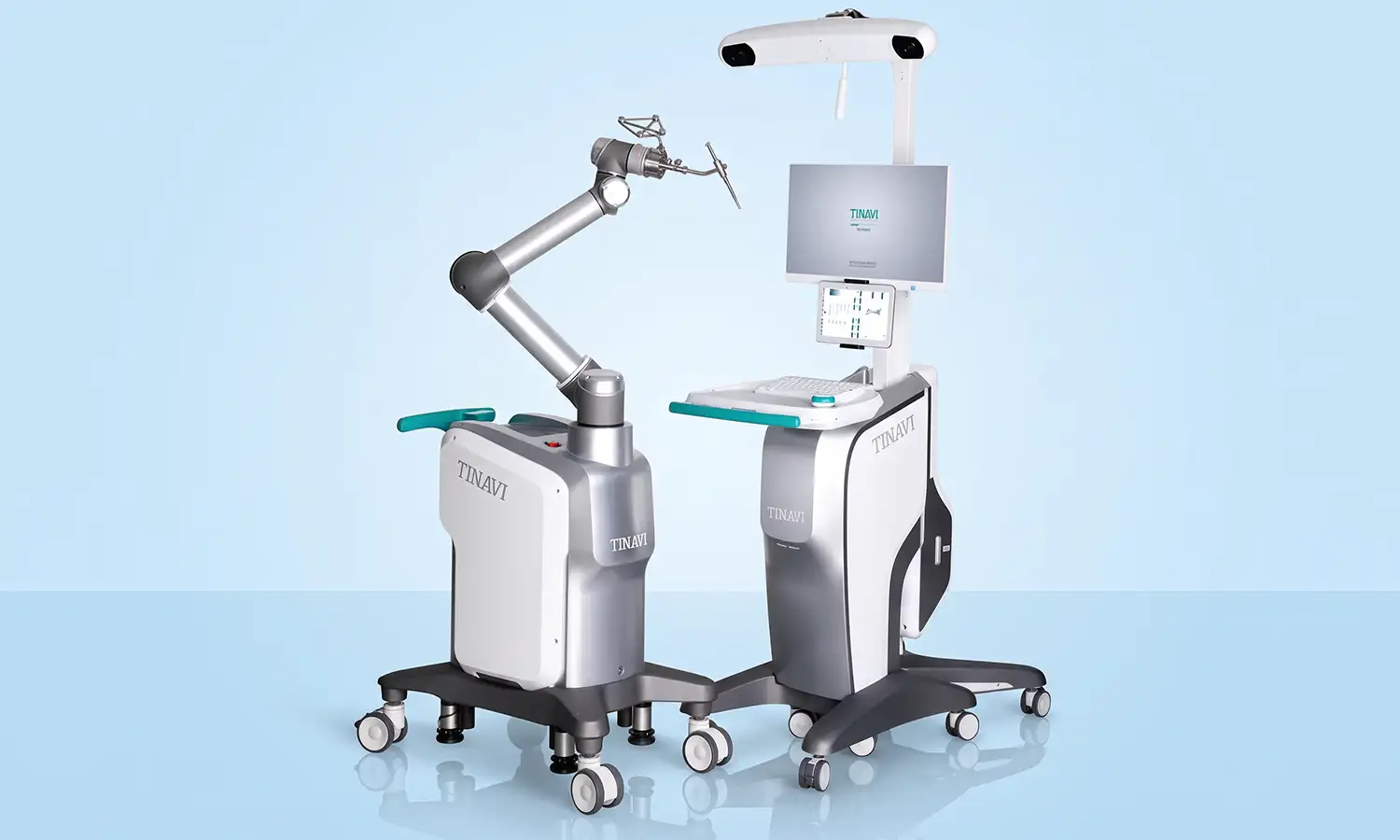
Developed by Beijing Tinavi Medical Technologies Co., Ltd., the "Tianji II" orthopedic surgical robot was the first system of its kind in China to receive registration certification from the National Medical Products Administration (NMPA).In 2023, the fourth-generation "Tianji II" obtained registration certification for indications across the entire spectrum of orthopedics, becoming the world's first orthopedic surgical robot capable of covering all orthopedic surgical areas (trauma, spine, and joints).The "Tianji II" robotic arm features a repetitive positioning accuracy of 0.1 mm, with clinical accuracy reaching the sub-millimeter level (<1 mm).By the end of 2025, the Tianji series of orthopedic robots had completed over 150,000 clinical surgeries across more than 200 medical institutions nationwide.In 2025 alone, Tianji orthopedic surgical robots performed over 49,000 surgeries.
Core Technologies
What is the "Tianji II" orthopedic surgical robot?
The "Tianji II" orthopedic surgical robot is a high-precision navigation and positioning system designed to assist orthopedic surgeons in performing precise, minimally invasive procedures.Rather than performing surgery autonomously, it comprises three main components: the host computer (the "brain"), the optical tracking system (the "eyes"), and the robotic arm (the "hand").The system captures real-time positional data of instruments and bones via optical tracking; the host computer plans the optimal surgical path; and the robotic arm executes the procedure with precision—realizing a "surgeon-led, robot-assisted" approach to precise orthopedic surgery.
1. High-precision optical navigation and real-time tracking technology
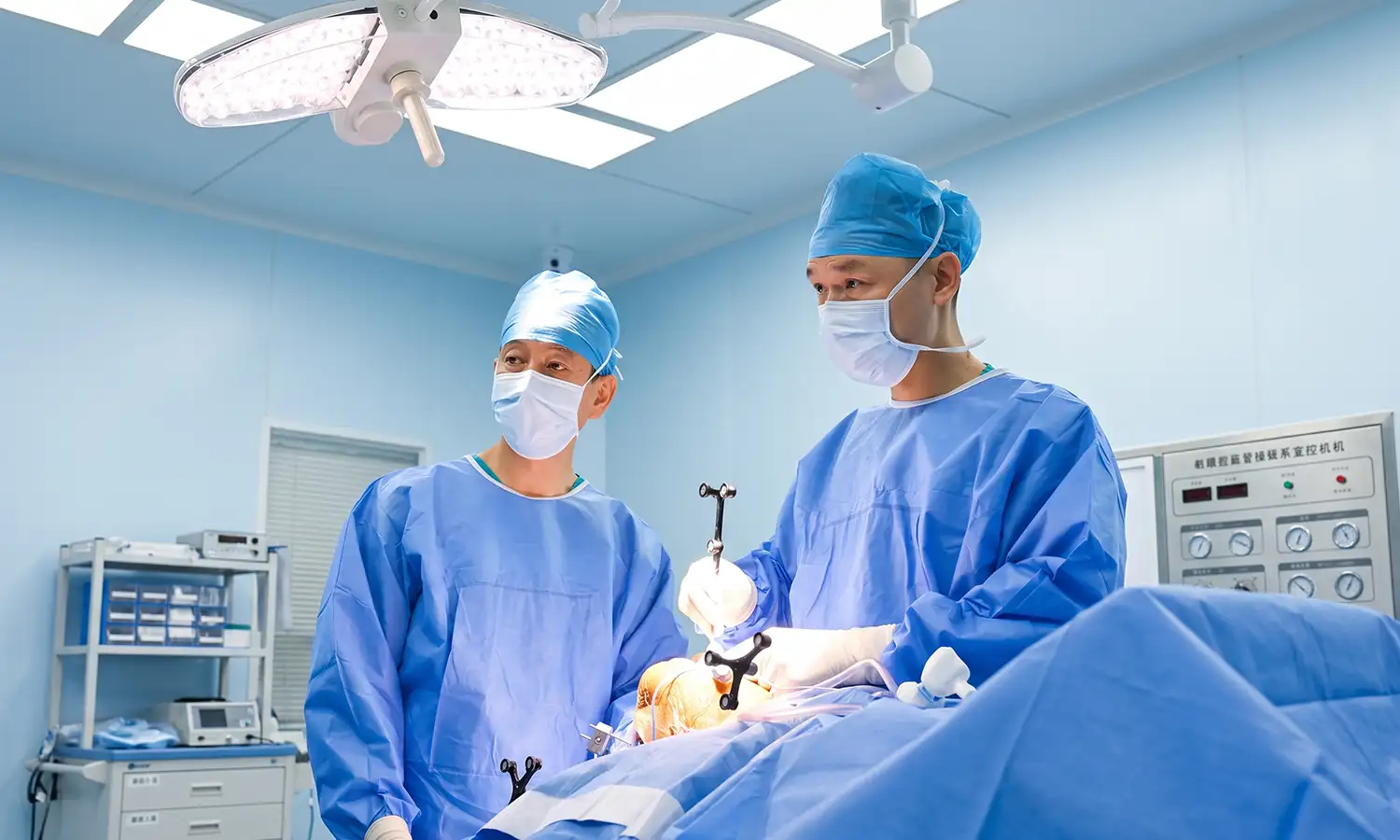
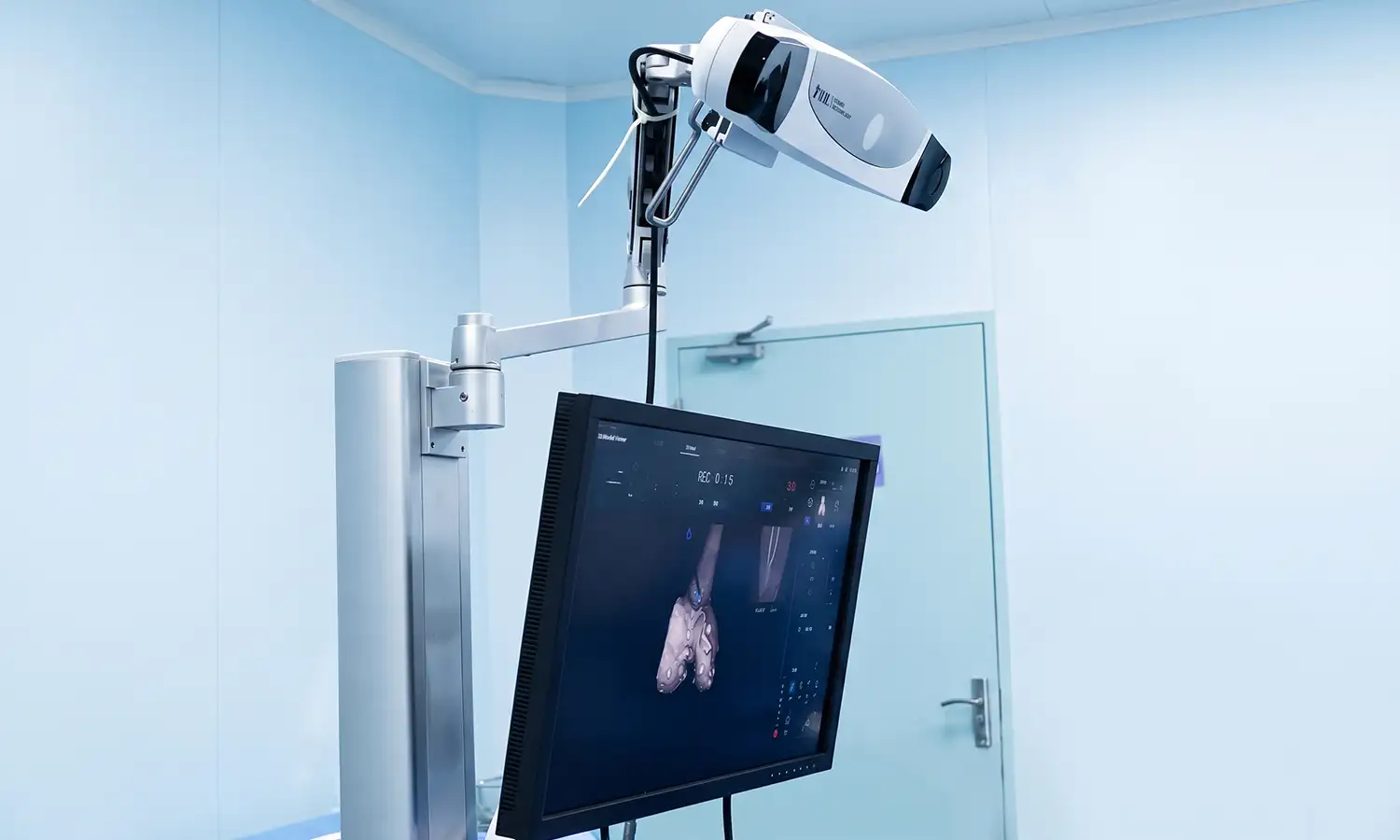
Equipped with a high-precision optical tracking system, "Tianji II" constructs 3D models using multi-dimensional CT image fusion technology and tracks the real-time positions of surgical instruments and bones during surgery.The system maps the surgical space and plans surgical paths based on intraoperative 3D and 2D images, precisely translating the pre-operative plan into actual execution.The robotic arm boasts a repetitive positioning accuracy of 0.1 mm, ensuring every movement is precise and controllable.
2. Intelligent surgical planning and precise execution by robotic arms
Utilizing preoperative CT scan data, the system constructs a dynamic 3D model of the patient's skeleton, precisely quantifying key parameters such as bone defects and deformity angles.Surgeons can simulate the osteotomy scope, implant size, and placement angles in a preoperative virtual environment to customize the surgical plan.During the procedure, the robotic arm provides stable positioning and operational guidance, automatically filtering out deviations caused by factors such as physiological tremors or fatigue during manual operation.In 2023, the "Tianji II" (Tiangui II) received registration certification for full orthopedic indications, becoming the world's first orthopedic surgical robot capable of covering the entire spectrum of orthopedic surgeries (trauma, spine, and joints).
Scope of Indications
The "Tianji II" orthopedic surgical robot is widely used in fields such as spinal surgery, orthopedic trauma, and joint surgery.
1. Areas for treatment/surgery
Field Primary Applications
Spinal Surgery Full-segment spinal surgery (cervical, thoracic, lumbar, and sacral); pedicle screw internal fixation; spinal deformity correction, etc.
Trauma Orthopedics Fracture fixation surgeries for pelvic, acetabular, femoral neck, hand, and foot fractures, etc.
Joint Surgery Total knee arthroplasty, unicompartmental knee arthroplasty, etc.
2. Suitable patient population
• Patients requiring spinal surgery
For patients undergoing spinal surgeries such as pedicle screw fixation or spinal deformity correction, the "Tianji II" system enables screw placement with sub-millimeter precision, significantly minimizing the risk of injury to surrounding nerves and blood vessels.
• Patients requiring surgery for complex fractures, such as those of the pelvis or acetabulum
Anatomical structures such as the pelvis and acetabulum are complex, making traditional surgery high-risk.The "Tianji II" system's precision navigation and real-time tracking technologies enable precise fixation via minimally invasive procedures.
• Patients requiring joint replacement
For patients requiring joint replacement due to conditions like osteoarthritis, the "Tianji II" system utilizes preoperative 3D dynamic models to precisely plan the scope of osteotomy and the angle of prosthesis placement.This reduces operative time by approximately 30% compared to traditional surgery and significantly decreases blood loss.
Core Strengths
Comparison Dimension Conventional Orthopedic Surgery "Tianji II" Orthopedic Surgical Robot
Surgical Precision Millimeter-level; relies on surgeon experience Sub-millimeter level (<1mm); precise positioning via navigation
Incision size Relatively large incision with extensive muscle dissection "Keyhole" incisions; minimally invasive implantation
Intraoperative bleeding Significant blood loss Blood loss reduced by over 90%
Surgery time Relatively long Reduced by approximately 30%; higher efficiency
Hospital stay duration Longer Reduced by 5–7 days
Intraoperative radiation Requires repeated fluoroscopy;high radiation exposure Substantial reduction in intraoperative radiation
Operational stability Subject to physiological tremor and fatigue-induced errors Stable holding by robotic arm; elimination of human-induced errors
Postoperative recovery Slower recovery, significant pain Faster recovery, significantly reduced pain
Conventional Orthopedic Surgery
Conventional orthopedic surgery relies primarily on the surgeon's experience and manual technique; surgical precision is influenced by the surgeon's expertise, the available operating space, and patient physiology.Achieving accurate positioning presents challenges in cases involving complex skeletal structures or requiring precise implant placement.These procedures typically necessitate larger incisions and tissue dissection, which may increase intraoperative blood loss and the burden of postoperative recovery.Additionally, the need for repeated fluoroscopic imaging for positioning guidance can result in significant radiation exposure for both patients and medical staff.
"Tianji II" Orthopedic Surgical Robot
Compared to traditional surgical methods, robot-assisted technology enables minimally invasive surgical approaches, reducing tissue damage and intraoperative blood loss. It also minimizes the need for repeated intraoperative fluoroscopy, thereby lowering radiation exposure.The robotic arm offers stable control, mitigating errors caused by hand tremors or fatigue; this enhances the precision and safety of complex orthopedic surgeries, helping to shorten patient recovery times and alleviate postoperative pain.
FAQ
1. Does the "Tianji II" orthopedic surgical robot perform surgery automatically?
No. "Tianji II" primarily assists physicians with preoperative or intraoperative planning, navigation, positioning, and robotic arm guidance. Actual surgical decisions and critical maneuvers are still performed by trained orthopedic surgeons;the device cannot replace the physician's independent judgment.
2. Which orthopedic surgeries might utilize the "Tianji II" system?
This system is applicable to select orthopedic surgeries requiring precise navigation and positioning, such as those for trauma involving the spine, pelvis, and limbs.Suitability is assessed by the orthopedic team based on the lesion site, surgical approach, imaging conditions, and the patient's physical status.
3. Does robot assistance necessarily mean a smaller incision?
Precision planning and navigation can facilitate minimally invasive procedures, but incision size is ultimately determined by the extent of the disease, fixation methods, and intraoperative conditions.Doctors may adjust the surgical approach based on safety requirements; the extent of surgical trauma cannot be judged solely by whether a robotic system is used.
4. Are X-ray or CT images still used during robot-assisted surgery?
Orthopedic navigation typically requires medical imaging for planning, registration, and position verification; the necessity and extent of intraoperative imaging depend on the specific surgical plan.The medical team implements appropriate radiation protection and dose control measures while ensuring surgical safety and meeting positioning requirements.
5. How do I inquire about "Tianji II" robot-assisted orthopedic surgery?
To determine your suitability for "Tianji II" robot-assisted orthopedic surgery, please provide recent X-ray, CT, or MRI images, diagnostic reports, records of past surgeries, information on any existing implants, and details regarding underlying medical conditions.Doctors will assess whether surgery is indicated and whether robot-assisted technology would offer tangible benefits for your specific procedure.