


What is thyroid cancer
Thyroid cancer is a tumor formed by malignant proliferation of thyroid follicular epithelial cells. The thyroid lies at the front of the neck and secretes thyroid hormones to regulate metabolism. Its two lobes are connected by the isthmus.
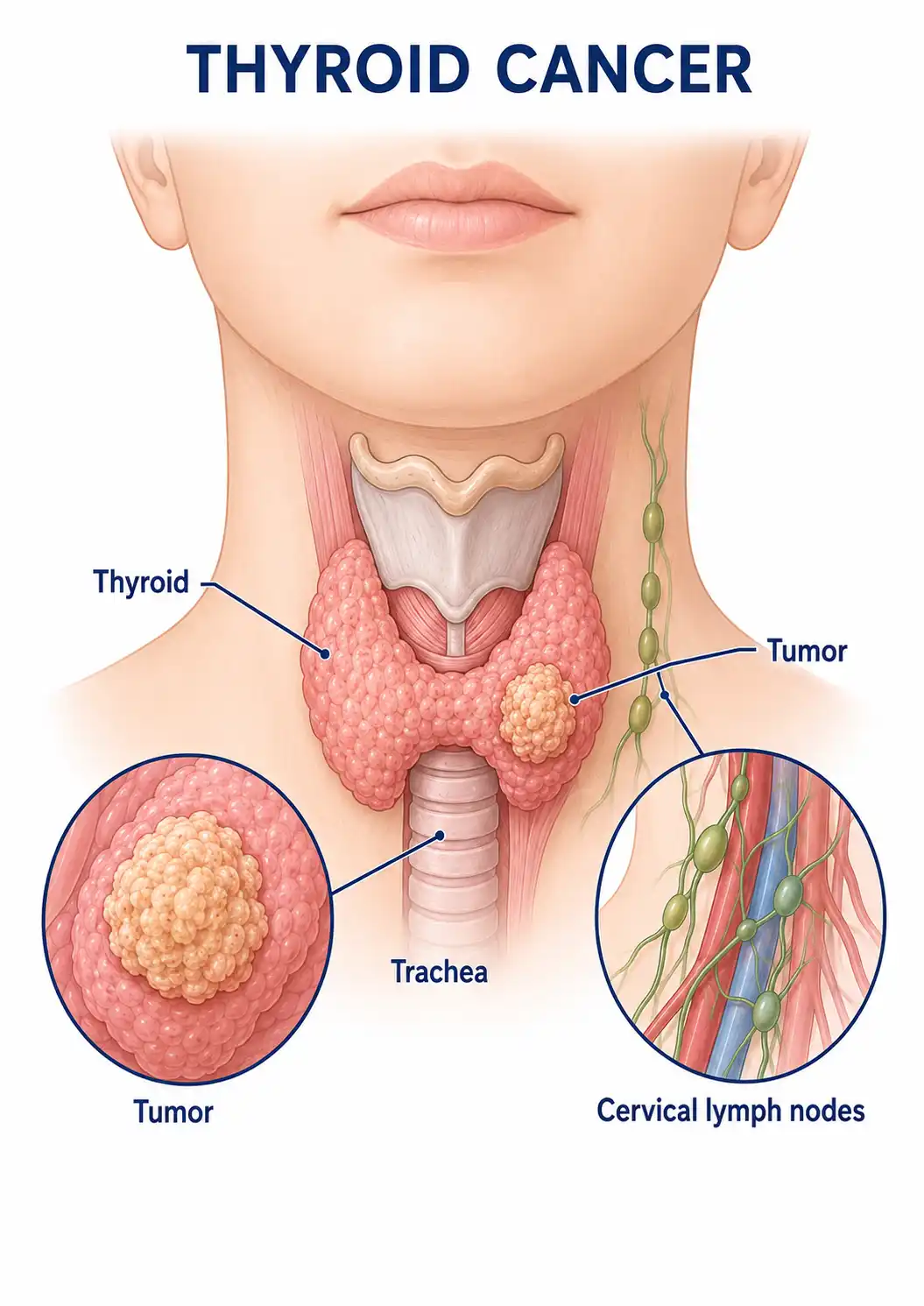
The global situation regarding thyroid cancer
Thyroid cancer is one of the malignancies with the fastest-growing incidence worldwide, predominantly affecting women. Most cases are differentiated thyroid cancer, with a good overall prognosis and high survival.
Consult a doctor regarding cancer-related issues
Anyone with a painless neck lump, hoarseness, difficulty swallowing, or enlarged cervical lymph nodes should promptly consult an endocrinologist or thyroid surgeon.
Main types of thyroid cancer
1. Papillary carcinoma
The most common type, accounting for over 80% of thyroid cancers, grows slowly and has a good prognosis. Cervical lymph node metastasis occurs readily, but distant metastasis is less common.
2. Follicular carcinoma
Accounting for about 10% of thyroid cancers, it is more common in iodine-deficient regions. Blood-borne spread to the lungs and bones is relatively common, and prognosis is slightly poorer than for papillary carcinoma.
3. Medullary carcinoma
Arising from thyroid parafollicular C cells, it may be sporadic or hereditary, secretes calcitonin, and has distinctive biological behavior and treatment strategies.
4. Anaplastic carcinoma
Extremely rare but highly malignant, it mainly affects older patients, grows rapidly, and may infiltrate extensively and metastasize early, with an extremely poor prognosis.
5. Oncocytic carcinoma
A special form of differentiated thyroid cancer, its cells contain abundant eosinophilic cytoplasmic granules and take up radioactive iodine poorly.
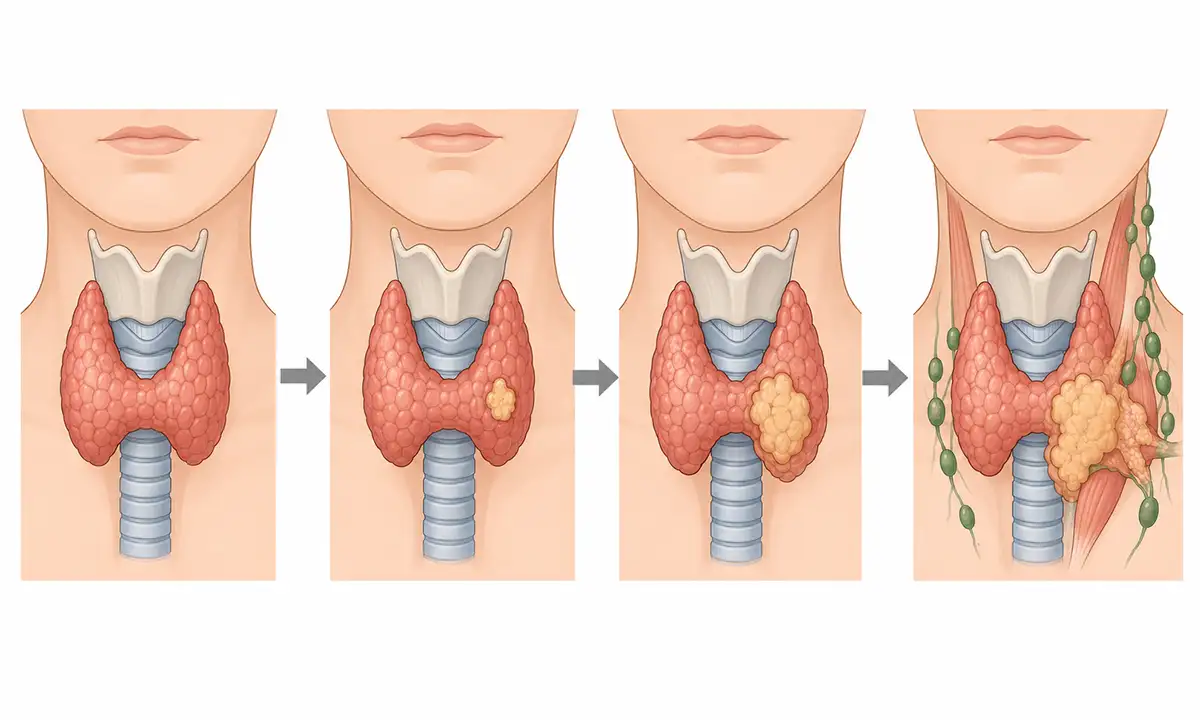
Typical symptoms and signs of thyroid cancer
1. Neck lump
A painless, relatively hard lump or nodule in the thyroid region is the most common initial symptom. It moves up and down with swallowing and grows slowly.
2. Hoarseness
Recurrent laryngeal nerve invasion causes hoarseness, indicating posterior tumor infiltration and serving as an important sign of progression.
3. Difficulty swallowing
An enlarging tumor compressing the esophagus causes swallowing discomfort, particularly with dry, hard foods, and must be distinguished from esophageal disease.
4. Dyspnea
A large tumor or retrosternal goiter compressing the trachea causes impaired breathing, worse when lying flat. Severe cases require emergency management.
5. Enlarged cervical lymph nodes
Papillary carcinoma can spread early to cervical lymph nodes, producing palpable hard, enlarged nodes on the side of the neck.
6. Diarrhea and facial flushing
Medullary thyroid cancer may cause persistent diarrhea and facial flushing due to tumor secretion of biologically active substances, an important distinguishing feature.
How is thyroid cancer diagnosed
1. Ultrasound examination
Thyroid ultrasound is the preferred examination, assessing nodule size, shape, borders, internal echoes, and blood flow. TI-RADS classification guides further management.
2. Fine-needle aspiration biopsy
Ultrasound-guided fine-needle aspiration of a thyroid nodule obtains cells for pathological examination and is the most reliable preoperative diagnostic method.
3. Thyroid function tests
Serum TSH, T3, and T4 assess thyroid function, which is usually normal in thyroid cancer patients.
4. Neck CT or MRI
Contrast-enhanced CT or MRI assesses the relationship of large tumors to surrounding structures and the extent of retrosternal goiter.
5. Calcitonin testing
Elevated serum calcitonin is a specific marker of medullary thyroid cancer, used for differential diagnosis and postoperative monitoring.
6. Genetic testing
RET mutation testing in medullary carcinoma determines whether the cancer is hereditary and guides family screening.
What treatments are available for thyroid cancer
1. Surgical treatment
Total or near-total thyroidectomy is the standard operation for differentiated thyroid cancer, with central compartment lymph node dissection. Lifelong thyroid hormone is required afterward.
2. Radioactive iodine therapy
Iodine-131 eliminates residual thyroid tissue and metastases after surgery, an adjuvant treatment specific to differentiated thyroid cancer.
3. Endocrine therapy
Postoperative levothyroxine sodium suppresses TSH to reduce recurrence risk while replacing thyroid function.
4. Targeted therapy
Multitarget tyrosine kinase inhibitors such as sorafenib and lenvatinib may be used for advanced radioactive iodine-refractory thyroid cancer.
5. External beam radiotherapy
External beam radiotherapy controls local progression of unresectable locally advanced tumors or postoperative residual disease.
6. Active surveillance
For low-risk papillary microcarcinoma, close follow-up instead of immediate surgery may be selected after fully informed consent.
7. Medullary carcinoma treatment
Medullary thyroid cancer is primarily treated surgically and does not require radioactive iodine therapy. Postoperative thyroid hormone replacement and calcitonin monitoring are needed.
8. Follow-up monitoring
Regular postoperative thyroglobulin testing, neck ultrasound, and whole-body iodine scans monitor recurrence and metastasis. Long-term follow-up is essential.
Conclusion
Thyroid cancer is the most common endocrine malignancy, with a favorable prognosis in most cases. Regular examinations, prompt care for neck lumps, standardized surgery, and postoperative adjuvant treatment can achieve long-term survival.


