


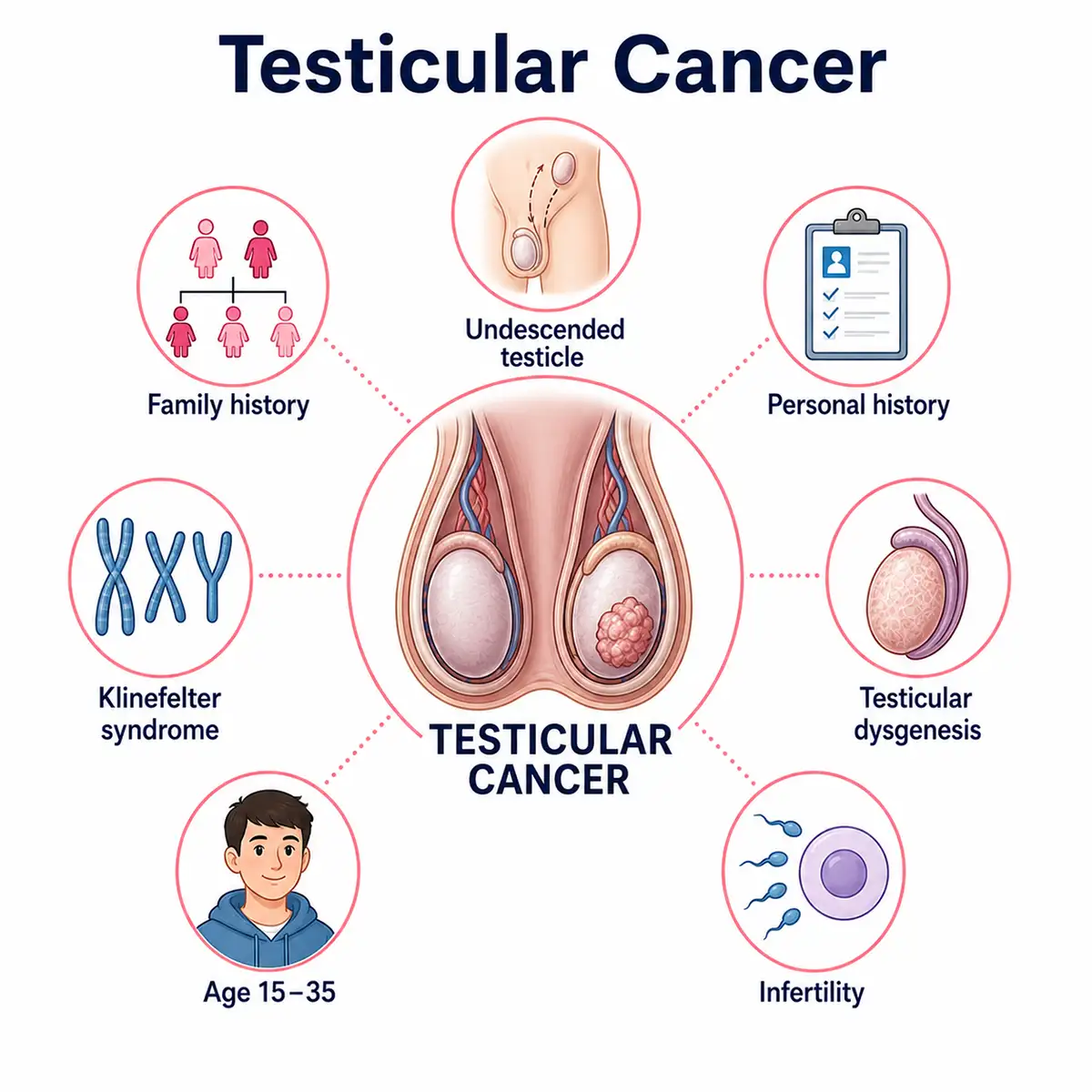
1. History of undescended testis
Cryptorchidism is the most significant risk factor for testicular cancer; the risk of developing the disease in individuals with undescended testicles is five to ten times higher than in the general population, and the risk remains elevated even after surgical correction.
2. Genetic factors
Individuals with a history of testicular cancer among first-degree relatives face a two- to three-fold increased risk of developing the disease; certain genetic predispositions render individuals more sensitive to carcinogens.
3. Klinefelter syndrome
Patients with Klinefelter syndrome possess an extra X chromosome, which significantly increases the risk of testicular germ cell tumors, particularly mediastinal germ cell tumors.
4. Contralateral testicular cancer
Patients with a history of germ cell tumor in the contralateral testis are at significantly increased risk of developing a tumor in the remaining testis and require long-term follow-up monitoring.
5. Factors contributing to infertility
Infertile men—particularly those with testicular dysgenesis—face an increased risk of developing testicular germ cell tumors compared to men with normal fertility.
6. Racial factors
The incidence of testicular cancer is significantly higher in Caucasians than in Black or Asian populations, with the highest rates globally found in the Scandinavian region of Northern Europe.
7. Age factors
Testicular germ cell tumors are most common in young adults aged 15 to 35;the age of onset for seminoma is slightly later than that for non-seminoma.
Conclusion
Testicular cancer is caused by a combination of factors, including undescended testicles and genetic influences;it is a serious malignancy common among young and middle-aged men.Early surgery for undescended testicles, along with regular self-examinations to ensure early detection and timely intervention, is crucial for improving prognosis.


