


What is oropharyngeal cancer
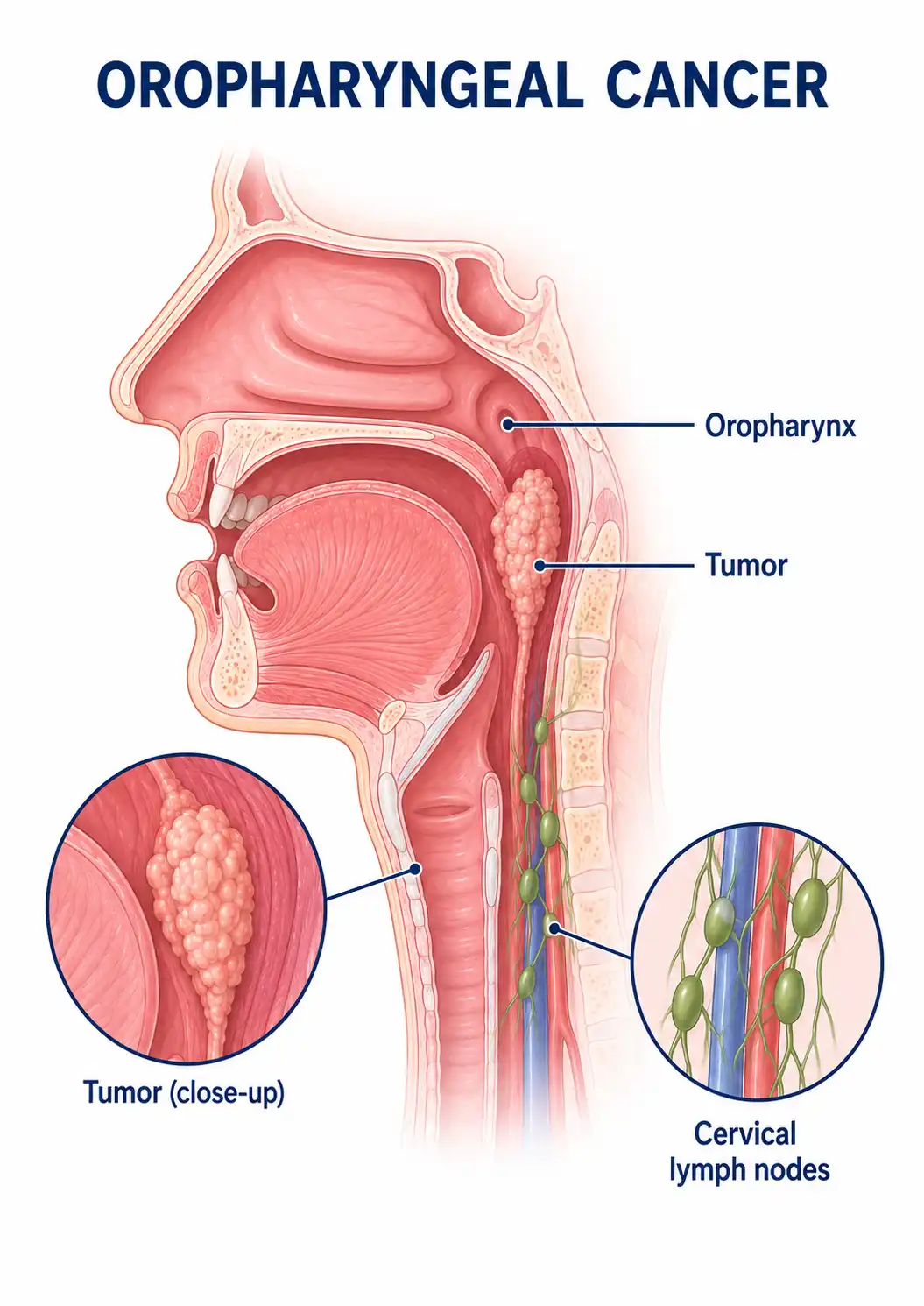
Oropharyngeal cancer is a tumor formed by malignant proliferation of oropharyngeal mucosal epithelial cells. Behind the mouth, the oropharynx includes the tongue base, soft palate, tonsillar region, and posterior pharyngeal wall and is a shared passage for digestion and breathing.
The global situation regarding oropharyngeal cancer
Oropharyngeal cancer accounts for a proportion of head and neck malignancies worldwide. Its incidence has increased in developed countries in recent years, associated with a growing proportion of HPV-related cases.
Consult a doctor regarding cancer-related issues
Anyone with persistent throat pain, unilateral ear pain, difficulty swallowing, a painless neck lump, or restricted mouth opening should promptly consult an ENT or head and neck oncology specialist.
Main types of oropharyngeal cancer
1. Squamous cell carcinoma
This is the most common pathological type of oropharyngeal cancer, accounting for over 95%. It is closely associated with HPV infection, smoking, and drinking and is classified as well, moderately, or poorly differentiated.
2. HPV-related cancer
Closely associated with high-risk HPV infection, it commonly occurs in the tonsils and tongue base. Patients tend to be younger, respond better to chemoradiotherapy, and have a relatively favorable prognosis.
3. HPV-unrelated cancer
Closely associated with long-term smoking and drinking, it is more common in older patients, has more aggressive biological behavior, and has a relatively poor prognosis.
4. Lymphoepithelioma-like carcinoma
This relatively rare type is associated with Epstein-Barr virus infection, contains extensive lymphocytic infiltration, and is relatively radiosensitive.
5. Minor salivary gland carcinoma
Arising from minor salivary glands in the oropharynx, these rare tumors include diverse pathological types such as adenoid cystic and mucoepidermoid carcinoma.
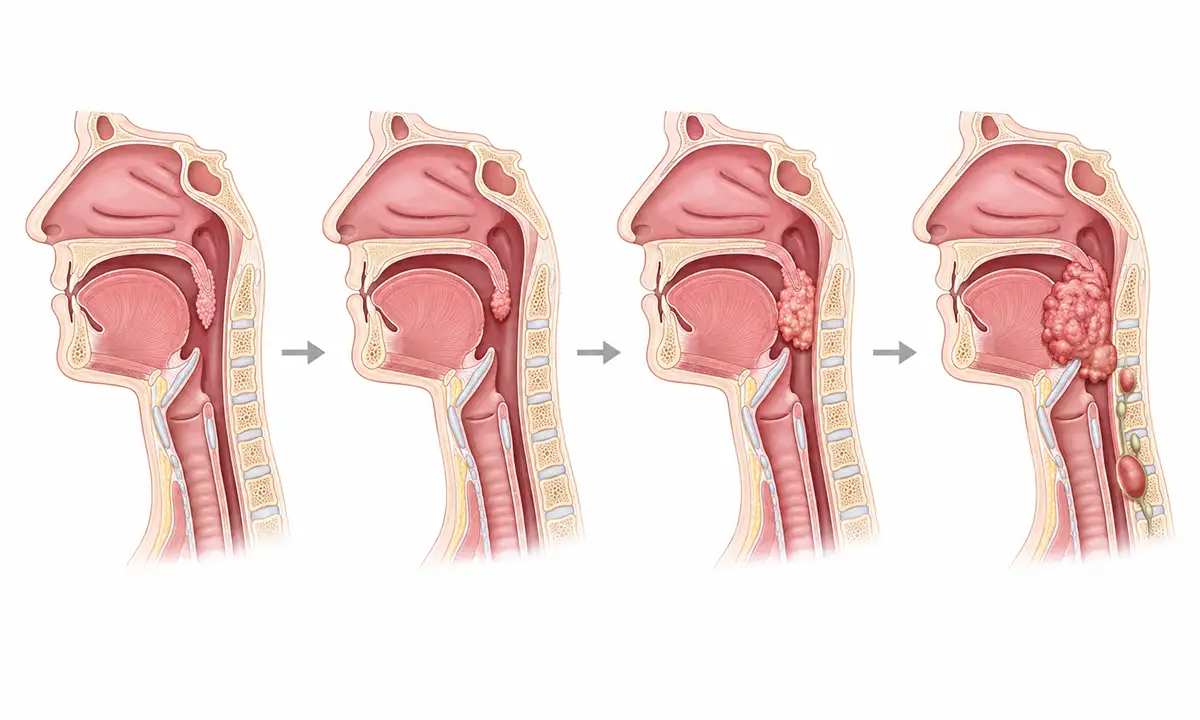
Typical symptoms and signs of oropharyngeal cancer
1. Throat pain
Persistent throat pain is common, usually unilateral and worse on swallowing. It may radiate to the ear and is often mistaken for pharyngitis, delaying medical attention.
2. Difficulty swallowing
Tumor enlargement impairs swallowing, causing painful swallowing and a foreign body sensation. In severe cases, even liquids are difficult to swallow, with increased drooling.
3. Neck lump
Oropharyngeal cancer readily spreads to cervical lymph nodes. More than half of patients present with a painless neck lump as their initial symptom.
4. Ear pain
Invasion of the glossopharyngeal nerve or auricular branch of the vagus nerve causes deep unilateral ear pain despite a normal ear examination.
5. Restricted mouth opening
Invasion of the chewing muscles or temporomandibular joint causes difficulty opening the mouth, impairing eating and oral examination and suggesting extensive disease.
6. Voice changes
Involvement of the larynx or nerves supplying the muscles causes muffled speech. Severe cases may cause dysarthria and breathing difficulty.
How is oropharyngeal cancer diagnosed
1. Oral and pharyngeal examination
The doctor visually examines and palpates the oropharyngeal mucosa for ulcers, lumps, or color changes, assessing lesion extent and consistency.
2. Fiberoptic laryngoscopy
Fiberoptic laryngoscopy provides a detailed view of the oropharyngeal regions, detects early lesions, and assesses tumor location and size, making it important for outpatient screening.
3. Pathological biopsy
Pathological examination of tissue obtained under laryngoscopic guidance is the diagnostic gold standard. HPV testing and p16 immunohistochemical staining may also be performed.
4. Contrast-enhanced CT or MRI
Contrast-enhanced head and neck CT or MRI assesses tumor invasion depth, involvement of surrounding structures, and cervical lymph node metastasis.
5. Neck ultrasound
Ultrasound assesses cervical lymph node size, shape, and internal structure, and ultrasound-guided needle biopsy can confirm metastasis.
6. PET-CT scan
Whole-body PET-CT detects distant metastases that conventional imaging may miss, supporting comprehensive staging and treatment planning.
What treatments are available for oropharyngeal cancer
1. Surgical treatment
Transoral robotic and laser surgery are important treatments for early oropharyngeal cancer, causing less trauma and preserving organ function.
2. Radiation therapy
Intensity-modulated radiotherapy is a main treatment for oropharyngeal cancer. In early disease, it can achieve outcomes comparable to surgery while preserving swallowing and speech.
3. Concurrent chemoradiotherapy
Concurrent chemoradiotherapy is the standard regimen for locally advanced disease and significantly improves local control and survival.
4. Chemotherapy
Induction chemotherapy shrinks tumors to facilitate subsequent treatment, while adjuvant chemotherapy reduces distant metastasis risk. Platinum and taxane drugs are commonly used.
5. Immunotherapy
PD-1 inhibitors such as pembrolizumab have been approved for recurrent or metastatic oropharyngeal cancer, offering new options for advanced disease.
6. Targeted therapy
Anti-EGFR targeted drugs such as cetuximab can treat advanced oropharyngeal cancer and improve efficacy when combined with chemotherapy.
7. Functional preservation
Treatment must balance tumor control with organ function preservation. A multidisciplinary team develops an individualized plan to maintain swallowing and speech.
8. Follow-up monitoring
Regular head and neck CT or MRI after treatment monitors local recurrence and cervical lymph node metastasis. Long-term follow-up is essential.
Conclusion
The nonspecific early symptoms of oropharyngeal cancer are easily overlooked, and most cases are intermediate or advanced at diagnosis. Greater awareness, prompt care for throat pain with a neck lump, and comprehensive treatment centered on chemoradiotherapy help improve prognosis.


