


Skin cancer is a tumor resulting from the malignant transformation of epidermal cells; it is primarily categorized into two main types: basal cell carcinoma and squamous cell carcinoma.It commonly occurs on sun-exposed areas such as the head, face, neck, and backs of the hands, initially presenting as skin nodules or ulcers.
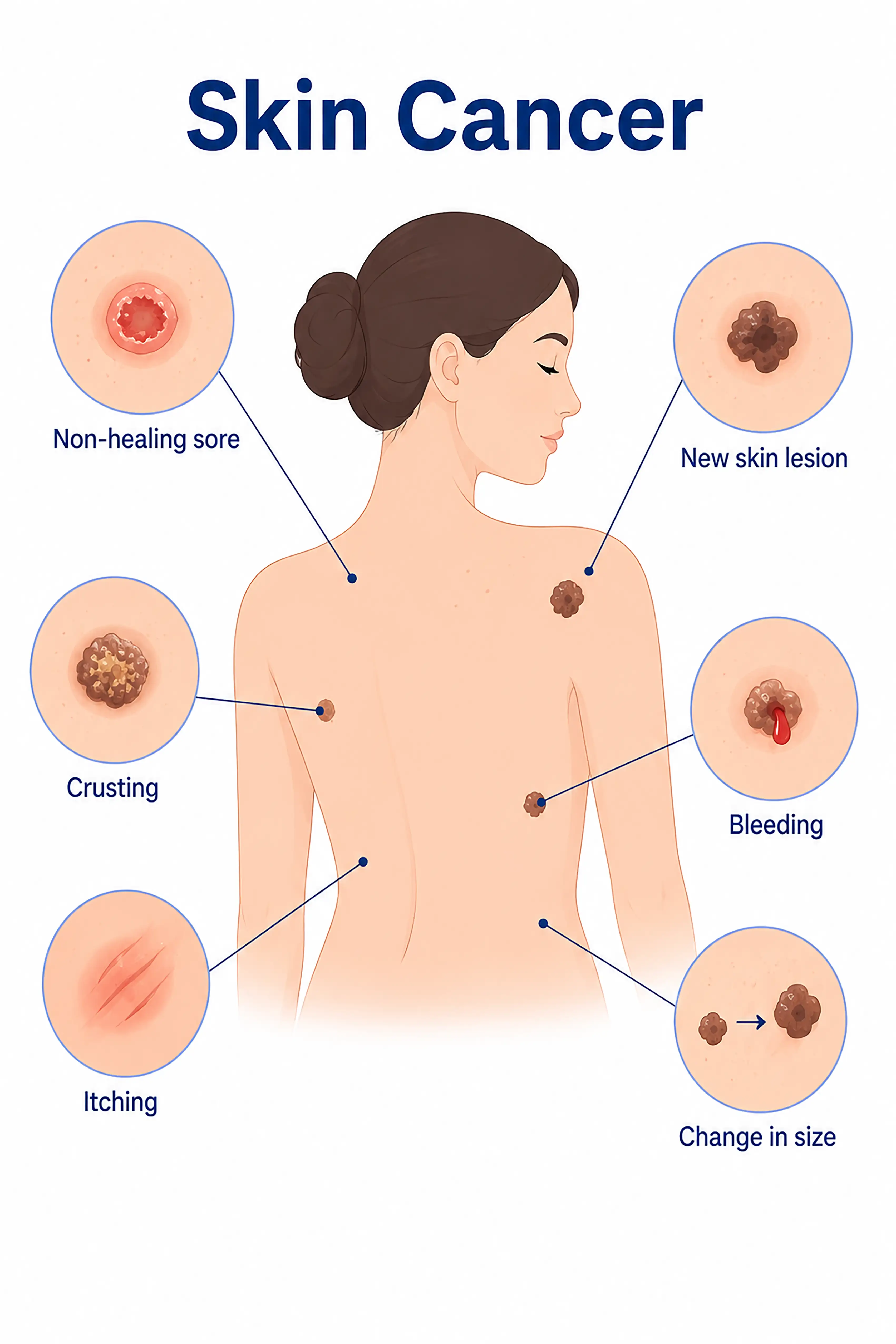
Global prevalence of skin cancer
Skin cancer is one of the most common malignant tumors worldwide; basal cell carcinoma accounts for approximately 70%–80% of all cases.The incidence rate is significantly higher among Caucasians than among people of color.Long-term exposure to ultraviolet (UV) radiation from the sun is the most significant risk factor.Most skin cancers grow slowly, and early treatment yields good results.
Symptoms associated with skin cancer stages
1.Early symptoms of skin cancer
Small nodules, pearly papules, or erythematous lesions appear on the skin; surface telangiectasia (dilated blood vessels) may be present. Basal cell carcinoma presents with pearly, raised borders, while squamous cell carcinoma may exhibit hyperkeratosis.
2.Intermediate-stage skin cancer symptoms
The lesion enlarges to form a cauliflower-like or ulcerative mass with raised, irregular edges and an uneven base; it bleeds easily upon contact and is accompanied by localized pain or itching.
3.Advanced skin cancer symptoms
Extensive tumor invasion of deep tissues and bone, presenting with severe pain, hemorrhage, foul odor, and distant metastasis; facial tumors may cause disfigurement.
When to Seek Medical Attention
Early signs of skin cancer include new growths on the skin, changes to existing moles or spots, and ulcers that do not heal.Please consult a doctor via "Chat with a Doctor" for early detection.During the online consultation, the doctor will ask about your history of sun exposure and skin changes, and provide guidance on undergoing a skin biopsy.
Staging of skin cancer
Stage 0 skin cancer
Cancer cells are confined to the epidermis; this is classified as carcinoma in situ, presenting as well-demarcated erythematous or keratotic skin plaques.
Stage I skin cancer
Tumor diameter <2 cm, confined to the skin, no lymph node metastasis; presents as small nodules or ulcers.
Stage II skin cancer
The tumor measures 2–5 cm in diameter or invades subcutaneous tissue, accompanied by regional lymph node enlargement and significant lesion growth.
Stage III skin cancer
Tumor diameter >5 cm or invasion of deep tissues, with regional lymph node metastasis.
Stage IV skin cancer
The tumor invades bone or metastasizes to distant organs such as the lungs or liver, resulting in symptoms associated with metastasis.
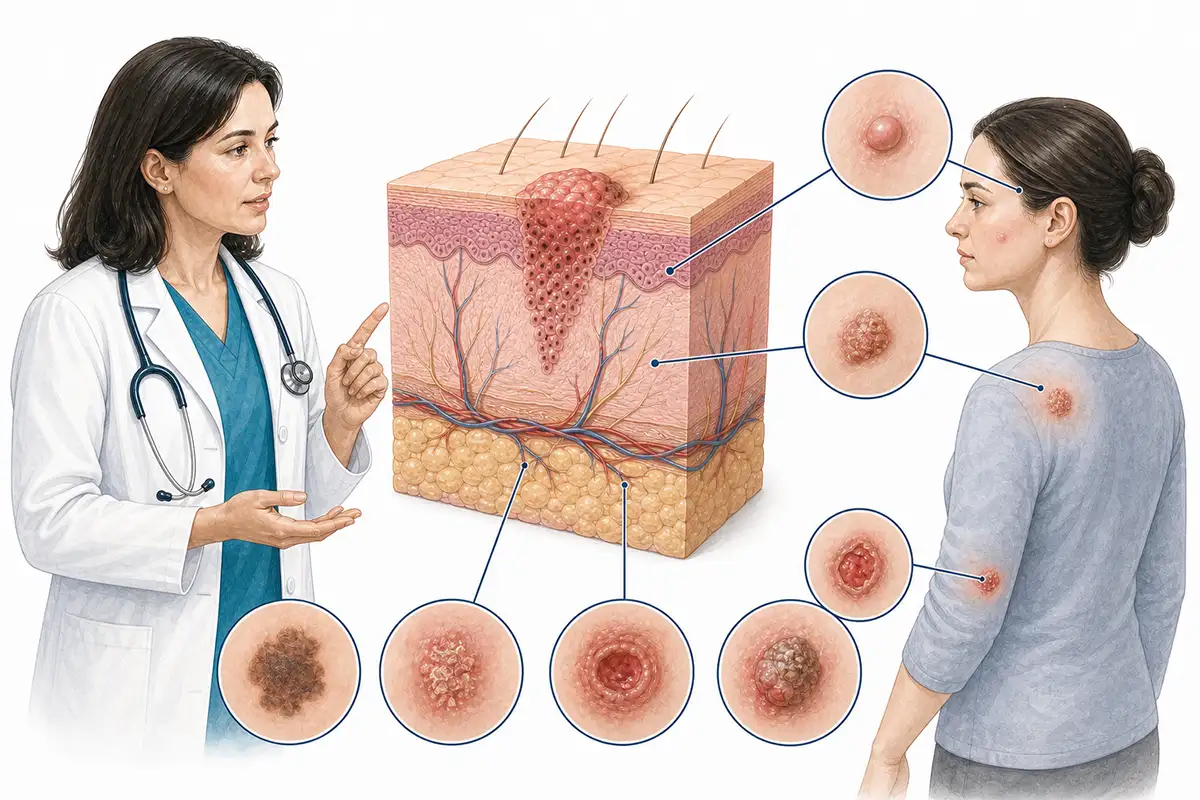
Detailed symptoms of skin cancer
1.Skin nodule
Early signs include the appearance of small nodules or papules on the skin with a smooth surface or visible telangiectasia (dilated capillaries); basal cell carcinoma lesions often feature a pearly, translucent, raised border.
2.Non-healing ulcer
A skin ulcer that fails to heal after several weeks—characterized by raised, everted edges and an uneven base, accompanied by oozing blood and crusting—is a typical sign of skin cancer.
3.Cauliflower-like tumor
Squamous cell carcinoma often presents as an exophytic, cauliflower-like growth with a hyperkeratotic surface and firm texture; it bleeds easily upon contact.
4.Color changes
Skin discoloration occurs in the affected area—appearing red, white, brown, or black—with a clear demarcation from the surrounding normal skin.
5.Localized itching/pain
Persistent itching, stinging, or burning sensations occur at the tumor site; standard anti-itch medications are ineffective.
6.Hemorrhage and exudation observed
Ulceration of the tumor surface leads to easy bleeding and the presence of bloody or serous discharge, accompanied by a foul odor.
7.Appearance of raised margins
A typical presentation of basal cell carcinoma involves an ulcer with raised, pearly, and inwardly rolled edges, and a depressed center.
8.Lymphadenopathy
In the advanced stage, regional lymphadenopathy may be present; the nodes are hard and have poor mobility, suggesting lymph node metastasis.
9.Scar-like changes
Basal cell carcinoma may present as a flat, scar-like plaque with a smooth or slightly atrophic surface and irregular borders.
Conclusion
Early detection and treatment of skin cancer yield good outcomes.Avoiding excessive sun exposure, using sunscreen, and performing regular skin self-examinations are important preventive measures.Seek medical attention promptly if suspicious skin lesions appear.


