


Skin cancer is a tumor formed by the malignant proliferation of skin cells.The skin is the body's largest organ, consisting of the epidermis, dermis, and subcutaneous tissue; skin cancer can originate from various cells within the epidermis or dermis.
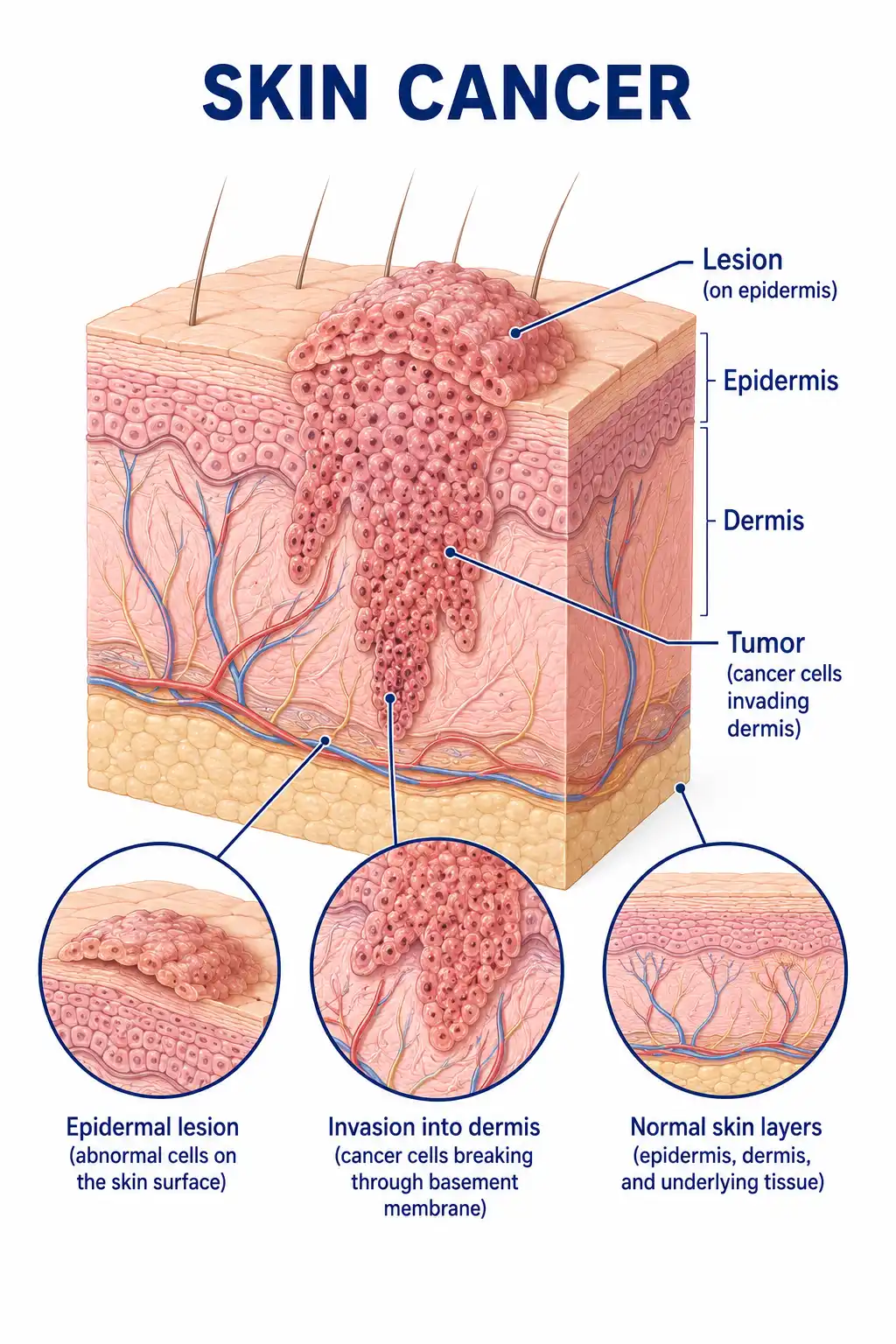
Global overview of skin cancer
Skin cancer is the most common malignant tumor worldwide, and its incidence is rising year by year.Basal cell carcinoma accounts for over 80% of skin cancer cases, followed by squamous cell carcinoma.UV exposure is the primary risk factor.
Consult a doctor regarding cancer-related issues
Patients presenting with new skin growths, changes in existing moles, non-healing ulcers, or alterations in skin color should promptly consult a dermatologist or oncologist.
Main types of skin cancer
1.Basal cell carcinoma
The most common type of skin cancer; it grows slowly, rarely metastasizes, and typically occurs on sun-exposed areas such as the head and face.
2.Squamous cell carcinoma
The second most common type of skin cancer; it is more aggressive than basal cell carcinoma and is capable of local invasion and metastasis.
3.Melanoma
The most aggressive form of skin cancer; although it accounts for only 1% of skin cancer cases, it is the leading cause of skin cancer-related deaths.
4.Merkel cell carcinoma
A rare, aggressive form of cutaneous neuroendocrine carcinoma that typically affects the head and face of elderly patients and progresses rapidly.
5.Skin adnexal carcinoma
Malignant tumors originating from sweat glands, sebaceous glands, or hair follicles; relatively rare.
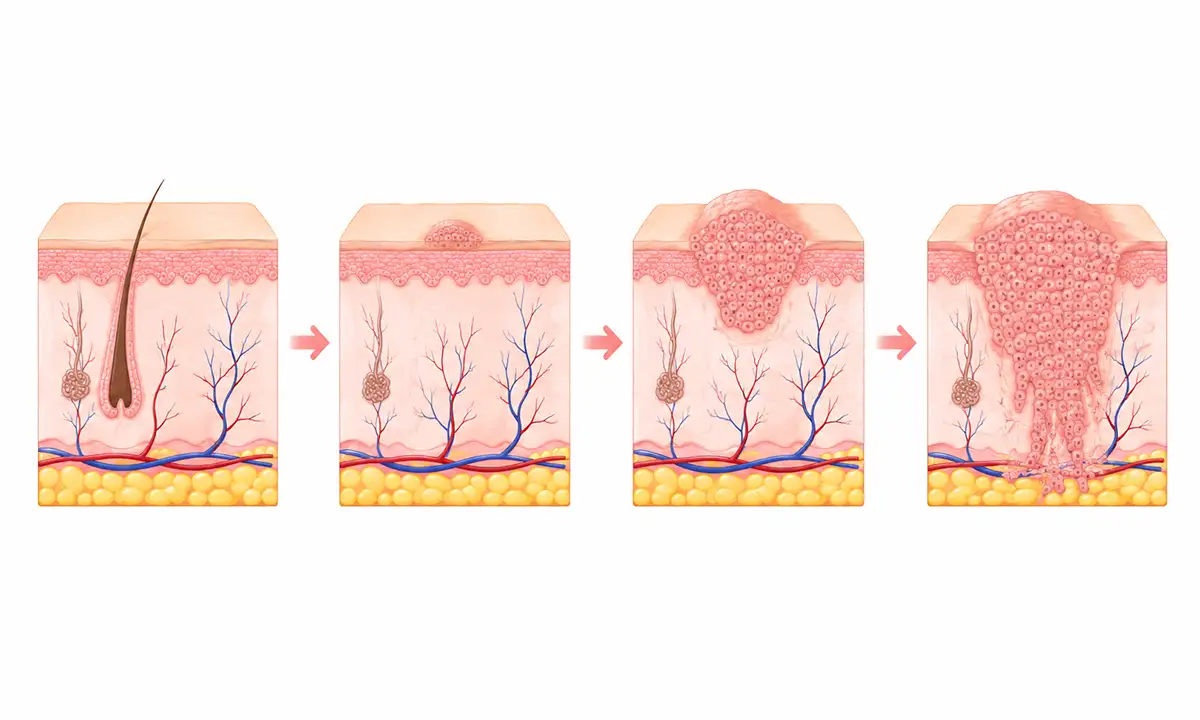
Typical symptoms and signs of skin cancer
1.Skin nodule
New growths or nodules appear on the skin surface;basal cell carcinoma often exhibits a pearly luster, while squamous cell carcinoma often resembles a cauliflower.
2.Non-healing ulcer
A persistent skin ulcer with raised edges and an uneven base that bleeds easily upon contact.
3.Pigmentation changes
Appearance of skin hyperpigmentation or hypopigmentation, or changes in the color or shape of an existing pigmented nevus (mole).
4.Itching and pain
Persistent itching, pain, or tenderness occurs at the site of the lesion.
5.Bleeding and scabbing
The lesion bleeds easily and forms a surface scab; bleeding recurs after the scab detaches.
6.Lymph node enlargement
Enlargement of regional lymph nodes suggests possible metastasis.
Diagnostic Methods for Skin Cancer
1.Dermoscopy
Dermoscopy allows for the magnified observation of the fine structures of skin lesions, aiding in the differentiation between benign and malignant conditions.
2.Biopsy pathology
Biopsy or excision of the suspicious lesion for pathological examination is the gold standard for diagnosis.
3.Imaging examination
CT or MRI is used to assess deep infiltration and lymph node metastasis; systemic evaluation is required for patients with advanced disease.
4.Sentinel lymph node biopsy
For assessing lymph node metastasis status in cutaneous squamous cell carcinoma and melanoma.
5.HPV testing
Some cases of cutaneous squamous cell carcinoma are associated with HPV infection; HPV testing can be performed.
6.Immunohistochemistry
Immunohistochemical staining aids in differentiating between various types of skin cancer.
Skin Cancer Treatment Methods
1.Mohs surgery
Mohs micrographic surgery is the standard treatment for skin cancer; it involves layer-by-layer excision and real-time pathological examination to maximize the preservation of normal tissue.
2.Radical resection
Excision of the tumor and a surrounding safety margin of normal tissue; suitable for non-facial skin cancers.
3.Radiotherapy
For patients who are ineligible for surgery or have contraindications to surgery, and as postoperative adjuvant therapy to reduce recurrence rates.
4.Photodynamic therapy
Uses a photosensitizer and irradiation with a specific wavelength of light to destroy tumor cells; suitable for superficial lesions.
5.Cryotherapy
Use liquid nitrogen cryotherapy to destroy tumor tissue; this method is suitable for small, superficial basal cell carcinomas and precancerous squamous cell lesions.
6.Local drug therapy
5-Fluorouracil cream and imiquimod cream for superficial basal cell carcinoma and actinic keratosis.
7.Targeted therapy
Hedgehog pathway inhibitors are used for advanced basal cell carcinoma.
8.Prevention and follow-up
Avoid excessive UV exposure; perform regular skin self-examinations and professional check-ups; and maintain long-term follow-up to monitor for new skin cancers.
Conclusion
Skin cancer is the most common malignant tumor, and the prognosis is favorable with early detection and treatment.Incidence and mortality rates can be effectively reduced through sun protection, regular check-ups, and standardized treatment.


