


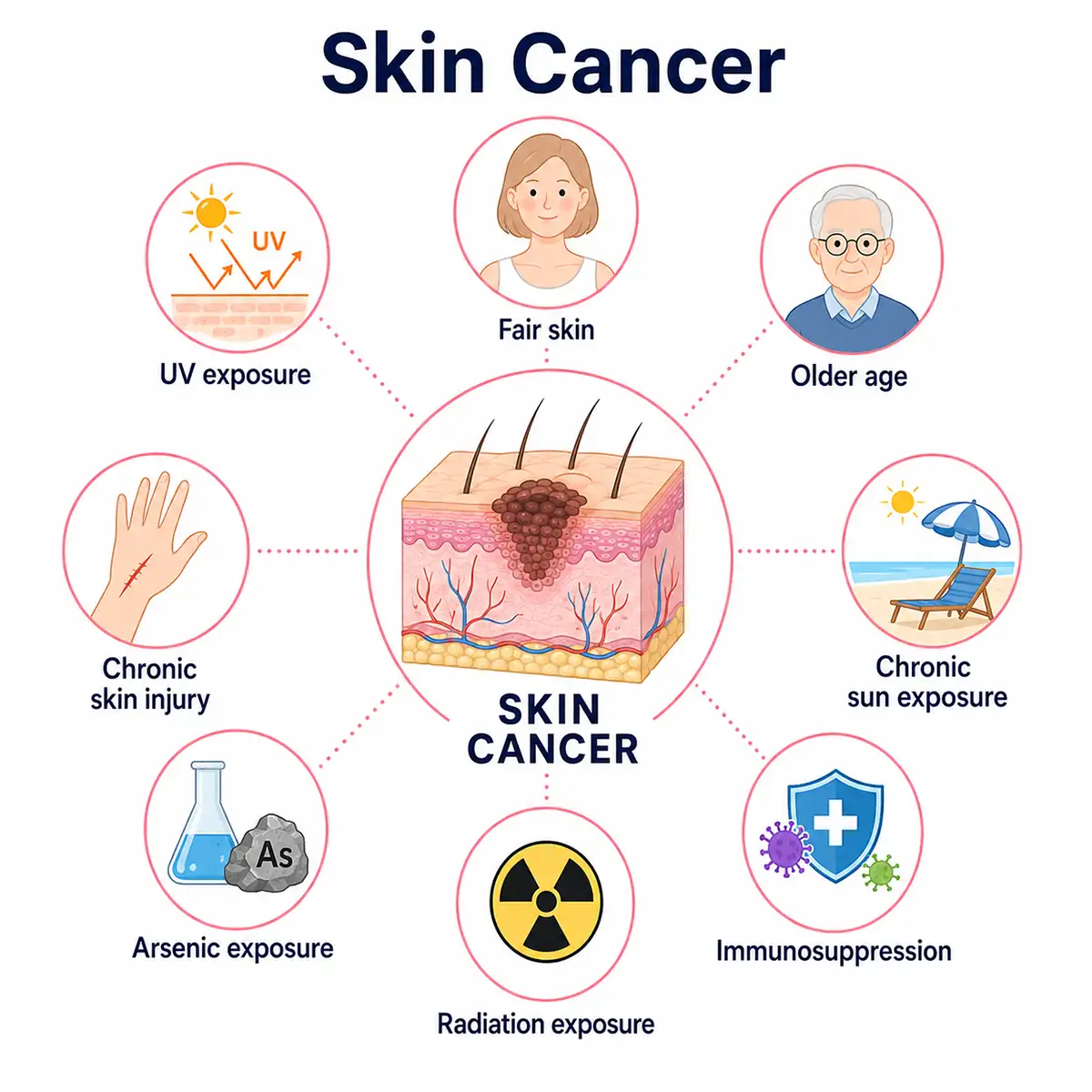
1. Ultraviolet (UV) exposure
Long-term chronic ultraviolet (UV) exposure is the primary risk factor for skin cancer; UVB radiation can damage skin cell DNA, leading to the accumulation of mutations.
2. Skin color type
Individuals with fair skin, red or blonde hair, and a tendency to sunburn easily face a significantly higher risk of skin cancer compared to those with darker skin.
3. Arsenic exposure
Long-term consumption of well water with excessive arsenic levels or the use of arsenic-containing medications can increase the risk of cutaneous squamous cell carcinoma.
4. Radiation exposure
A history of radiotherapy or long-term exposure to ionizing radiation, such as X-rays, can increase the risk of skin cancer, particularly basal cell carcinoma.
5. Immunosuppression
Organ transplant recipients using immunosuppressants face a significantly increased risk of skin cancer; squamous cell carcinoma is the predominant type and tends to be more aggressive.
6. Chronic ulcer
Conditions such as non-healing burn scars, pressure ulcers, and chronic osteomyelitis sinus tracts can progress to Marjolin's ulcer, a form of squamous cell carcinoma.
7.Human papillomavirus (HPV)
High-risk HPV infection is associated with the development of certain cutaneous squamous cell carcinomas, particularly those in the anogenital region.
Conclusion
Skin cancer is caused by the combined effects of various factors, such as ultraviolet (UV) exposure and skin type. Although it is often locally invasive, it can cause disfigurement and serious harm.Sun protection, avoidance of arsenic exposure, and regular skin examinations to ensure early detection and timely intervention are crucial.


