


Global disease prevalence: Penile cancer is a rare malignant tumor in men worldwide; incidence is higher in regions with poor sanitary conditions, and squamous cell carcinoma is the most common type.
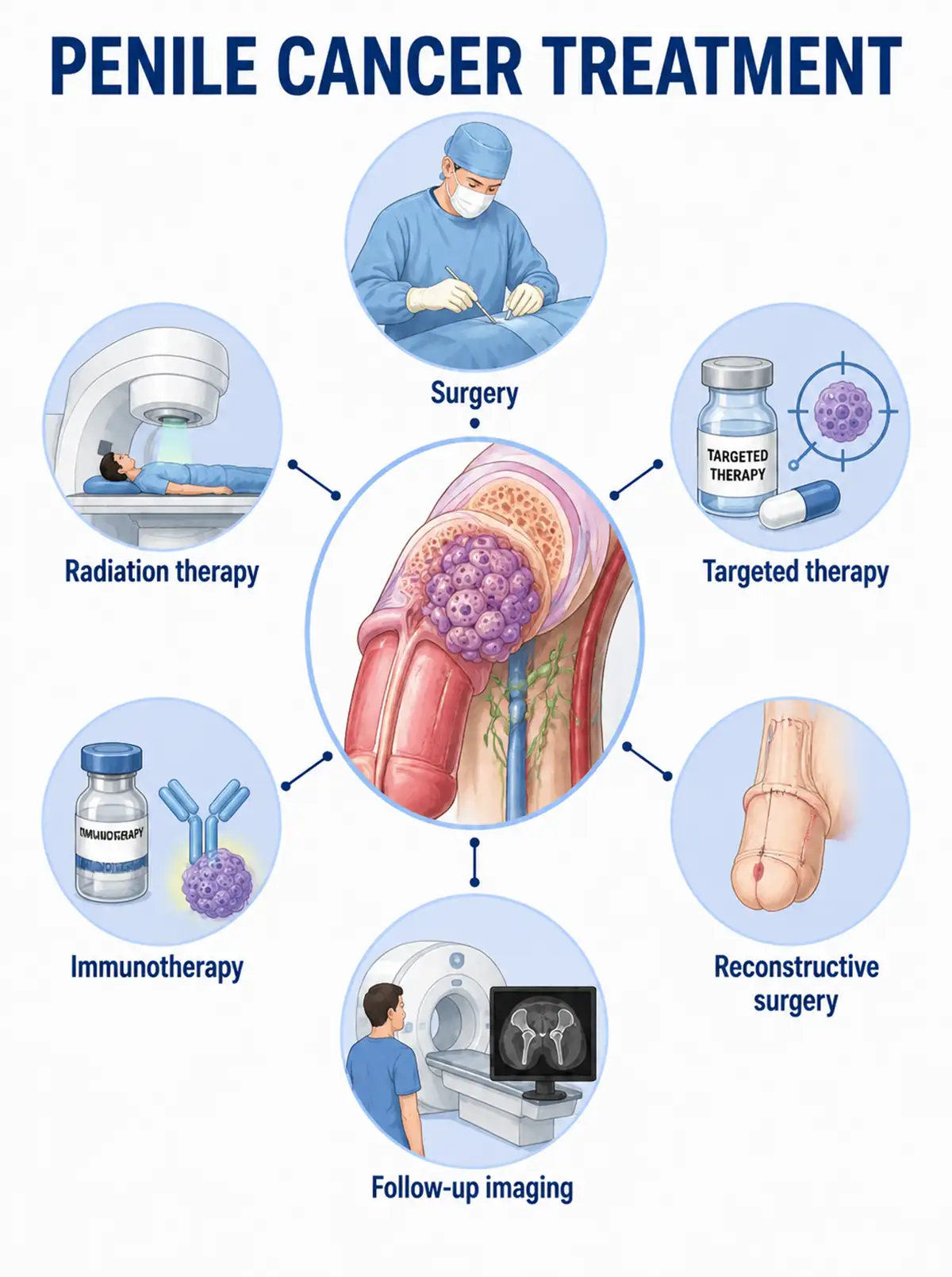
Staging-based treatment for penile cancer
Early treatment (localized tumor, reduced volume, favorable outcome)
Organ-sparing surgery to resect the lesion can effectively control tumor progression while preserving urinary and sexual function.
Intermediate-stage treatment (addressing local spread, inhibiting growth, and delaying progression)
employs a comprehensive approach—such as surgery combined with chemoradiotherapy—to control further tumor spread and preserve organ function to the greatest extent possible.
Treatment for advanced-stage disease (involving distant metastasis, symptom relief, and survival prolongation)
primarily relies on systemic therapies such as radiotherapy and chemotherapy to alleviate clinical symptoms and extend patient survival as much as possible.
Consequences of failure to receive timely treatment in the early stage: If standardized treatment is not administered promptly in the early stage, the tumor will continue to grow and spread to inguinal lymph nodes and distant organs; the optimal window for intervention will be missed.
Why choose Fosun Health for penile cancer treatment
Fosun Health’s penile cancer diagnosis and treatment services are managed by a specialized urologic oncology center; the team has extensive experience in penile-sparing surgery, inguinal lymph node dissection, and comprehensive treatment for advanced-stage disease.Leveraging a global medical network, patients have access to cutting-edge international treatment options, including partial penectomy with penile preservation, minimally invasive laser surgery, sentinel lymph node biopsy, CyberKnife M6 precision radiotherapy, and chemotherapy.
For complex cases—such as advanced-stage disease or inguinal lymph node metastasis—a multidisciplinary team (MDT) comprising experts in urology, medical oncology, radiation oncology, and plastic/reconstructive surgery collaborates to formulate the optimal treatment plan; a cross-border consultation mechanism enables patients to obtain second opinions from top-tier international medical centers.
Foshan Fosun Chancheng Hospital is equipped with the CyberKnife M6 precision radiotherapy system and the VitalBeam linear accelerator, enabling the delivery of precision intensity-modulated radiotherapy (IMRT) and stereotactic radiosurgery (SRS).The hospital is highly experienced in function-preserving surgery and sentinel lymph node biopsy techniques for penile cancer; by combining precision radiotherapy with comprehensive treatment strategies, they maximize the preservation of the patient's quality of life.
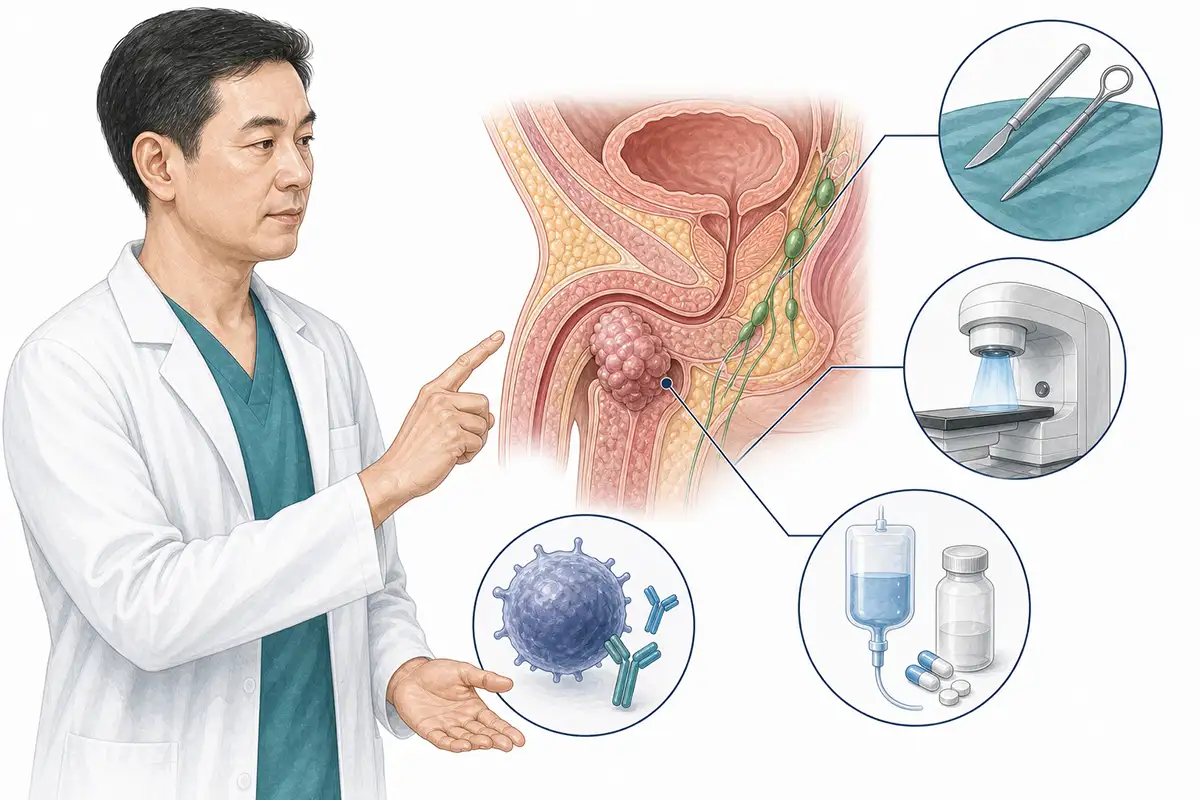
Treatment Methods for Penile Cancer
1.Local excision or partial penectomy
For localized penile cancer, surgical options such as local excision or partial penectomy may be selected based on tumor size, location, depth of invasion, and relationship to the urethra.
Treatment advantages:
① Local control: Direct resection of the primary tumor.
② Organ preservation: Preserving as much penile tissue as possible for certain early-stage lesions while ensuring adequate tumor margins.
③ Functional preservation: Appropriate selection of the surgical extent helps preserve urinary function and partial sexual function.
④ Clarifies pathology: Resected specimens allow for the assessment of tumor invasion depth and surgical margins.
2.Inguinal lymph node surgery
For patients at risk of lymph node metastasis or those with clinical or imaging evidence of inguinal lymph node involvement, sentinel lymph node biopsy or inguinal lymph node dissection may be considered based on risk stratification.
Treatment advantages:
① Staging assessment: Determine the presence or absence of regional lymph node metastasis.
② Removal of metastases: Directly resecting involved lymph nodes in patients with regional lymph node metastasis.
③ Guiding subsequent treatment: Lymph node pathology results can be used to determine disease stage.
④ Local control: Reduces the risk of continued progression in regional lymph nodes.
3. VitalBeam linear accelerator precision radiotherapy
For selected cases of penile cancer that are locally advanced, involve lymph nodes, or are unsuitable for surgery, radiotherapy may be considered based on the extent of the tumor and specific pathological findings.
Treatment advantages:
① Precise irradiation: Formulate a radiotherapy plan based on the primary lesion and the extent of lymph node involvement.
② Organ preservation: Enabling some patients to avoid or delay extensive resection surgery through radiotherapy.
③ Local control: Treatment targeting the primary tumor and regional lymph nodes.
④ Combination therapy: May be used in combination with drug therapies such as chemotherapy, depending on the disease stage.
4.Chemotherapy
Anticancer drugs such as mitomycin are used to kill cancer cells;they are often combined with radiotherapy to enhance efficacy and serve as a crucial component of the treatment regimen.
5.Immunotherapy
Activates the body's immune system to recognize and attack cancer cells, providing a new treatment option for patients with advanced penile cancer.Helps improve therapeutic efficacy.
6.Lymph node dissection
Involves surgical resection of metastatic inguinal lymph nodes to control regional tumor spread and guide subsequent treatment strategies.It is an important therapeutic modality.
7.Local drug therapy
Drugs such as imiquimod are applied directly to the affected area to precisely kill cancer cells;this method is suitable for patients with precancerous lesions and serves as an important therapeutic approach.
8.Comprehensive therapy
Formulate an individualized comprehensive treatment plan based on the patient's specific condition, combining modalities such as surgery, radiotherapy, and chemotherapy to enhance therapeutic efficacy.
9.Supportive care
Approaches such as nutritional support, psychological counseling, and symptom management can comprehensively improve the patient's physical condition and quality of life.
Post-treatment care
Maintain vulvar hygiene and a regular daily routine; avoid resuming sexual activity too soon; attend scheduled follow-up appointments and actively cooperate with subsequent treatment as advised.
Post-treatment examinations
Periodic local examinations, palpation of inguinal lymph nodes, and follow-up imaging are required after treatment to timely detect tumor recurrence or metastasis.
Conclusion
Penile cancer poses a serious threat; the key to treatment lies in early detection, diagnosis, and intervention. Selecting an appropriate treatment plan and adhering to follow-up care helps improve quality of life.


