


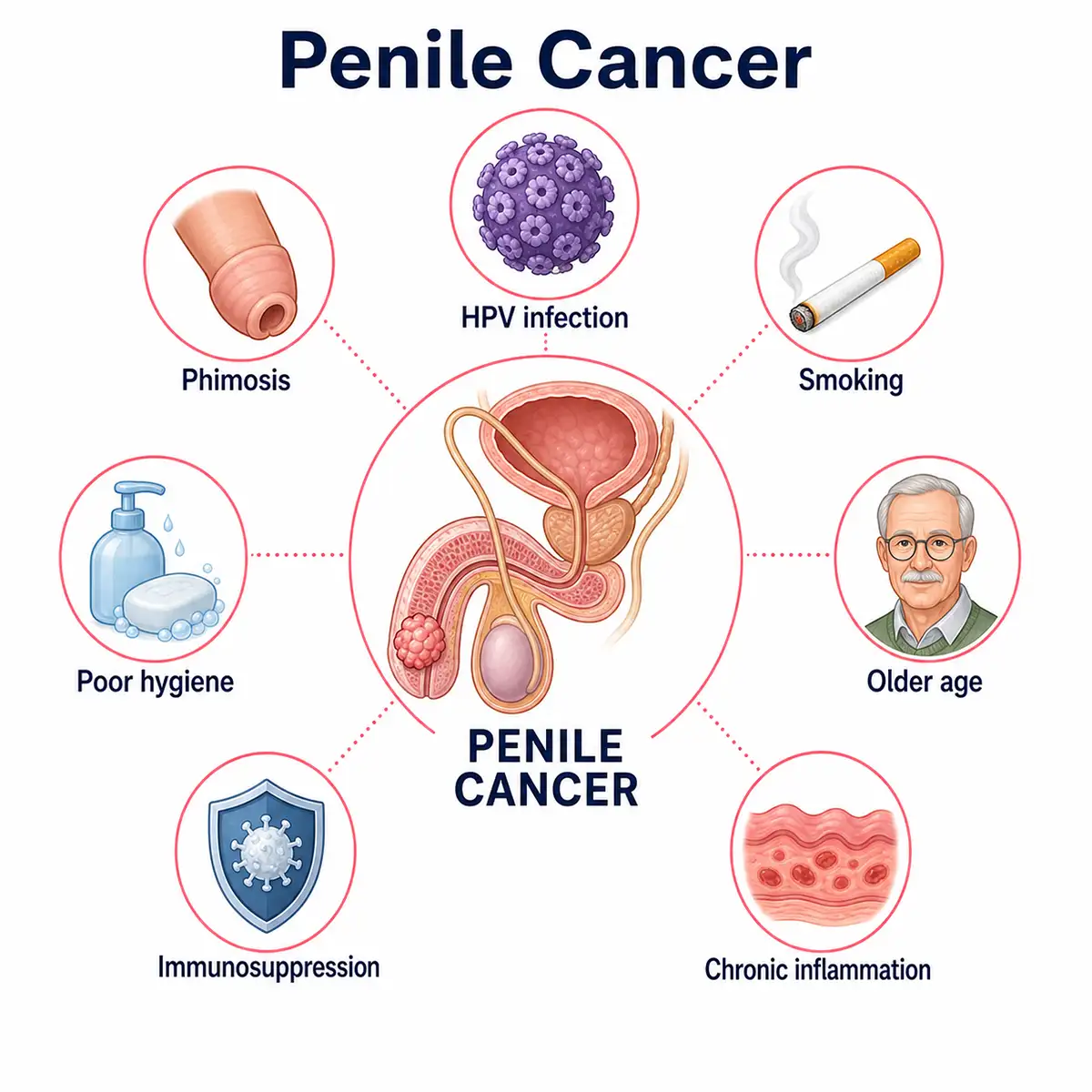
1. HPV infection
Infection with high-risk human papillomavirus (HPV), particularly types 16 and 18, is closely associated with approximately 50% of penile cancer cases.
2. Phimosis as a factor
Long-standing phimosis and redundant foreskin lead to the accumulation of smegma; chronic inflammation irritating the glans penis and the inner layer of the foreskin increases the risk of malignant transformation.
3. Smegma irritation
Substances such as cholesterol and steroids in smegma chronically irritate the mucosa, potentially leading to chronic inflammation and epithelial dysplasia.
4. Smoking factor
Smoking increases the risk of developing penile cancer; carcinogens in tobacco can irritate the penile mucosa during the excretion of urine.
5. Chronic inflammation
Chronic inflammation, such as balanitis and posthitis, persists over the long term; repeated cycles of injury and repair can lead to malignant transformation of the mucosal epithelium.
6. Immunosuppression
Individuals with HIV infection or those using immunosuppressants following organ transplantation exhibit reduced HPV clearance capacity and an increased risk of developing penile cancer.
7. Age factors
Penile cancer is most common in men aged 50–70 and rare in those under 30;the incidence increases with age.
Conclusion
Penile cancer is caused by the combined effects of multiple factors, such as HPV infection and phimosis; although rare, it poses serious risks.Maintaining local hygiene, undergoing early circumcision, and having regular check-ups are crucial for early detection and timely intervention.


