


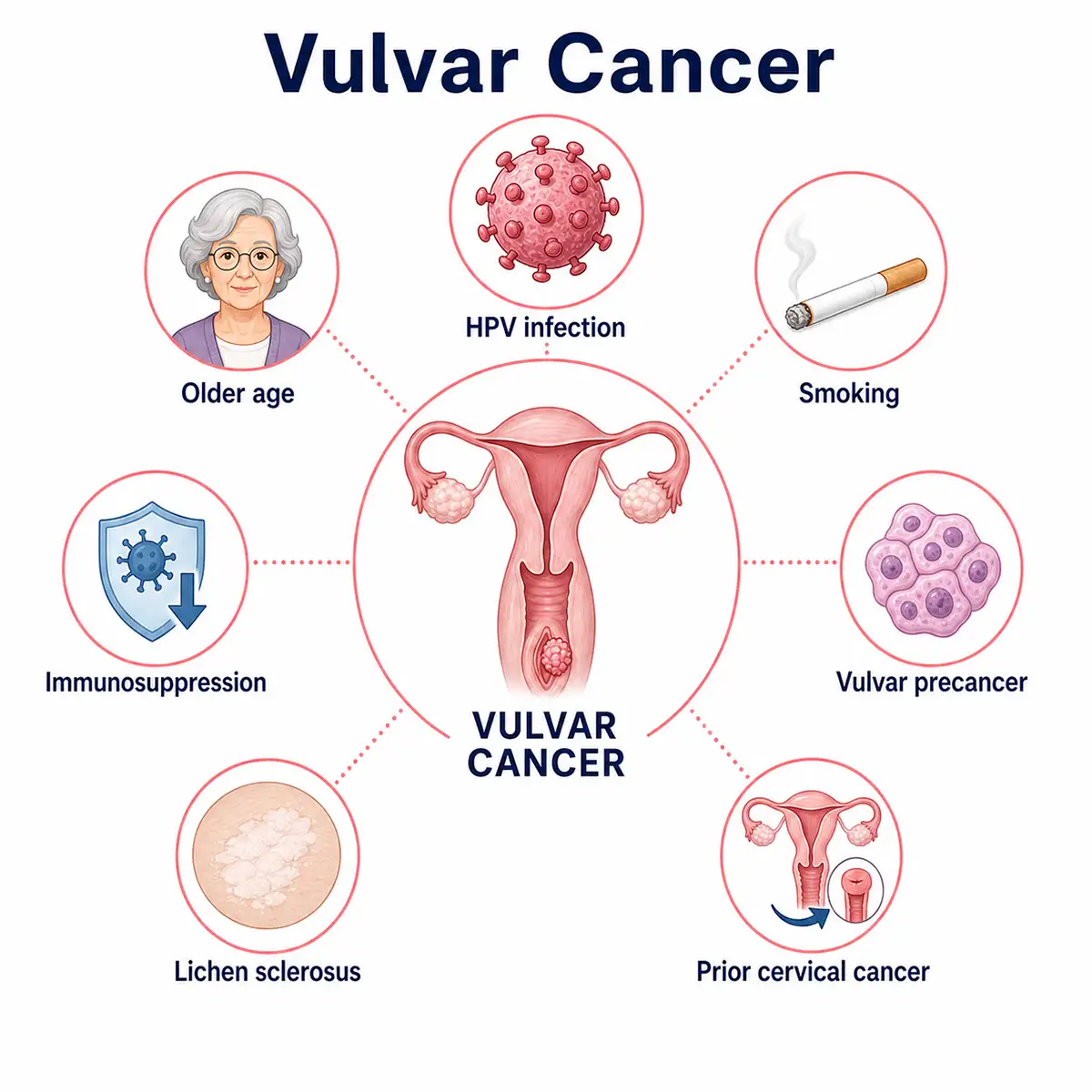
1. HPV infection
High-risk HPV infection is a significant causative factor for vulvar cancer, particularly showing a strong association with vulvar squamous cell carcinoma in young patients.
2. Vulvar intraepithelial neoplasia
Vulvar high-grade intraepithelial neoplasia is a definite precancerous lesion; approximately 80% of untreated cases can progress to invasive carcinoma.
3. Lichen sclerosus
Chronic skin diseases such as vulvar lichen sclerosus persist over the long term; chronic inflammatory irritation can lead to squamous epithelial hyperplasia and malignant transformation.
4. Chronic pruritus
Long-term chronic pruritus leads to repetitive scratching; the cycle of persistent injury and repair of the vulvar mucosa can increase the risk of malignant transformation.
5. Smoking factor
Smoking increases the risk of developing vulvar cancer, as carcinogens in tobacco can reach vulvar tissues via the bloodstream.
6. Immunosuppression
Individuals with HIV infection or an immunosuppressed state following organ transplantation exhibit reduced HPV clearance capacity and a significantly increased risk of developing vulvar cancer.
7. Age factors
Vulvar cancer is most common in postmenopausal older women, with an average age of onset around 65; however, HPV-associated types can occur in younger women.
Conclusion
Vulvar cancer results from the combined effects of various factors, such as HPV infection and chronic skin diseases; although rare, it poses a serious health risk.Prompt medical attention upon the appearance of vulvar itching or white patches is crucial for early detection and timely intervention.


