


Acoustic neuroma, now referred to as vestibular schwannoma, is a benign tumor arising from the proliferation of Schwann cells on the vestibular nerve sheath. It grows slowly, and common clinical manifestations include unilateral hearing loss, tinnitus, and balance disorders.

Global prevalence of acoustic neuroma
Acoustic neuroma is a rare benign tumor, diagnosed in fewer than 1 in 20,000 people annually.Incidence increases with age, with a rate of 1 in 5,000 people over the age of 70. It typically occurs unilaterally (on one side), while bilateral occurrence is seen in patients with Neurofibromatosis Type 2 (NF2).
Symptoms associated with acoustic neuroma stages
1.Early symptoms of acoustic neuroma
The tumor is small and slow-growing;symptoms are mild and easily overlooked, presenting as slight unilateral hearing loss, high-pitched tinnitus, and occasional vertigo, mimicking ear disorders.
2.Intermediate-stage symptoms of acoustic neuroma
Hearing loss progressively worsens, tinnitus persists, balance disorders become pronounced, facial numbness and muscle weakness develop, and headaches intensify.
3.Symptoms of advanced acoustic neuroma
Massive tumor compressing the brainstem, causing severe neurological impairment; symptoms include severe headache, ataxia, dysphagia, and voice changes; the condition is life-threatening.
When to Seek Medical Attention
Early signs of acoustic neuroma include unilateral hearing loss, persistent tinnitus, and balance disorders.Please consult a doctor via the "Chat with a Doctor" feature to facilitate early detection.During the online consultation, the doctor will ask about your symptoms and changes in your hearing, and guide you through the process of undergoing hearing tests and an MRI.
Staging of acoustic neuroma
Acoustic neuroma: Stage 0
This staging system is not applicable to acoustic neuromas.Acoustic neuromas are typically assessed using the Koos grading system, based on tumor size and the extent of invasion.
Acoustic neuroma: Stage I
Tumor confined to the internal auditory canal, presenting only with hearing loss and tinnitus, without other neurological deficits.
Acoustic neuroma: Stage II
Tumor protrudes from the internal auditory canal into the cerebellopontine angle; symptoms include significant hearing loss, balance disorders, and mild facial sensory abnormalities.
Acoustic neuroma: Stage III
The tumor occupies the cerebellopontine angle and abuts the brainstem, causing facial numbness and weakness, headache, and ataxia.
Acoustic neuroma: Stage IV
Massive tumor compressing the brainstem and cerebellum, resulting in severe neurological deficits, hydrocephalus, and symptoms of increased intracranial pressure.
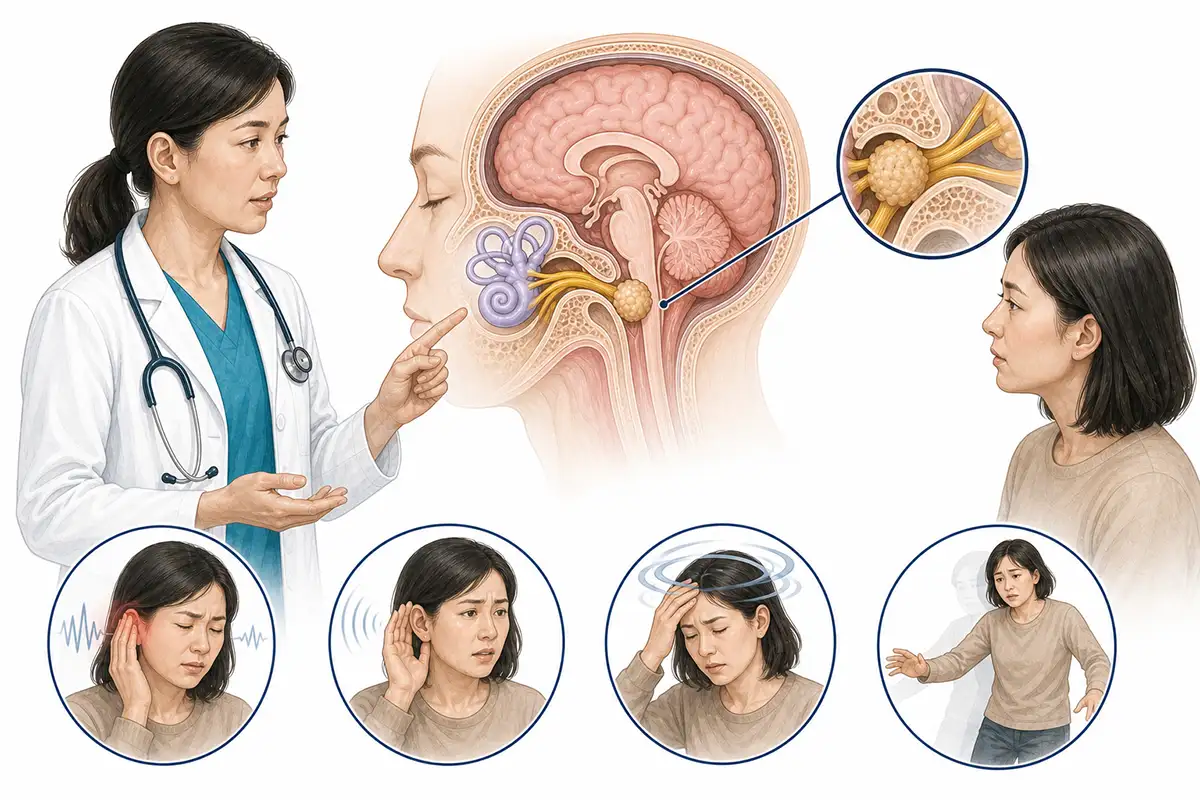
Detailed Symptoms of Acoustic Neuroma
1.Significant hearing loss
Unilateral sensorineural hearing loss is the most common symptom of acoustic neuroma; it typically develops gradually over months to years and is the initial presentation in approximately 90% of patients.
2.Persistent tinnitus
Patients experience persistent, high-pitched tinnitus in the affected ear—resembling the sound of cicadas or a steam whistle—which gradually worsens as the tumor grows; the tinnitus may persist even after total hearing loss.
3.Balance impairment
Tumor compression of the vestibular nerve causes balance disorders, unsteady gait, and a sense of instability; transient vertigo attacks may occur, though severe vertigo is rare.
4.Facial numbness
Tumor compression of the trigeminal nerve causes numbness, tingling, or reduced sensation on one side of the face; severe cases may affect corneal sensation, leading to corneal ulcers.
5.Facial muscle weakness
Compression of the facial nerve by the tumor causes weakness of facial expression muscles, incomplete eyelid closure, and drooping of the corner of the mouth, affecting facial expressions and eating.
6.Headache and sensation of pressure
Tumor enlargement compressing the brainstem or causing hydrocephalus leads to headache and a sensation of pressure in the head, typically localized to the occipital or neck regions.
7.Unsteady gait
Cerebellar and vestibular involvement leads to unsteady walking, a staggering gait, and a tendency to fall, with symptoms worsening particularly in the dark.
8.Dysphagia
Compression of the lower cranial nerves by a giant tumor causes dysphagia, choking when drinking, and hoarseness; while relatively rare, this indicates a serious condition.
9.Sudden hearing loss
A small number of patients may experience sudden hearing loss (sensorineural hearing loss), which can be misdiagnosed as sudden deafness.
Conclusion
Acoustic neuroma is a benign tumor; early diagnosis helps preserve hearing and facial nerve function.Treatment options include observation, stereotactic radiotherapy, and microsurgery, with the choice tailored to tumor size and the patient's condition.


