


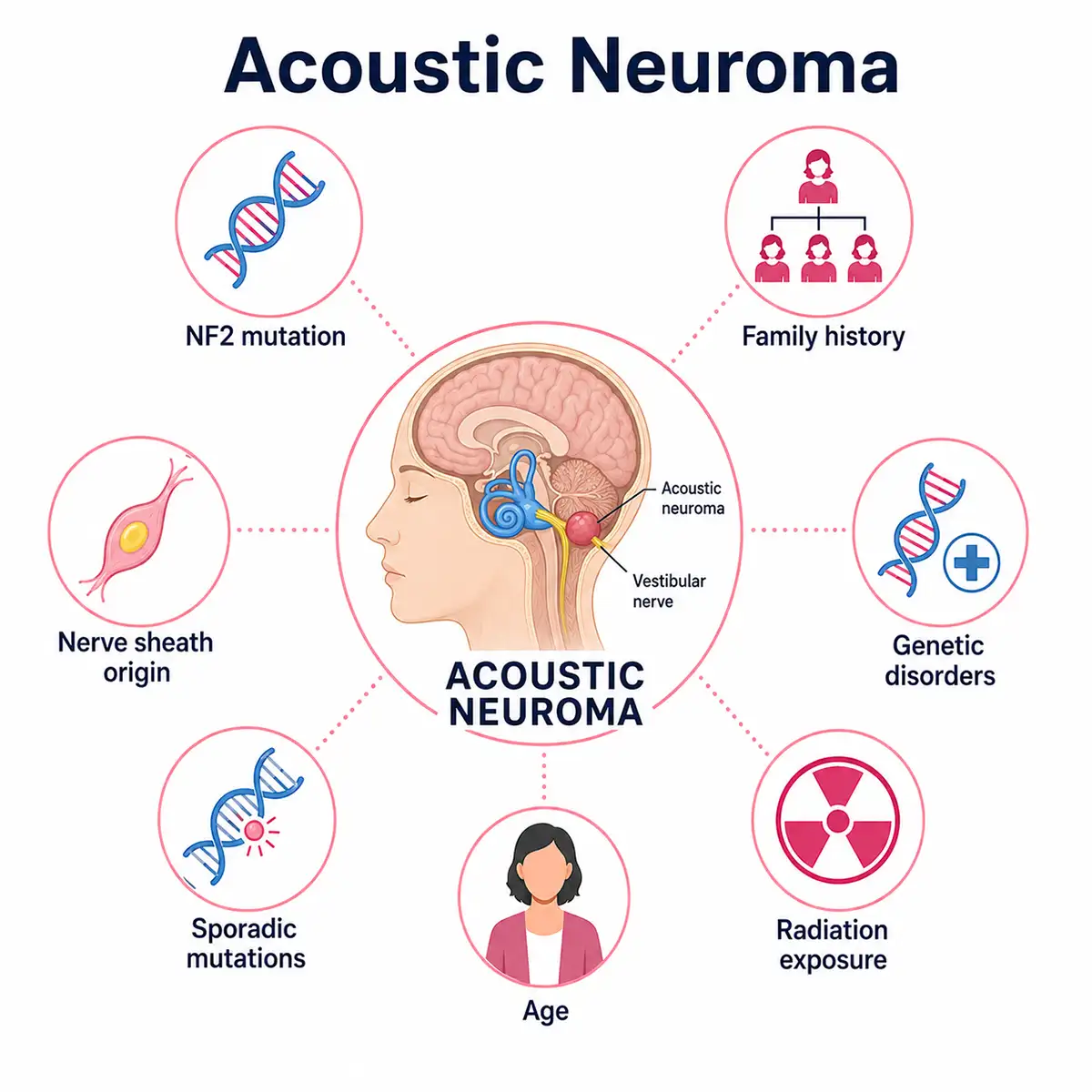
1. NF2 mutation
Neurofibromatosis type 2 is caused by *NF2* gene mutations; bilateral acoustic neuromas develop in almost all patients, making this the primary genetic factor.
2. Genetic factors
About half of the patients have sporadic cases, while the other half are associated with NF2; there are differences in the molecular mechanisms between hereditary and sporadic cases.
3. Ionizing radiation
A history of head and neck radiotherapy increases the risk of developing acoustic neuroma; the risk is particularly high for those who received radiotherapy during childhood.
4. Age factor
Acoustic neuromas are most common in people aged 30 to 60; the age of onset for sporadic cases is generally later than that for NF2-associated cases.
5. Gender differences
Sporadic acoustic neuromas are slightly more common in women than in men, possibly due to hormonal factors; tumor growth accelerates during pregnancy in some patients.
6. Noise exposure
Long-term exposure to high-intensity noise may be associated with the development of acoustic neuroma, although a causal relationship has not yet been confirmed by large-scale studies.
7. Mobile phone use
The World Health Organization classifies radiofrequency electromagnetic fields from mobile phones as a possible carcinogen, but there is currently no conclusive evidence of a direct causal link to acoustic neuroma.
Conclusion
Acoustic neuromas result from the interplay of multiple factors, such as NF2 gene mutations and radiation exposure. Although benign, they can impair hearing and facial nerve function.Prompt medical attention upon the onset of symptoms—such as tinnitus or hearing loss—is crucial for early detection and timely intervention.


