


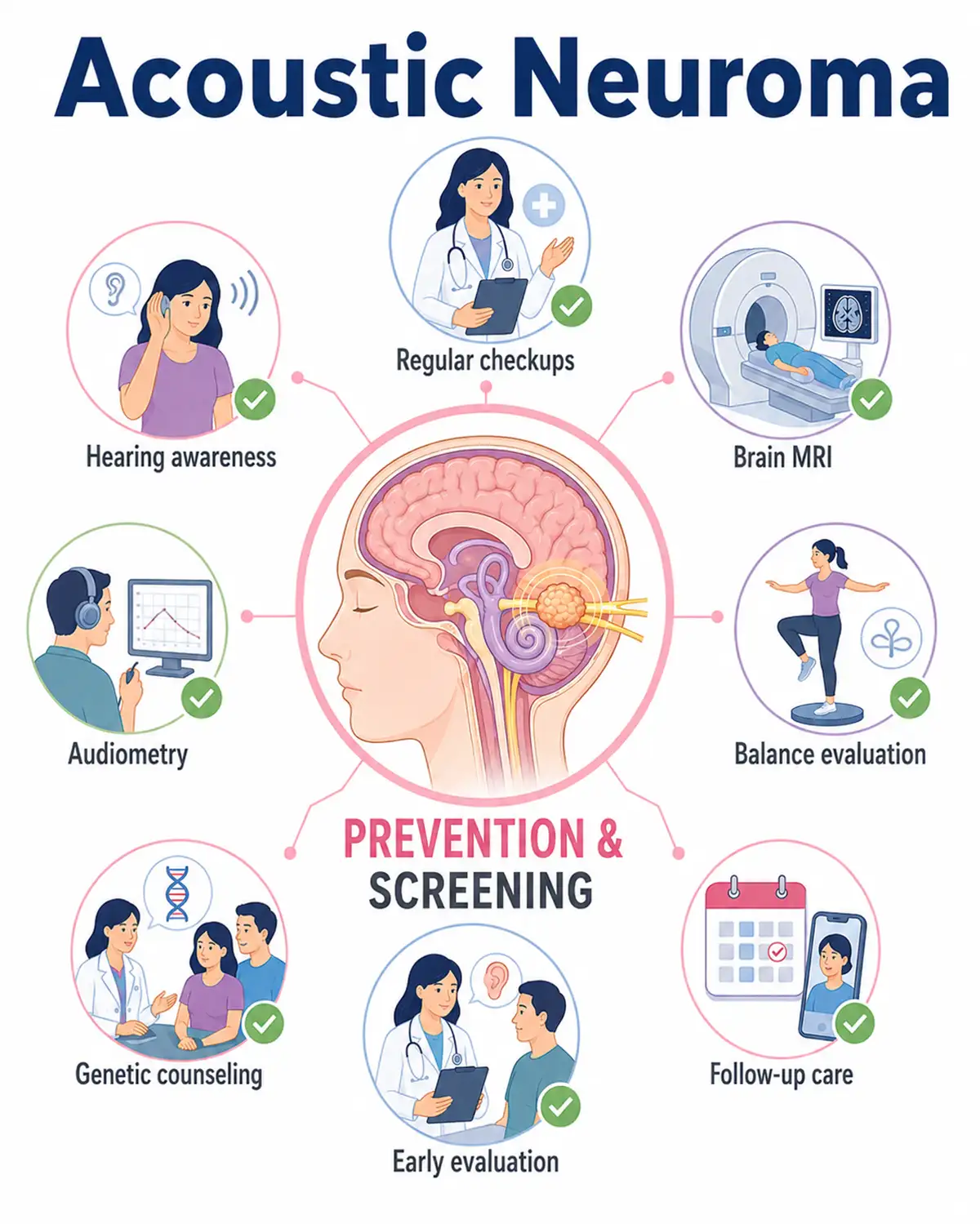
1. Genetic screening
Individuals with a family history of acoustic neuroma or neurofibromatosis should undergo *NF2* gene testing to clarify genetic risk and formulate an individualized monitoring plan.
2. Avoiding radiation
Unnecessary head and neck radiological examinations should be avoided during childhood; ionizing radiation can increase the risk of mutations in acoustic nerve sheath cells, a matter requiring serious attention.
3. Hearing monitoring
Undergo regular pure-tone audiometry and speech recognition tests; be alert to progressive unilateral hearing loss, as it is an early sign of acoustic neuroma.
4. Monitoring for tinnitus
Seek medical attention promptly if persistent unilateral tinnitus occurs, particularly when accompanied by hearing loss; tinnitus may be the initial symptom of an acoustic neuroma.
5. Facial sensation
Pay attention to symptoms such as facial numbness, pain, or altered taste; tumor enlargement can compress the trigeminal nerve, leading to facial sensory abnormalities.
6. Balance function
Seek prompt examination if gait instability, vertigo, or balance disorders occur; compression of the vestibular nerve can impair balance function.
7. Regular imaging
Carriers of NF2 gene mutations should undergo annual MRI of the internal auditory canal; early detection of small tumors allows for observation or the choice of conservative treatment options.
Conclusion
Acoustic neuromas result from the interplay of multiple factors, such as NF2 gene mutations and radiation exposure.Although benign, they can impair hearing and facial nerve function.For individuals with a family history, genetic screening and regular hearing monitoring are essential to ensure early detection and timely intervention.


