


Vaginal cancer is a relatively rare tumor resulting from the malignant transformation of vaginal mucosal epithelial cells, accounting for 1%–2% of malignant tumors of the female reproductive system.The most common symptoms are abnormal vaginal bleeding and vaginal discharge.
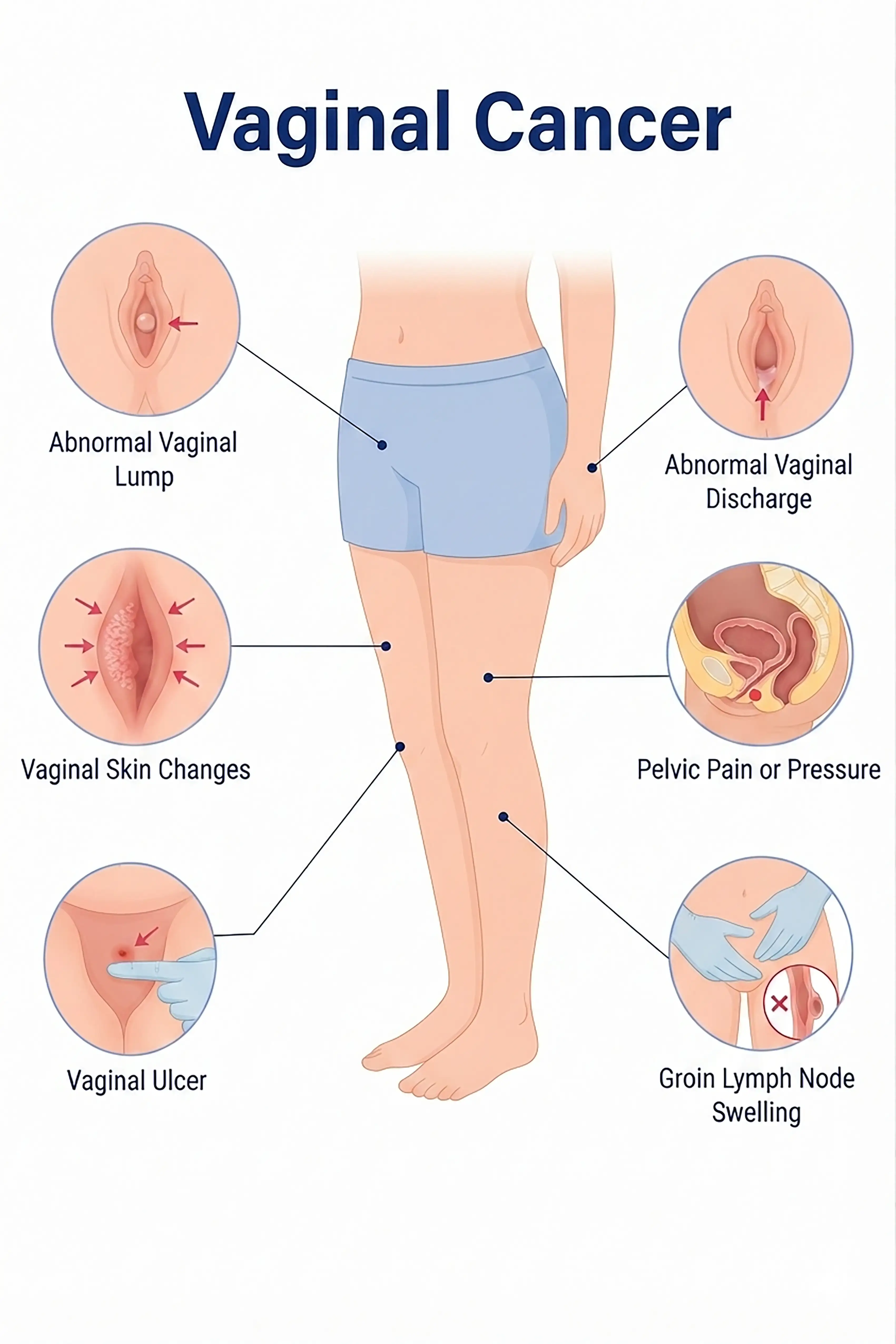
Global incidence of vaginal cancer
Vaginal cancer is a relatively rare malignancy of the female reproductive tract, accounting for approximately 1%–2% of cases.It predominantly affects postmenopausal women over the age of 60. Human papillomavirus (HPV) infection is a major risk factor, and vaginal intraepithelial neoplasia is a precursor lesion.Most vaginal cancers are squamous cell carcinomas.
Symptoms of vaginal cancer by stage
1.Early symptoms of vaginal cancer
The tumor is confined to the vaginal mucosa. It may present as postcoital bleeding, minor postmenopausal vaginal bleeding, or bloody vaginal discharge, and is easily overlooked.
2.Intermediate-stage symptoms of vaginal cancer
Increased vaginal bleeding, increased vaginal discharge with a foul odor, sensation of a vaginal mass, pain during sexual intercourse, urinary frequency and urgency, and pelvic pain.
3.Symptoms of advanced vaginal cancer
Tumor invasion of the bladder or rectum, resulting in hematuria, hematochezia, and difficulty with urination and defecation, accompanied by lower-extremity edema and symptoms of distant metastasis.
When to Seek Medical Attention
Early signs of vaginal cancer include abnormal vaginal bleeding, vaginal discharge, and pain during sexual intercourse.Please consult a doctor via the "Chat with a Doctor" feature to facilitate early detection.During the online consultation, the doctor will ask about your symptoms and history of HPV infection, and guide you through the process of undergoing a gynecological examination and biopsy.
Staging of vaginal cancer
Stage 0 vaginal cancer
Cancer cells are confined to the vaginal mucosal epithelium; this is classified as carcinoma in situ, often presenting as abnormal vaginal bleeding and detected via gynecological examination.
Stage I vaginal cancer
The tumor is confined to the vaginal wall with no lymph node metastasis; symptoms may include postcoital bleeding or vaginal discharge.
Stage II vaginal cancer
The tumor invades the paravaginal tissues but does not reach the pelvic wall, resulting in significant vaginal bleeding and pelvic pain.
Stage III vaginal cancer
The tumor extends to the pelvic wall with regional lymph node metastasis, accompanied by difficulty urinating and lower-limb edema.
Stage IV vaginal cancer
Tumor invasion of the bladder or rectal mucosa, or distant metastasis, resulting in hematuria, hematochezia, and systemic wasting.
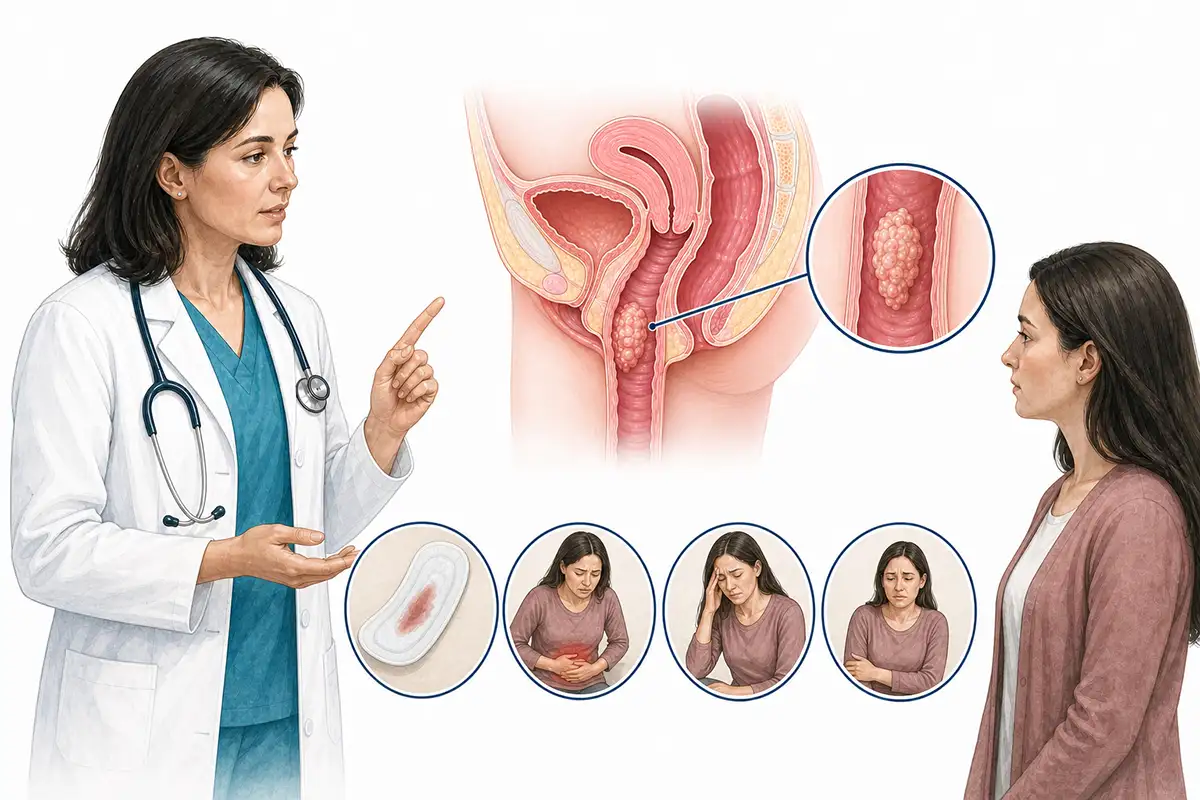
Detailed Symptoms of Vaginal Cancer
1.Abnormal vaginal bleeding
The most common initial symptom presents as postcoital bleeding, postmenopausal vaginal bleeding, or irregular intermenstrual bleeding; the amount of bleeding can vary.
2.Excessive vaginal discharge
Increased vaginal discharge;initially watery or bloody, becoming purulent or foul-smelling in later stages due to tumor necrosis and infection.
3.Pain during sexual intercourse
Tumor invasion of the vaginal wall or associated infection causes pain during sexual intercourse; severe cases may present with post-coital bleeding.
4.Pelvic pain
Tumor invasion of surrounding tissues or nerve compression causes persistent lower abdominal or pelvic pain, which may radiate to the lumbosacral region.
5.Vaginal mass
A hard mass or ulcer with an irregular surface that bleeds easily upon contact may be detected within the vagina during a gynecological examination or self-examination.
6.Urinary frequency and urgency
Anterior invasion of the bladder by the tumor causes urinary irritation symptoms such as frequency, urgency, painful urination, and hematuria.
7.Constipation and bloody stools
Posterior invasion of the rectum by the tumor causes rectal irritation symptoms such as difficulty defecating, tenesmus, and bloody stools.
8.Lower extremity edema
Pelvic lymph node metastasis compresses lymphatic vessels, causing lower limb edema—most notably in the distal extremities—accompanied by a sensation of heaviness.
9.Dysuria (difficulty urinating)
Tumor extensively invades the bladder neck or urethral orifice, causing obstructed voiding or urinary retention.
Conclusion
Vaginal cancer is relatively rare; abnormal vaginal bleeding is the most important warning sign.HPV vaccination and regular gynecological examinations help with prevention and early detection.


