


Vaginal cancer accounts for only 1%–2% of malignancies in the female reproductive tract.It predominantly affects postmenopausal women over the age of 60. Approximately 70% of cases are squamous cell carcinomas, which are closely associated with HPV infection.Vaginal intraepithelial neoplasia (VaIN) is a precursor lesion.
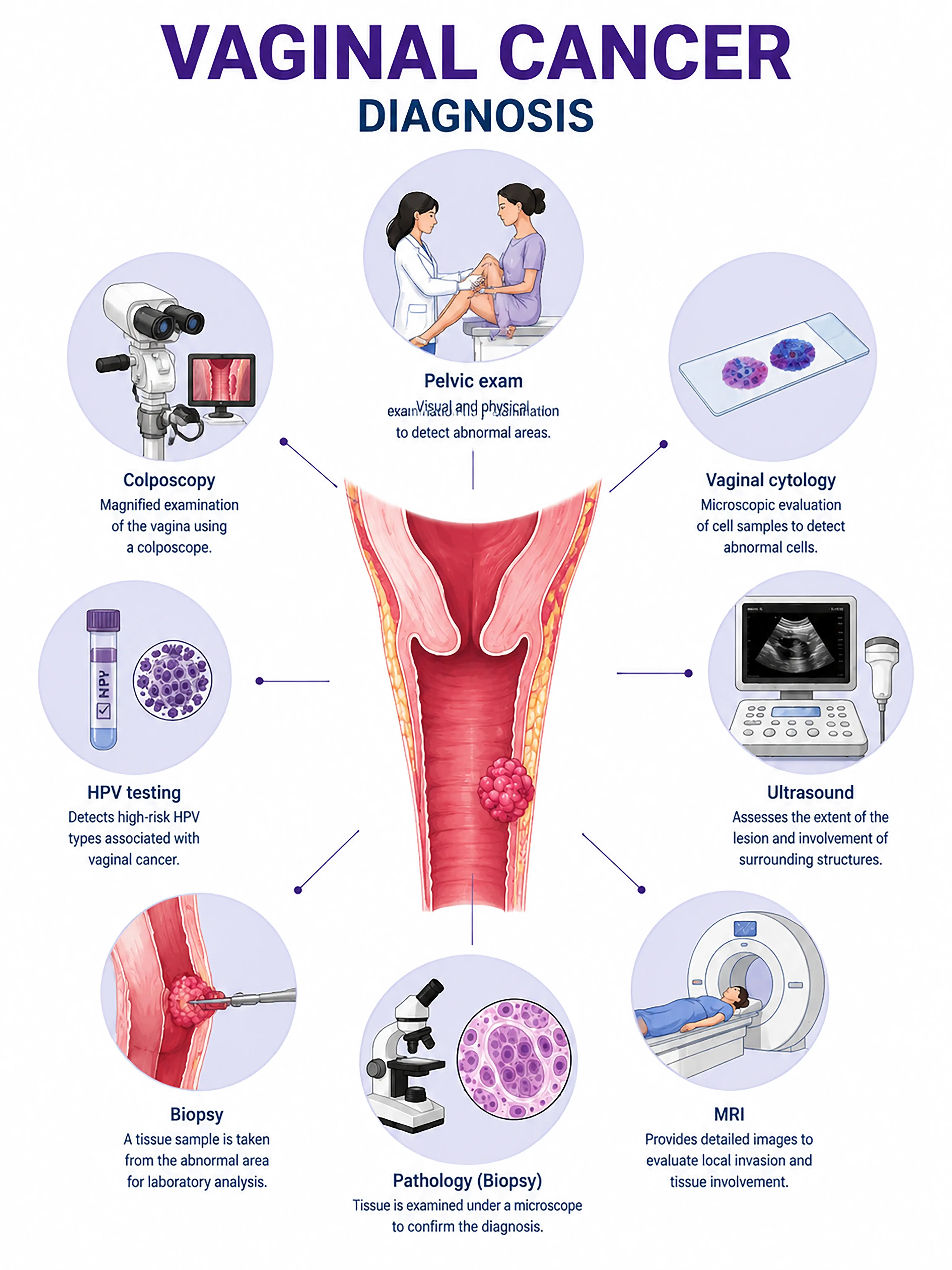
Diagnosis of vaginal cancer by stage
1.Early diagnosis of vaginal cancer
The tumor is confined to the vaginal mucosa; it is often asymptomatic or presents with only minor vaginal bleeding.Gynecological examination reveals vaginal wall abnormalities; colposcopy-guided acetic acid testing localizes the lesion, and biopsy confirms the diagnosis.
2.Diagnosis of intermediate-stage vaginal cancer
Presents with vaginal bleeding and discharge.Colposcopic biopsy is used to determine the pathological type, while contrast-enhanced CT and MRI assess the depth of tumor invasion and involvement of surrounding tissues.
3.Diagnosis of advanced vaginal cancer
Tumor invasion of the bladder or rectum, or distant metastasis to the lungs and liver.Whole-body CT and PET-CT are used to assess the extent of metastasis, and multiple biopsies are performed to confirm the pathology.
If vaginal cancer is not diagnosed promptly, the tumor will infiltrate deeply and invade adjacent organs; distant metastasis significantly worsens the prognosis and increases treatment difficulty.
When to Seek Medical Attention
Early signs of vaginal cancer include abnormal vaginal bleeding, vaginal discharge, and bleeding after sexual intercourse. Please consult a doctor via the "Chat with a Doctor" feature to facilitate early detection.During the online consultation, the doctor will ask about your symptoms and history of HPV infection, and guide you through the process of undergoing a gynecological examination and biopsy.
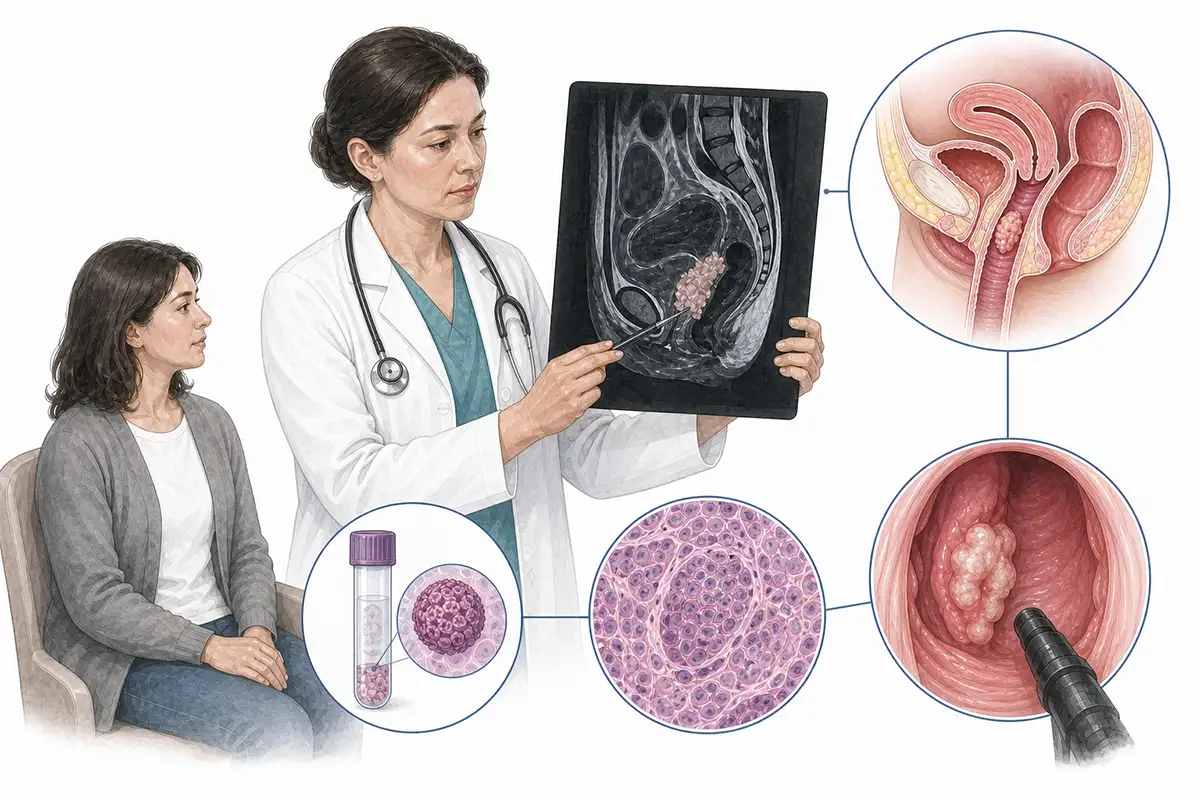
Basis for diagnosing vaginal cancer
1.Gynecological examination
Uses a vaginal speculum to inspect the vaginal wall for ulcers, masses, or discoloration, and employs bimanual examination to assess wall thickness and relationships with surrounding tissues; serves as the basis for preliminary screening.
2.Colposcopy
Specialized magnification is used to examine the vaginal mucosa; acetic acid and iodine tests are employed to localize suspicious lesions and guide precise biopsies.
3.Histopathological biopsy
Obtaining a biopsy of suspicious tissue under colposcopy guidance for pathological examination is the gold standard for diagnosing vaginal cancer, allowing for the determination of the pathological type.
4.Pelvic MRI examination
MRI is the preferred imaging modality for assessing the local extent of vaginal cancer invasion, clearly showing the relationship of the tumor to the bladder, rectum, and parametrial tissues.
5.Contrast-enhanced CT scan
Contrast-enhanced CT assesses pelvic and retroperitoneal lymph node metastasis, as well as the presence of distant metastases in organs such as the lungs and liver.
6.HPV testing
Detects high-risk HPV infection status; approximately 70% of vaginal cancers are associated with HPV infection, aiding in etiological analysis and prognostic assessment.
7.Cervical cytology
Vaginal cytology (smear test) can detect abnormal cells;although less sensitive than cervical cancer screening, it serves as an adjunctive diagnostic tool.
8.Cystoscopy and rectoscopy
For patients with advanced-stage disease, assess for tumor invasion of the bladder and rectum to rule out involvement of adjacent organs.
9.Whole-body PET-CT
Assess for distant metastasis; offers advantages in detecting occult metastatic lesions that are difficult to identify via conventional imaging, aiding in precise staging.
Daily Self-Check
Postmenopausal women experiencing abnormal vaginal bleeding or discharge should seek medical attention promptly.Those with a history of cervical cancer must remain vigilant for the development of vaginal cuff carcinoma.
Conclusion
Vaginal cancer is relatively rare; diagnosis relies on gynecological examination and colposcopy-guided biopsy.Postmenopausal women experiencing abnormal vaginal bleeding should be highly vigilant.


