


Vaginal cancer is a tumor formed by the malignant proliferation of squamous epithelial cells of the vaginal mucosa.The vagina is a muscular canal connecting the vulva to the uterus, serving as the passage for menstrual flow and fetal delivery.
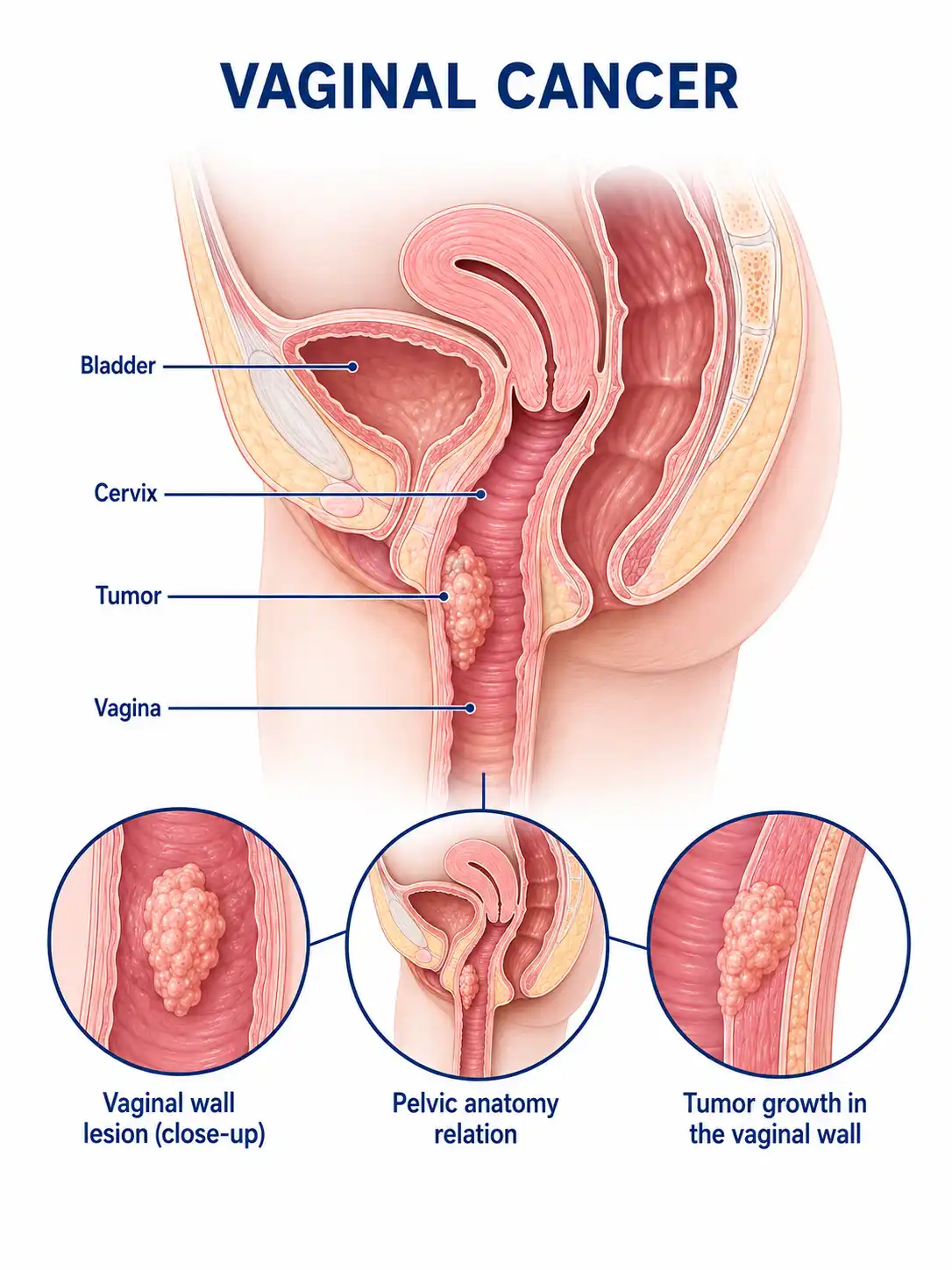
Global overview of vaginal cancer
Vaginal cancer accounts for a small proportion (approximately 1%–2%) of malignancies in the female reproductive system and is most common in women over the age of 60. Most cases are squamous cell carcinomas associated with HPV infection.
Consult a doctor regarding cancer-related issues
Women experiencing symptoms such as abnormal vaginal bleeding, vaginal discharge, pain during intercourse, or vaginal lumps should promptly consult a gynecologic oncologist.
Main types of vaginal cancer
1. Squamous cell carcinoma
It is the most common type of vaginal cancer, accounting for approximately 70%–80% of cases; it is associated with persistent high-risk HPV infection and a history of cervical intraepithelial neoplasia.
2. Types of adenocarcinoma
Accounts for approximately 10%–15% of vaginal cancers; subtypes include clear cell adenocarcinoma and adenocarcinoma of the usual type, with the former associated with in utero exposure to diethylstilbestrol (DES).
3. Melanoma
Originates from vaginal mucosal melanocytes; extremely rare, highly malignant, and carries a poor prognosis.
4. Sarcoma subtype
Originates from vaginal mesenchymal tissue (e.g., leiomyosarcoma and rhabdomyosarcoma); in children, embryonal rhabdomyosarcoma is the most common type.
5. Neuroendocrine carcinoma
Extremely rare; it is a highly malignant tumor that grows rapidly, is prone to early metastasis, and has an extremely poor prognosis.
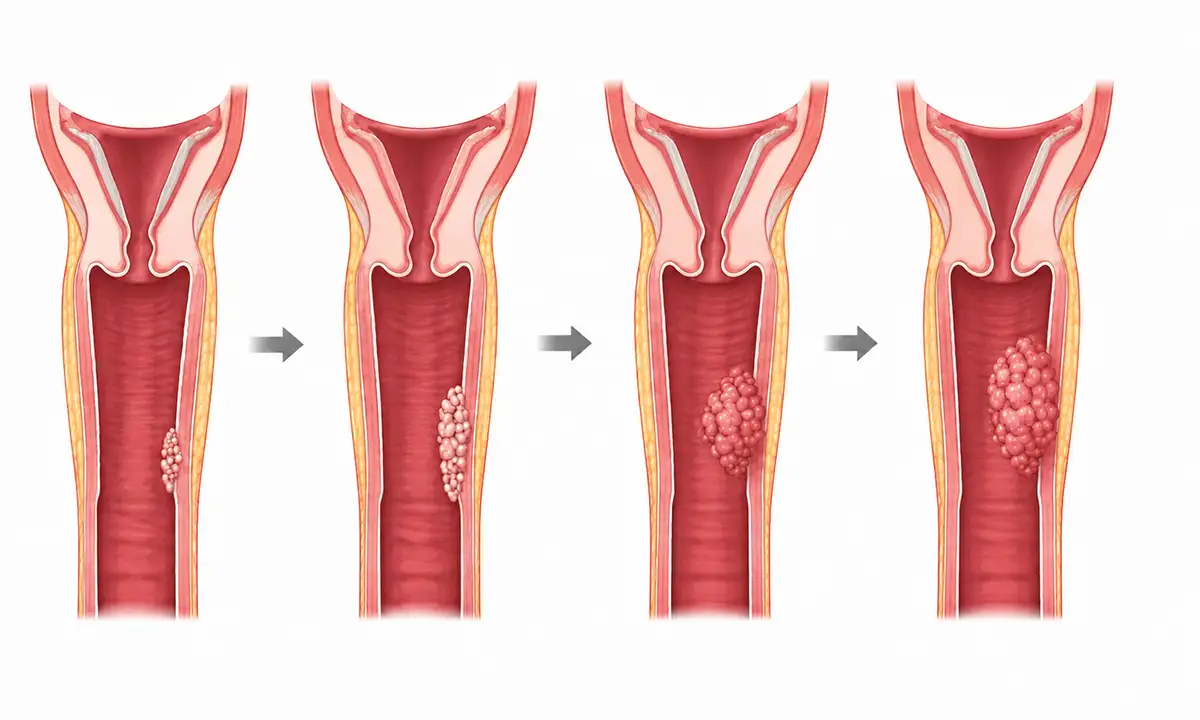
Typical symptoms and signs of vaginal cancer
1. Abnormal vaginal bleeding
The most common symptoms are bleeding after sexual intercourse, postmenopausal bleeding, or intermenstrual bleeding; any vaginal bleeding occurring outside of menstruation warrants attention.
2. Vaginal discharge
Presence of watery, bloody, or purulent vaginal discharge with an unpleasant odor, associated with tumor necrosis and infection.
3. Painful intercourse (dyspareunia)
When the tumor is located in the upper vagina or on the posterior vaginal wall, it causes pain during sexual intercourse, affecting quality of life.
4. Vaginal mass
Some patients present with a palpable, hard, and irregular vaginal mass; differential diagnosis from benign vaginal tumors is required.
5. Abnormalities in urination and defecation
When an advanced-stage tumor invades the bladder or rectum, symptoms such as urinary frequency, urgency, hematuria, difficulty defecating, or bloody stools may occur.
6. Pelvic pain
Tumor invasion of surrounding tissues or nerves causes persistent pelvic pain, which may radiate to the lumbosacral region.
Diagnostic methods for vaginal cancer
1. Gynecological examination
Speculum examination is used to observe the vaginal mucosa for abnormal hyperplasia, ulcers, or masses, while a rectovaginal examination assesses the involvement of paravaginal tissues.
2. Colposcopy
Colposcopy allows for magnified observation of subtle changes in the vaginal mucosa, guides biopsies of suspicious areas, and improves the early diagnosis rate.
3. Pathological biopsy
Obtaining a biopsy of suspicious tissue under colposcopy guidance for pathological examination is the definitive gold standard for diagnosing vaginal cancer.
4. Pelvic MRI
MRI clearly shows the depth of tumor invasion into the vaginal wall and its relationship with the adjacent bladder and rectum, serving as a crucial tool for staging.
5. HPV testing
Test for high-risk HPV infection status; a positive result suggests a potential HPV-associated squamous cell carcinoma.
6. Chest CT scan
Chest CT is used to rule out pulmonary metastasis and is an essential component of routine preoperative staging examinations.
Vaginal Cancer Treatment Methods
1. Radiotherapy
Radiotherapy is the primary treatment for vaginal cancer, comprising external beam radiotherapy and intracavitary brachytherapy;radiotherapy alone can achieve good outcomes in early-stage patients.
2. Surgical treatment
Early-stage vaginal cancer with localized lesions may be treated with wide local excision or total vaginectomy; ovarian-sparing surgery is an option for young patients who wish to preserve ovarian function.
3. Concurrent chemoradiotherapy
For patients with locally advanced disease, concurrent chemoradiotherapy can enhance therapeutic efficacy and control the progression of local lesions.
4. Chemotherapy
Platinum-based chemotherapy regimens can be used for the systemic treatment of patients with advanced or recurrent disease to control disease progression.
5. Targeted therapy
The use of drugs targeting specific molecular markers for vaginal cancer is currently being explored.
6. Immunotherapy
Immune checkpoint inhibitors have demonstrated some efficacy in a subset of patients with advanced vaginal cancer.
7. Palliative support
For patients with advanced disease, provide comprehensive treatment aimed at controlling symptoms, alleviating suffering, and improving quality of life.
8. Follow-up monitoring
Regular post-treatment gynecological examinations and pelvic imaging are required to monitor for local recurrence; long-term follow-up is crucial.
Conclusion
Vaginal cancer is a relatively rare malignancy of the female reproductive system associated with HPV infection.Early detection, standardized treatment, and long-term follow-up can help improve patient prognosis.


