


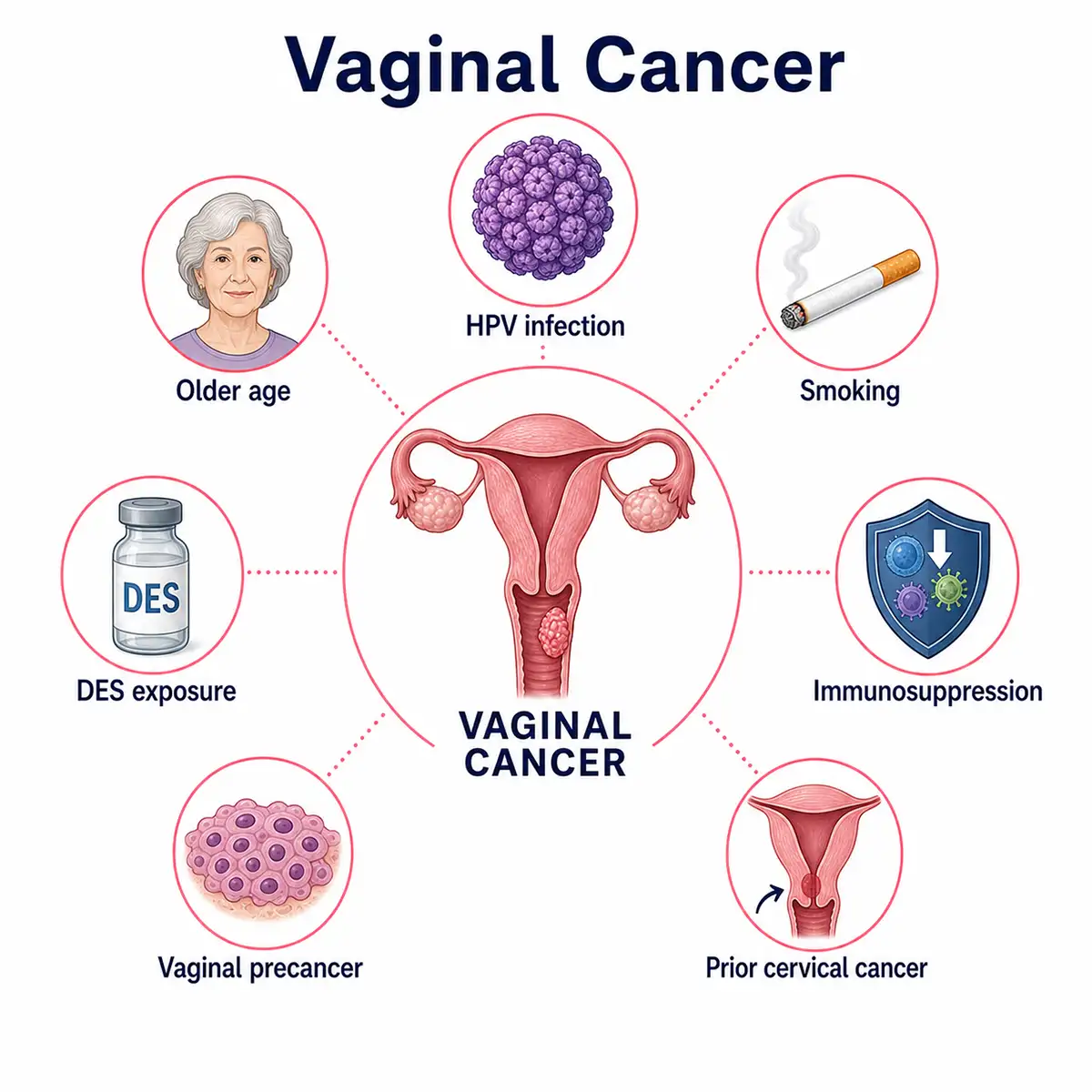
1. HPV infection
High-risk human papillomavirus (HPV) infection is a major causative factor for vaginal cancer; specifically, HPV type 16 is closely associated with the development of vaginal squamous cell carcinoma.
2. Vaginal intraepithelial neoplasia
High-grade vaginal intraepithelial neoplasia is a definite precancerous lesion; without treatment, it can progress to invasive vaginal cancer.
3. History of hysterectomy
Patients who have undergone hysterectomy due to cervical precancerous lesions remain at risk of developing vaginal intraepithelial neoplasia and vaginal cancer in the remaining vaginal tissue.
4. Radiation exposure
A history of pelvic radiotherapy increases the risk of vaginal cancer; radiation can damage the DNA of vaginal mucosal cells, leading to malignant transformation.
5. Diethylstilbestrol
Women whose mothers took diethylstilbestrol (DES) during pregnancy face a significantly increased risk of developing vaginal clear-cell adenocarcinoma, a condition with a clear causal link to such exposure.
6. Immunosuppression
Individuals with HIV infection or those on long-term immunosuppressive therapy following organ transplantation are at risk for persistent HPV infection and an increased risk of developing vaginal cancer.
7. Age factors
Vaginal squamous cell carcinoma is most common in elderly women over the age of 60, whereas clear cell adenocarcinoma is more common in younger women and is associated with DES exposure.
Conclusion
Vaginal cancer results from the interplay of multiple factors, including HPV infection and vaginal intraepithelial neoplasia; although rare, it poses a serious health risk.For women with a history of cervical precancerous lesions, regular screening is essential to ensure early detection and timely intervention.


