


Global disease prevalence: Soft tissue tumors are relatively rare malignant tumors worldwide; they comprise dozens of different types, are more common in adults, and have widely varying prognoses.
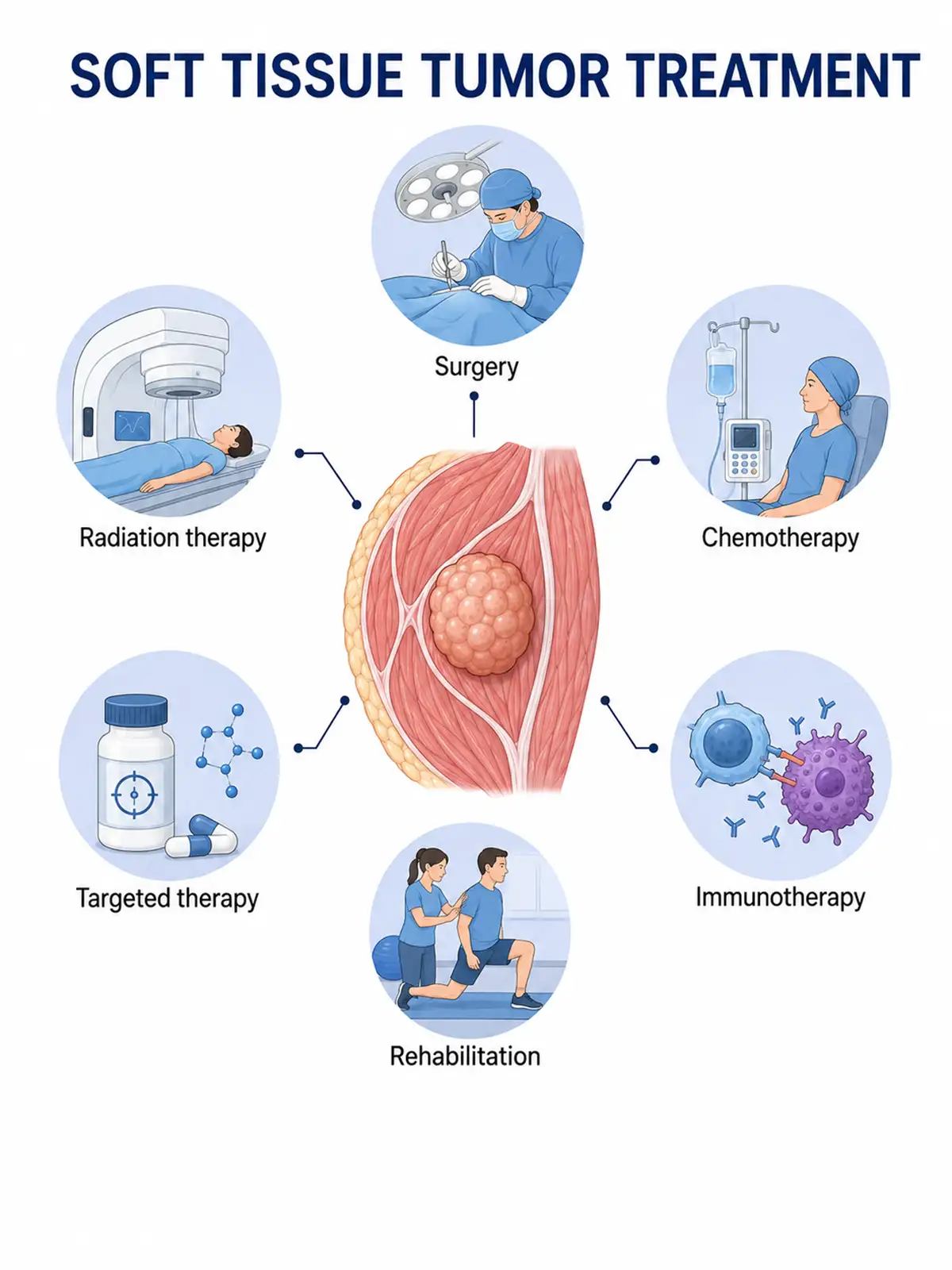
Staged treatment for soft tissue tumors
Early treatment (when the tumor is localized and small, yielding good results)
involving wide surgical resection of the lesion—can effectively control tumor progression while preserving limb function to the greatest extent possible.
Treatment for the intermediate stage (involving local spread; aiming to inhibit growth and delay progression)
employs a comprehensive approach—such as surgery combined with radiotherapy and chemotherapy—to control further tumor spread and slow the rate of disease deterioration.
Treatment for advanced disease (distant metastasis; aimed at symptom relief and survival prolongation)
primarily employs systemic therapies such as chemotherapy, targeted therapy, and others to alleviate clinical symptoms and extend patient survival as much as possible.
Why choose Fosun Health for soft tissue tumor treatment
Fosun Health’s soft tissue tumor diagnosis and treatment services are managed by a specialized bone and soft tissue tumor center; the team has extensive experience in wide local excision, pre- and post-operative radiotherapy, and multidisciplinary comprehensive treatment.Leveraging a global medical network, patients have access to cutting-edge international options, including wide local excision, precision pre- and post-operative radiotherapy, targeted therapy, immunotherapy, and isolated limb perfusion (ILP) chemotherapy.
For complex cases such as advanced or recurrent soft tissue sarcoma, a multidisciplinary team (MDT)—comprising experts in orthopedic oncology surgery, medical oncology, radiation oncology, and radiology—collaborates to formulate the optimal treatment plan; a cross-border consultation mechanism enables patients to obtain second opinions from leading international centers.
Foshan Fosun Chancheng Hospital is equipped with the CyberKnife M6 precision radiotherapy system and the VitalBeam linear accelerator, enabling the delivery of precision intensity-modulated radiotherapy (IMRT) and stereotactic radiosurgery (SRS).The hospital has extensive experience in combining wide local excision with precision radiotherapy for soft tissue sarcomas, significantly improving local control and patient survival rates.
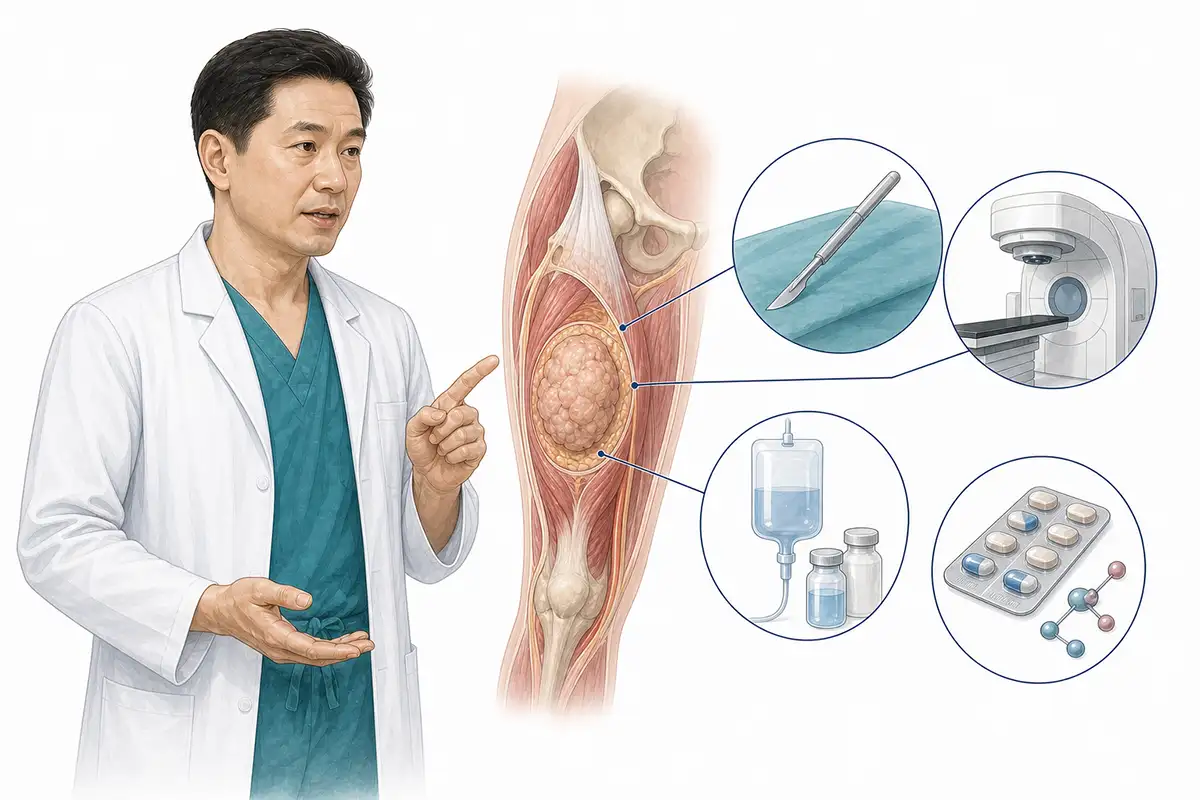
Treatment Methods for Soft Tissue Tumors
1.Wide tumor excision
For localized, resectable soft tissue sarcomas, wide surgical resection is the primary local treatment modality; the surgical plan is formulated based on tumor site, size, histological type, and relationship with major blood vessels and nerves.
Treatment advantages:
① Complete resection: Direct removal of the primary tumor to achieve local control.
② Preserve function: Preserve vital nerves, blood vessels, and normal tissues as much as possible while ensuring the required extent of tumor resection.
③ Clarify pathology: Intact specimens can be used to determine histological type, grade, and margin status.
④ Facilitates reconstruction: Repair and functional reconstruction can be performed for defects resulting from extensive resection.
2.CyberKnife precision radiotherapy
For select soft tissue tumors that are unresectable, locally recurrent, or situated near critical structures, CyberKnife precision radiotherapy may be evaluated based on lesion size, location, and prior radiotherapy history.
Treatment advantages:
① Precise focusing: Concentrating high-dose radiation on the target lesion.
② Reduction of surgical trauma: Offers a non-surgical local treatment option for certain lesions unsuitable for repeat surgery.
③ Dose optimization: Optimizes the irradiation field based on the relationship between the tumor and surrounding normal tissues.
④ Treatment of local recurrence: Can be used for local control of select cases of local recurrence or residual lesions.
3. VitalBeam linear accelerator precision radiotherapy
For patients with certain high-grade soft tissue sarcomas, postoperative local recurrence, or a high risk of local recurrence, radiotherapy may be selected based on tumor location and pathological characteristics.
Treatment advantages:
① Precise radiotherapy: Formulate a treatment plan based on the extent and anatomical location of the tumor.
② Postoperative adjuvant therapy: May be used for selected patients at high risk of local recurrence.
③ Irradiation of complex sites: Allows for individualized dose planning for various sites, such as the extremities, trunk, and pelvis.
④ Normal tissue protection: Minimizes radiation exposure to surrounding normal tissues while meeting target dose requirements.
4.Cryoablation
For selected patients with localized soft tissue tumors, locally recurrent lesions, or conditions unsuitable for surgery, image-guided cryoablation may be evaluated based on tumor type, size, location, and the status of surrounding critical structures.
5.Seed implantation
For selected patients with unresectable, locally recurrent, or residual localized soft tissue malignancies following prior treatment, radioactive seed implantation may be considered based on lesion location, extent, and treatment history.
6.Chemotherapy
Kills cancer cells using anticancer drugs such as doxorubicin; demonstrates good efficacy against specific types of cancer, such as rhabdomyosarcoma.
7.Targeted therapy
Precision targeting of specific molecular markers yields significant efficacy and manageable side effects in conditions such as gastrointestinal stromal tumors (GIST).
8.Radiofrequency ablation therapy
Uses radiofrequency thermal energy to directly destroy tumor tissue; suitable for patients with unresectable locally recurrent or metastatic lesions.
9.Neoadjuvant therapy
Using chemoradiotherapy prior to surgery to shrink the tumor creates more favorable conditions for subsequent surgical resection and increases the success rate.
10 Comprehensive treatment
Formulate an individualized comprehensive treatment plan based on the patient's specific condition, combining modalities such as surgery, radiotherapy, and chemotherapy to enhance therapeutic efficacy.
11 Supportive care
Approaches such as nutritional support, psychological counseling, and symptom management can comprehensively improve the patient's physical condition and quality of life, as well as enhance therapeutic efficacy.
Post-treatment care
Focus on functional exercises for the affected limb and balanced nutrition; avoid strenuous exercise; attend scheduled follow-ups and actively cooperate with further treatment as advised.
Post-treatment examinations
Periodic local MRI, chest CT, and follow-up imaging are required after treatment to timely detect local recurrence or pulmonary metastasis.
Conclusion
Soft tissue tumors pose a serious threat; the key to treatment lies in early detection, diagnosis, and intervention. Selecting an appropriate treatment plan and adhering to follow-up care helps improve quality of life.


