


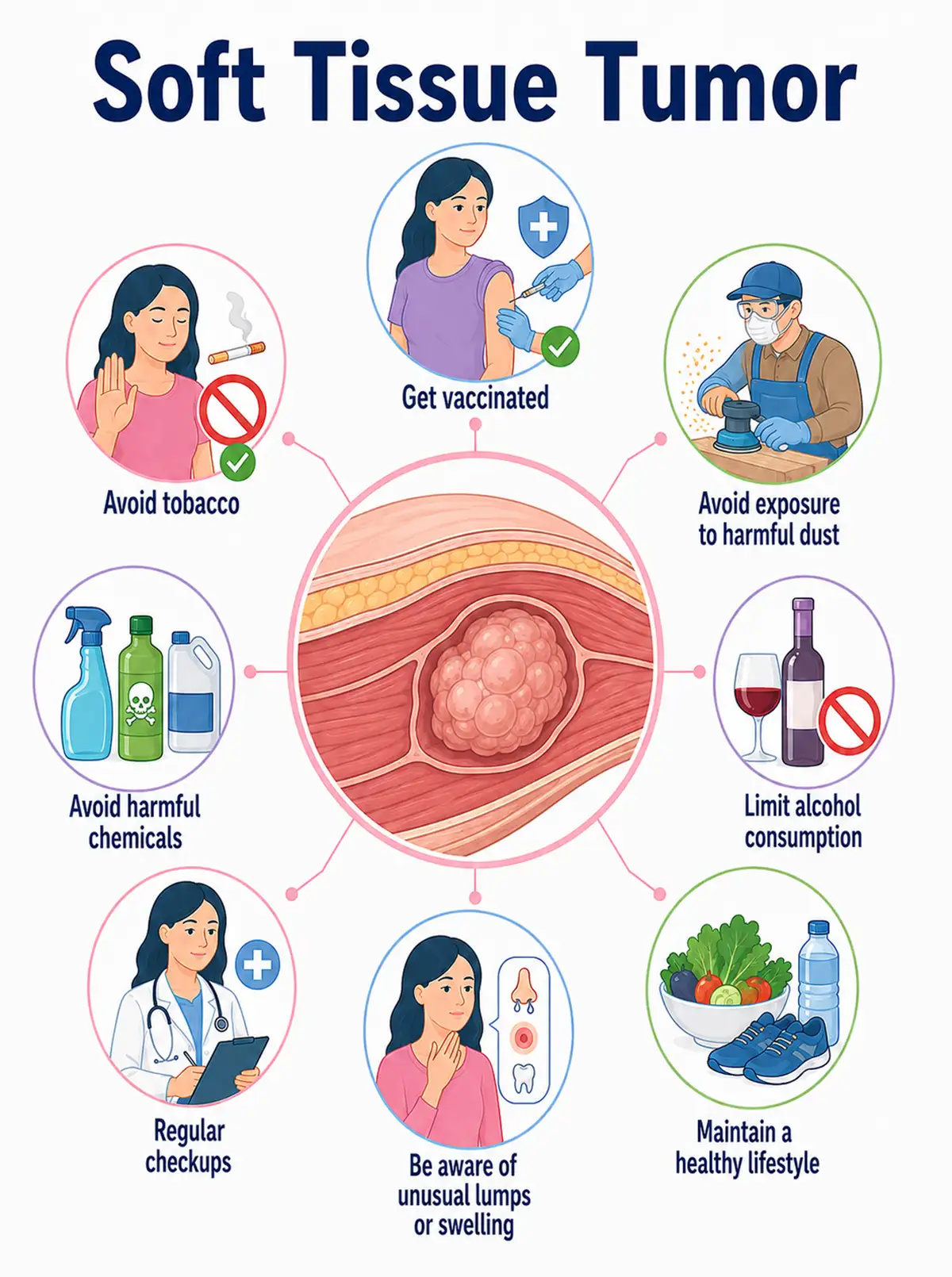
1. Avoidance of radiation
Minimize unnecessary radiological examinations and treatments; a history of radiotherapy is a known risk factor for soft tissue sarcoma and warrants serious attention.
2. Occupational protection
Individuals with long-term exposure to chemicals such as vinyl chloride, dioxins, and herbicides should implement occupational protective measures to minimize skin contact with and inhalation of harmful substances.
3. Focus on the mass
Seek medical attention promptly if a painless mass appears on the limbs or trunk—especially one exceeding 5 cm in diameter or showing recent enlargement—to rule out soft tissue sarcoma.
4. Genetic screening
Individuals with a family history of neurofibromatosis or Li-Fraumeni syndrome should seek genetic counseling and undergo regular physical examinations to monitor for changes in soft-tissue masses.
5. Lymphatic control
Patients who have undergone breast cancer surgery should actively prevent upper-limb lymphedema; long-term lymphedema can increase the risk of developing soft-tissue sarcoma.
6. Healthy lifestyle
Maintain a regular daily routine, a balanced diet, and moderate exercise; enhancing immune function helps the body recognize and eliminate abnormal cells.
7. Regular physical examinations
Undergo a comprehensive annual physical examination, including palpation of the limbs; high-risk individuals should undergo regular ultrasound or MRI scans to detect suspicious masses early.
Conclusion
Soft tissue tumors result from the interplay of various factors, such as radiation and chemical exposure; they comprise a complex array of pathological types and pose serious health risks.Avoiding exposure to carcinogens, monitoring changes in any lumps, and undergoing regular check-ups to ensure early detection and timely intervention are crucial for improving prognosis.


