


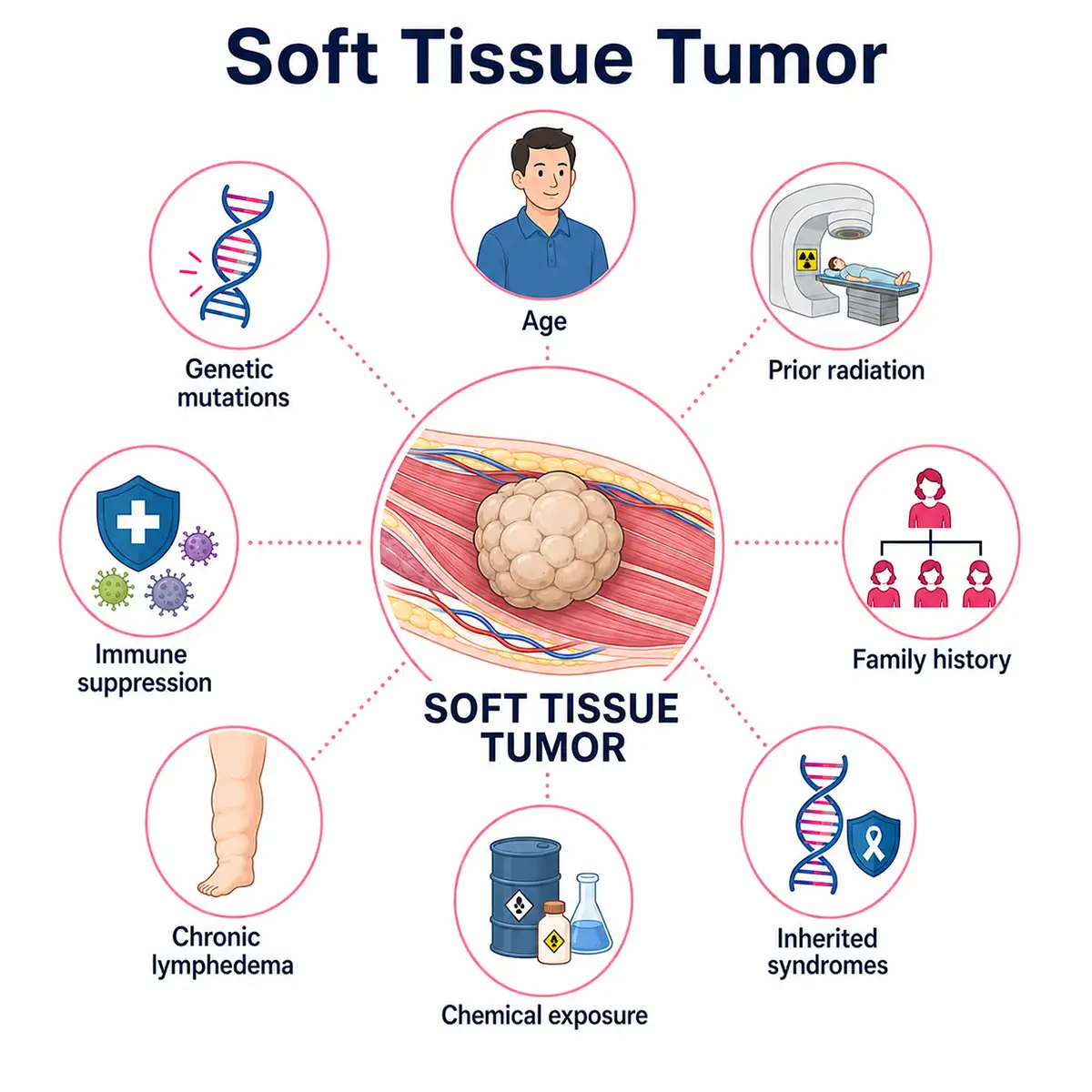
1. Genetic factors
Genetic disorders such as neurofibromatosis and Li-Fraumeni syndrome significantly increase the risk of developing soft tissue sarcoma.
2. Radiation exposure
A history of radiotherapy is a known risk factor for soft tissue sarcoma; the latency period following radiotherapy is typically ten to fifteen years or longer.
3. Chemical exposure
Long-term exposure to chemicals such as vinyl chloride, dioxins, and herbicides can increase the risk of developing soft-tissue sarcoma.
4. Chronic lymphedema
In patients with chronic lymphedema—such as those who develop lymphedema following breast cancer surgery—Stewart-Treves syndrome can increase the risk of soft-tissue sarcoma.
5. Immunosuppression
Long-term use of immunosuppressants following organ transplantation is associated with a significantly increased risk of soft-tissue sarcoma and Kaposi's sarcoma.
6. Viral infection
Human herpesvirus 8 (HHV-8) is closely associated with the development of Kaposi sarcoma; the risk of developing the disease is significantly elevated in individuals with HIV infection.
7. Age factors
Soft tissue sarcomas can occur at any age, though certain subtypes have specific age predilections; for instance, rhabdomyosarcoma is more common in children.
Conclusion
Soft tissue tumors result from the interplay of various factors, such as genetics and radiation exposure;they comprise a complex array of pathological types and pose serious health risks.Avoiding exposure to carcinogens and undergoing regular check-ups to ensure early detection and timely intervention are crucial for improving prognosis.


