


Global prevalence: Prostate cancer is one of the most common malignancies in men worldwide; incidence rates are higher in developed countries and regions, and the disease progresses relatively slowly.
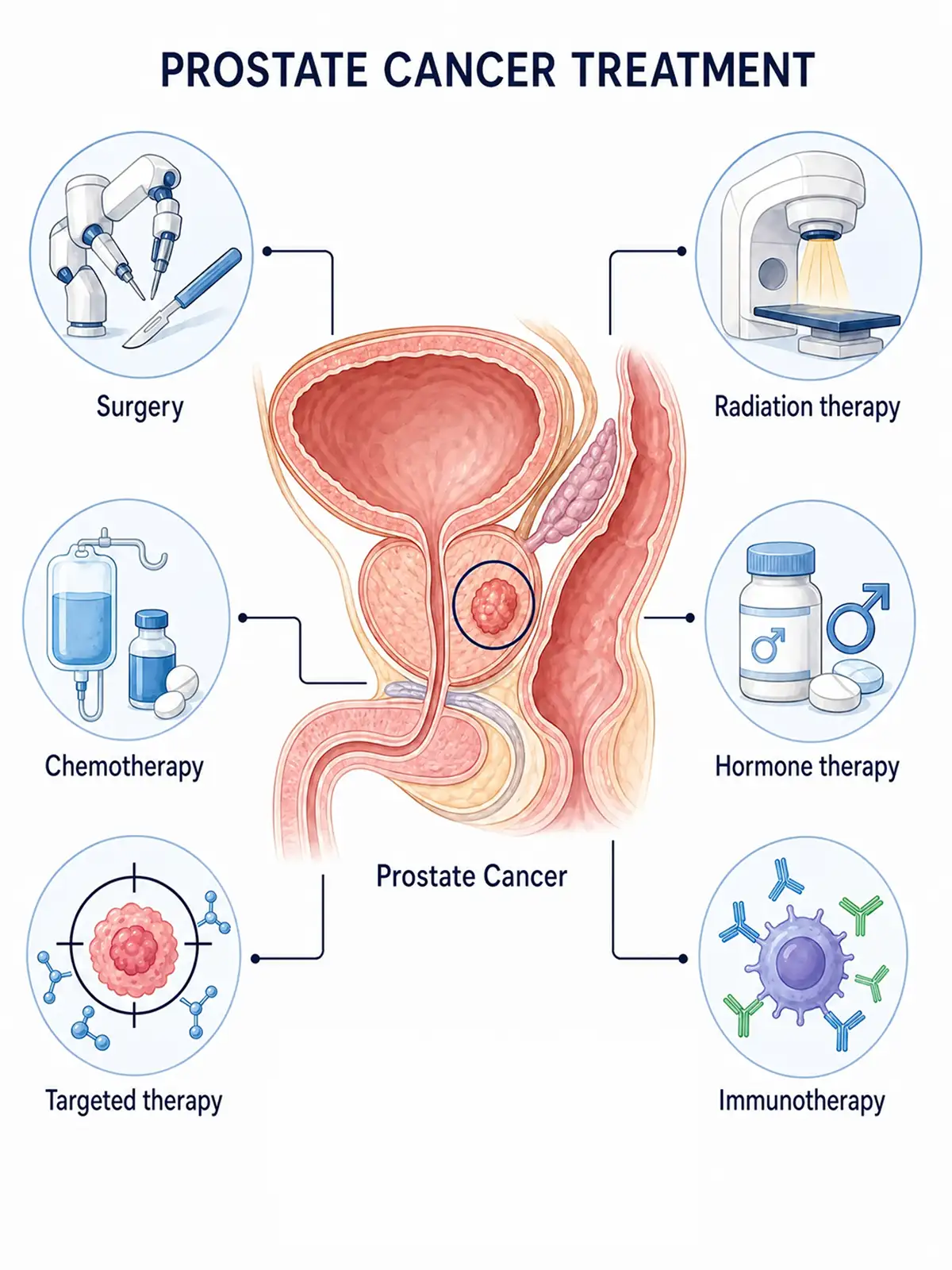
Treatment based on prostate cancer stages
Early treatment (involving a localized, small tumor with a favorable response)
specifically surgical resection combined with adjuvant therapy—can effectively control tumor progression, and the patient's prognosis is relatively good.
Intermediate-stage treatment (addressing local spread, inhibiting growth, and delaying progression)
employs a comprehensive approach—combining surgery with radiotherapy and endocrine therapy—to control further tumor spread and slow the rate of disease deterioration.
Treatment for advanced disease (distant metastasis; aimed at symptom relief and survival prolongation)
primarily employs systemic therapies such as endocrine therapy, chemotherapy, and others to alleviate clinical symptoms and extend patient survival as much as possible.
Why choose Fosun Health for prostate cancer treatment
Fosun Health’s prostate cancer care is managed by a specialized urologic oncology center; the team possesses extensive experience in robot-assisted radical prostatectomy, active surveillance for localized prostate cancer, and comprehensive treatment for advanced-stage disease.Leveraging a global medical network, patients can access state-of-the-art treatments such as sexual function-preserving robot-assisted radical prostatectomy, CyberKnife M6 stereotactic radiosurgery, novel endocrine therapies, PARP inhibitor targeted therapy, and ¹⁷⁷Lu-PSMA radionuclide therapy.
For complex cases such as metastatic castration-resistant prostate cancer, a Multidisciplinary Team (MDT)—comprising experts in urology, medical oncology, radiation oncology, and nuclear medicine—formulates the optimal treatment plan; a cross-border consultation mechanism enables patients to obtain second opinions from top-tier overseas medical centers.
Foshan Fosun Chancheng Hospital is equipped with the da Vinci surgical robot and the CyberKnife M6 precision radiotherapy system, enabling robot-assisted radical prostatectomy and stereotactic radiosurgery.By integrating genetic testing-guided targeted therapy and radionuclide therapy, the hospital provides personalized, comprehensive care for patients at various stages of prostate cancer.
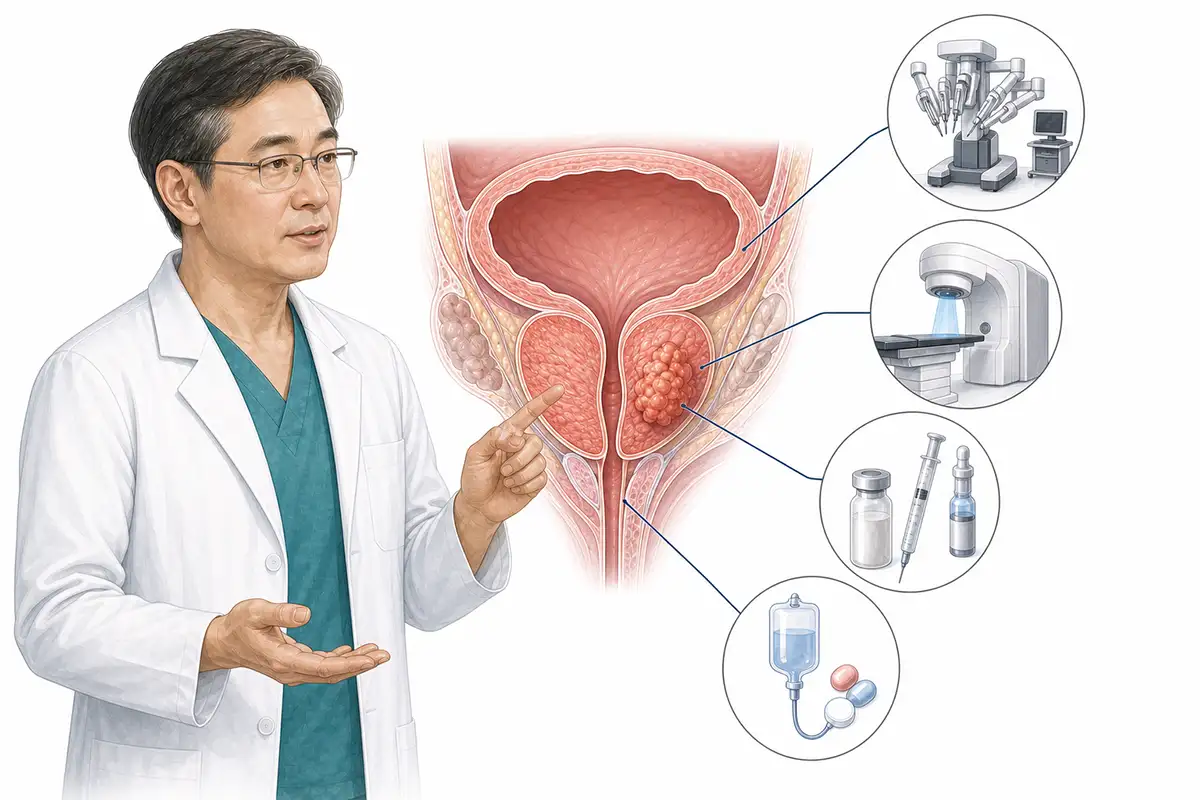
Prostate Cancer Treatment Methods
1.Da Vinci robot-assisted prostate cancer surgery
For patients with localized or partially locally advanced prostate cancer eligible for radical surgery, Da Vinci robot-assisted radical prostatectomy may be considered based on tumor stage, age, and overall health status.
Treatment advantages:
① Minimally invasive procedure: Complex pelvic surgery performed using a robotic-assisted system.
② Precise dissection: Magnified surgical field facilitates delicate pelvic dissection procedures.
③ Precise resection: Resection of the prostate, seminal vesicles, and related tissues is performed based on the extent of the tumor.
④ Functional preservation: Evaluates the preservation of structures such as neurovascular bundles based on tumor location, following safe tumor resection.
2.CyberKnife precision radiotherapy
For selected patients with localized or locally advanced prostate cancer, CyberKnife stereotactic radiotherapy may be evaluated based on risk stratification and anatomical considerations.
Treatment advantages:
① Precise localization: An individualized radiotherapy plan is formulated based on the locations of the prostate and the tumor.
② Dose concentration: Concentrating the radiation dose on the target area of the prostate.
③ Protects surrounding tissues: Minimizes radiation exposure to adjacent organs such as the bladder and rectum as much as possible.
④ Short treatment course: Patients meeting the indications for stereotactic radiotherapy can undergo high-dose hypofractionated treatment (fewer fractions).
3. VitalBeam linear accelerator precision radiotherapy
Based on the VitalBeam linear accelerator platform, precision radiotherapy techniques—such as intensity-modulated radiotherapy (IMRT) and image-guided radiotherapy (IGRT)—can be employed to formulate personalized treatment plans tailored to disease risk stratification.
Treatment advantages:
① Precise irradiation: Formulate a radiotherapy plan based on the prostate and relevant at-risk regions.
② Dose optimization: Improves the uniformity and accuracy of the dose distribution within the target area.
③ Protects normal tissues: Minimizes radiation exposure to surrounding tissues such as the rectum and bladder as much as possible.
④ Broad applicability: Radiotherapy regimens can be tailored based on risk stratification and treatment objectives.
4.Cryoablation
For selected patients with localized or locally recurrent prostate cancer, local therapies such as cryoablation may be considered based on the extent of the lesion and prior treatment history.
Treatment advantages:
① Local ablation: Destruction of tumor tissue in the target area using low temperatures.
② Minimally invasive treatment: Local ablation can be performed via routes such as the transperineal approach.
③ Local therapy: Targets specific lesions, minimizing impact on non-target tissues.
④ Selective application: Suitable for specific patients following rigorous assessment; not used as a routine treatment for all prostate cancer patients.
5.Seed implantation
For selected patients with localized prostate cancer, radioactive seed brachytherapy may be considered based on factors such as risk stratification, prostate volume, tumor extent, and urinary function.
6.Endocrine therapy
Suppresses androgen secretion via pharmacological or surgical castration, blocking tumor growth signals to effectively control tumor progression;can achieve favorable therapeutic results.
7.Chemotherapy
Kills cancer cells using anti-cancer drugs such as docetaxel to effectively control the rate of tumor progression; commonly used for patients with advanced castration-resistant disease to consolidate therapeutic efficacy.
8.Targeted therapy
Delivers precision strikes against specific molecular targets; offers good efficacy with relatively mild side effects; suitable for select patients with advanced-stage disease.Helps improve therapeutic outcomes.
9.Immunotherapy
Activates the body's immune system to recognize and attack cancer cells, offering a new treatment option for patients with advanced prostate cancer.
10 Comprehensive treatment
Formulate an individualized comprehensive treatment plan based on the patient's specific condition, combining modalities such as surgery, radiotherapy, and endocrine therapy to enhance therapeutic efficacy.
11 Supportive care
Approaches such as nutritional support, psychological counseling, and symptom management can comprehensively improve the patient's physical condition and quality of life, as well as consolidate therapeutic efficacy.
Post-treatment care
Maintain a regular daily routine and a balanced diet; engage in moderate exercise; attend scheduled follow-up appointments and actively cooperate with subsequent treatment as advised.
Post-treatment examinations
After treatment, regular prostate-specific antigen (PSA) testing, imaging follow-ups, and digital rectal examinations are required to detect changes in the condition in a timely manner.
Conclusion
Prostate cancer poses a serious health threat; successful treatment relies on early detection, diagnosis, and intervention, as well as the selection of appropriate treatment plans and consistent follow-up to improve quality of life.


