


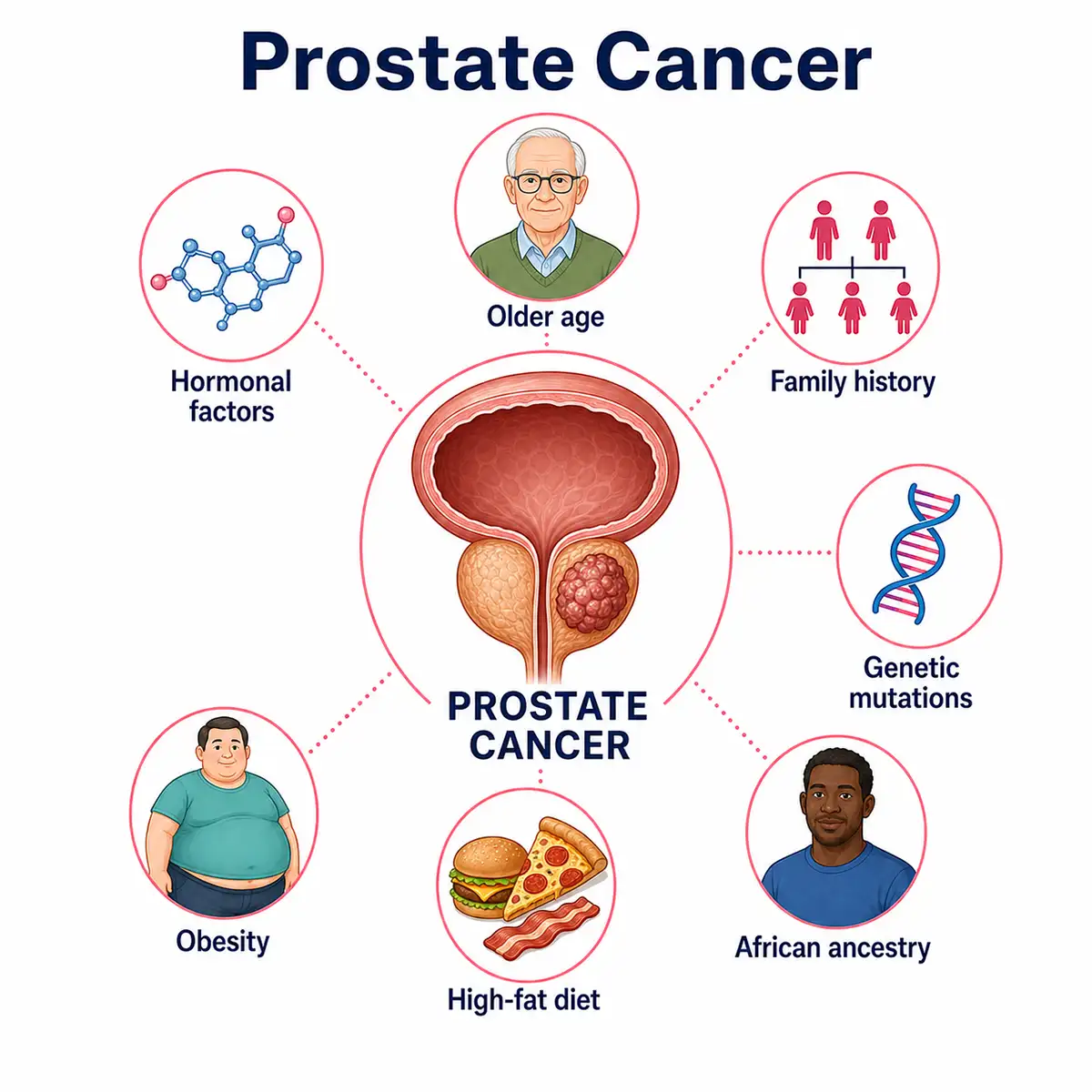
1. Age factor
The incidence of prostate cancer rises significantly with age; the vast majority of patients are over 65, while cases in those under 50 are rare.
2. Genetic factors
Having a first-degree relative with a history of prostate cancer increases the risk of developing the disease two- to threefold; BRCA1 and BRCA2 gene mutations also significantly increase the risk.
3. Androgen factors
Androgens—particularly dihydrotestosterone—promote the proliferation of prostate cells, and prolonged exposure to high levels of androgens is closely associated with the development of prostate cancer.
4. Racial differences
Prostate cancer incidence and mortality rates are highest among African-American men and relatively lower among Asian men; racial and genetic differences play a significant role.
5. High-fat diet
A long-term high-fat diet, particularly one involving excessive intake of red meat and dairy products, increases the risk of developing prostate cancer.
6. Obesity-related factors
Obesity may be associated with an increased risk of aggressive prostate cancer; changes in inflammatory factors and hormone levels in obese individuals promote tumor growth.
7. Occupational exposure
Workers exposed to heavy metals like cadmium over the long term, as well as agricultural workers exposed to pesticides and herbicides, may face an increased risk of prostate cancer.
Conclusion
Prostate cancer results from the interplay of various factors, such as age and genetics; it is a common and serious malignancy in older men.Regular testing for prostate-specific antigen (PSA) is crucial for older men to ensure early detection and timely intervention.


