


Prostate cancer is a tumor resulting from the malignant proliferation of prostatic acinar epithelial cells.The prostate is located beneath the bladder, surrounds the origin of the urethra, and secretes prostatic fluid, which constitutes a portion of semen.
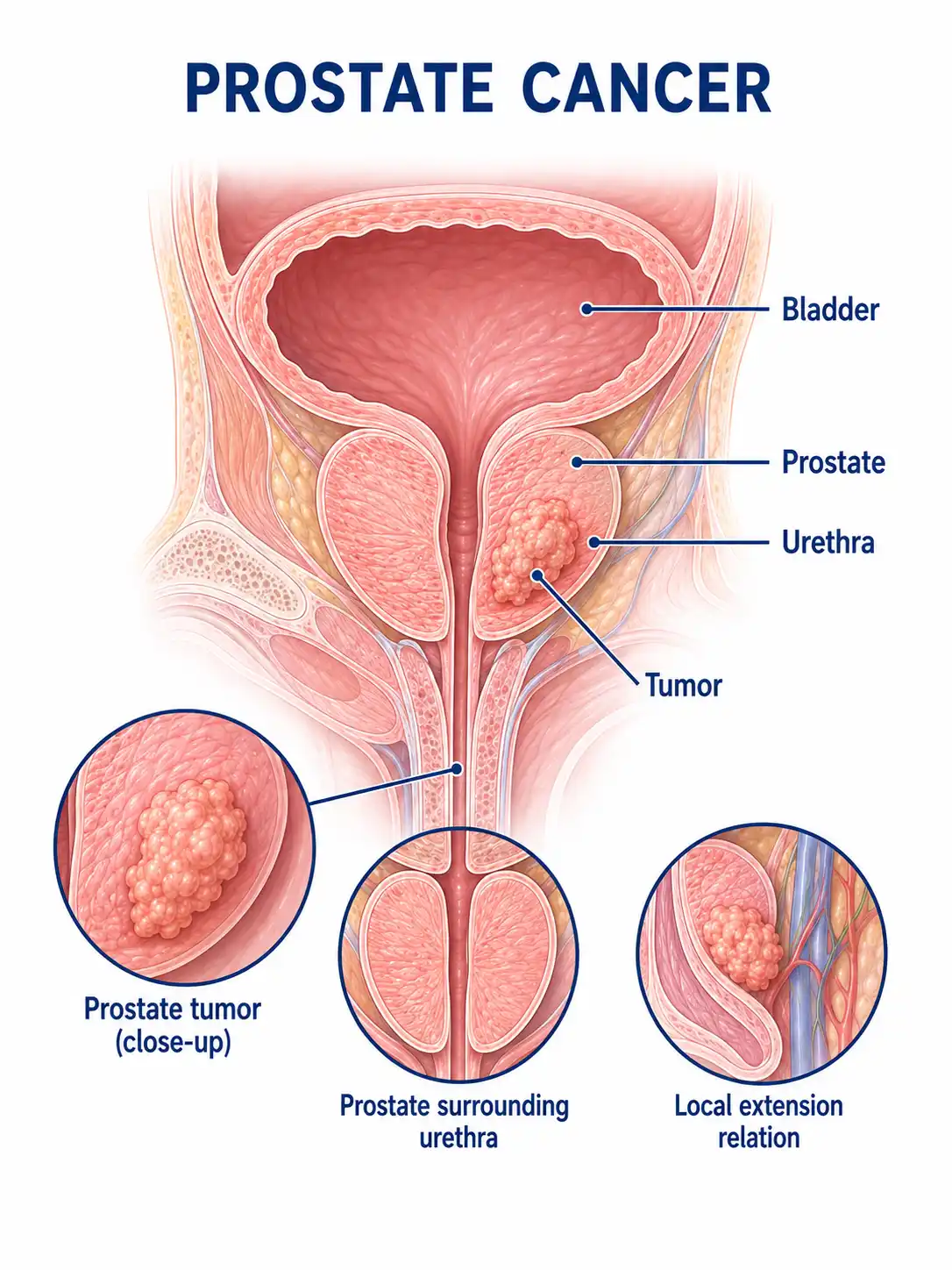
Global overview of prostate cancer
Prostate cancer is one of the most common malignancies among men worldwide.In my country, the incidence of prostate cancer is rising rapidly—with higher rates in urban areas compared to rural ones—and it predominantly affects men over the age of 65.
Consult a doctor regarding cancer-related issues
Men experiencing symptoms such as difficulty urinating, urinary frequency or urgency, hematuria (blood in the urine), or bone pain—particularly those over the age of 50 or with a family history of prostate cancer—should promptly consult a urologist.
Main types of prostate cancer
1. Acinar adenocarcinoma
The most common type of prostate cancer, accounting for over 95% of cases; it originates from the epithelium of the prostatic acini, and the Gleason score serves as the standard for pathological grading.
2. Ductal adenocarcinoma
Originating from the large ducts of the prostate, this is a relatively rare and highly aggressive tumor that often invades the seminal vesicles and bladder neck.
3. Neuroendocrine carcinoma
Includes small-cell carcinoma and large-cell neuroendocrine carcinoma; these are highly malignant and unresponsive to endocrine therapy.
4. Squamous cell carcinoma
Extremely rare; unlike prostatic adenocarcinoma, it is insensitive to both endocrine therapy and chemotherapy, and the prognosis is poor.
5. Transitional cell carcinoma
Originating from the prostatic urethra or prostatic ducts, this is a relatively rare tumor with biological behavior similar to that of transitional cell carcinoma of the bladder.
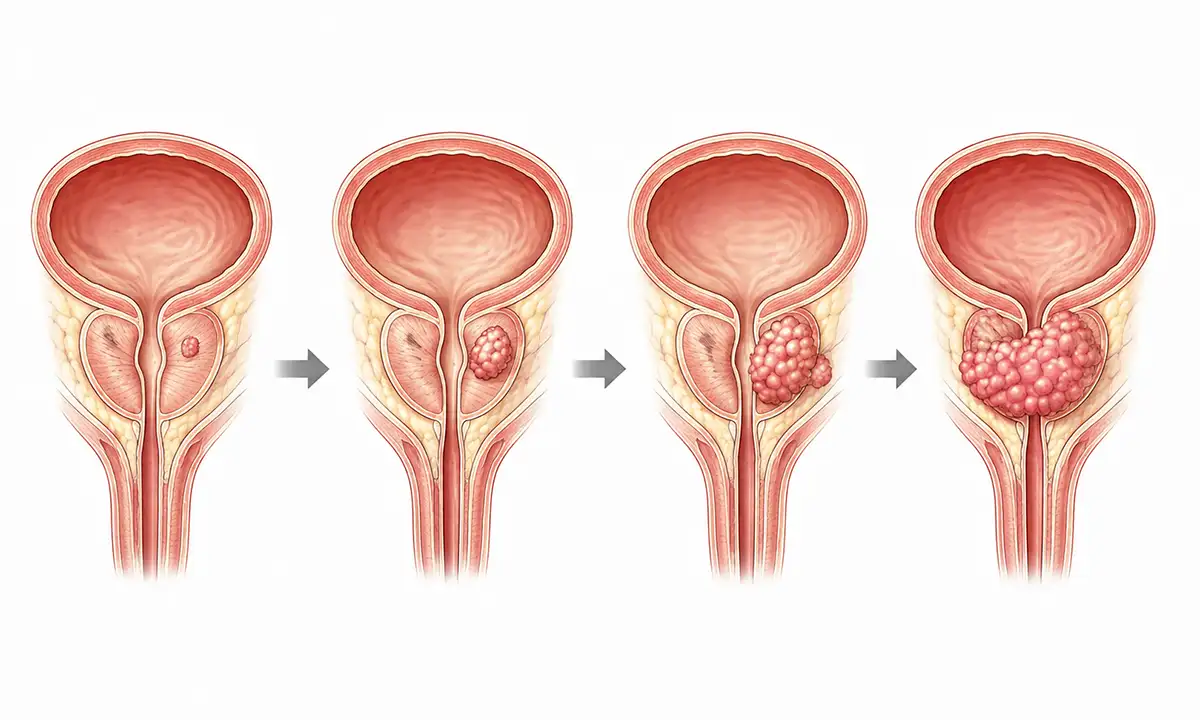
Typical symptoms and signs of prostate cancer
1. Difficulty urinating (dysuria)
There are often no noticeable symptoms in the early stages; as the tumor enlarges and compresses the urethra, symptoms such as difficulty urinating, a thinning urinary stream, and a sensation of incomplete emptying appear.
2. Urinary frequency and urgency
Symptoms of lower urinary tract irritation—such as increased nocturia, urinary frequency, and urgency—may occur; these are similar to symptoms of prostatic hyperplasia and can easily be confused.
3. Hematuria and hemospermia
The occurrence of hematuria or hemospermia due to tumor invasion of the urethra or seminal vesicles is a significant sign of disease progression.
4. Bone pain
The most common site of metastasis for prostate cancer is the bone, manifesting as persistent pain in the lower back, pelvis, or bones of the limbs.
5. Erectile dysfunction
Erectile dysfunction occurs when the tumor invades the neurovascular bundle; sexual function may also be affected following radical surgery.
6. Lower limb edema
Pelvic lymph node metastasis compresses lymphatic drainage, causing edema in both lower limbs; in severe cases, it may be accompanied by deep vein thrombosis.
What are the diagnostic methods for prostate cancer
1. PSA test
Prostate-specific antigen (PSA) is the most important serum marker for prostate cancer; elevated PSA levels suggest a possibility of prostate cancer, requiring comprehensive assessment alongside a digital rectal examination.
2. Digital rectal examination
A physician palpates the prostate via a digital rectal examination to assess its size, texture, and the presence of nodules; this is a simple and important examination method.
3. Prostate needle biopsy
Transrectal ultrasound-guided multi-core needle biopsy is the gold standard for diagnosing prostate cancer; typically, more than 12 cores are obtained.
4. Multiparametric MRI
mpMRI clearly visualizes intraprostatic lesions, and PI-RADS scores guide the decision on whether a needle biopsy is required.
5. Bone scan
Whole-body bone scanning is the preferred method for assessing bone metastases; it is indicated for patients with elevated PSA levels or significant bone pain.
6. PSMA-PET/CT
Molecular imaging targeting prostate-specific membrane antigen (PSMA) can detect tiny metastatic lesions that are difficult to identify via conventional imaging.
Prostate Cancer Treatment Methods
1. Radical prostatectomy
Open, laparoscopic, or robot-assisted radical prostatectomy is the primary treatment modality for localized prostate cancer.
2. Radiation therapy
External beam radiotherapy and brachytherapy (seed implantation) are effective treatments for localized prostate cancer, offering therapeutic outcomes comparable to surgery.
3. Active surveillance
For low-risk, localized prostate cancer, patients may opt for regular PSA monitoring and follow-up biopsies after providing fully informed consent.
4. Endocrine therapy
Androgen deprivation therapy is the foundational treatment for advanced prostate cancer and includes both pharmacological and surgical castration.
5. Chemotherapy
Docetaxel is a first-line chemotherapy drug for metastatic castration-resistant prostate cancer and can prolong survival.
6. Novel endocrine drugs
Novel endocrine drugs such as abiraterone and enzalutamide have significantly prolonged survival in patients with advanced prostate cancer.
7. Targeted therapy
PARP inhibitors, such as olaparib, are used to treat metastatic castration-resistant prostate cancer associated with mutations in homologous recombination repair genes.
8. Follow-up monitoring
Regular post-treatment monitoring of PSA levels is required to allow for timely intervention in the event of biochemical recurrence; long-term follow-up is crucial.
Conclusion
Prostate cancer is a common malignancy in men and is often asymptomatic in the early stages.Through early detection via PSA screening and the selection of appropriate treatments, most patients can achieve long-term survival.


