


Prostate cancer is the second most common malignancy among men worldwide.It predominantly affects men over the age of 65. Approximately 95% of cases are adenocarcinomas.The 5-year survival rate for early-stage prostate cancer is nearly 100%, whereas the prognosis is poor for advanced cases with metastasis.PSA screening enables early detection.
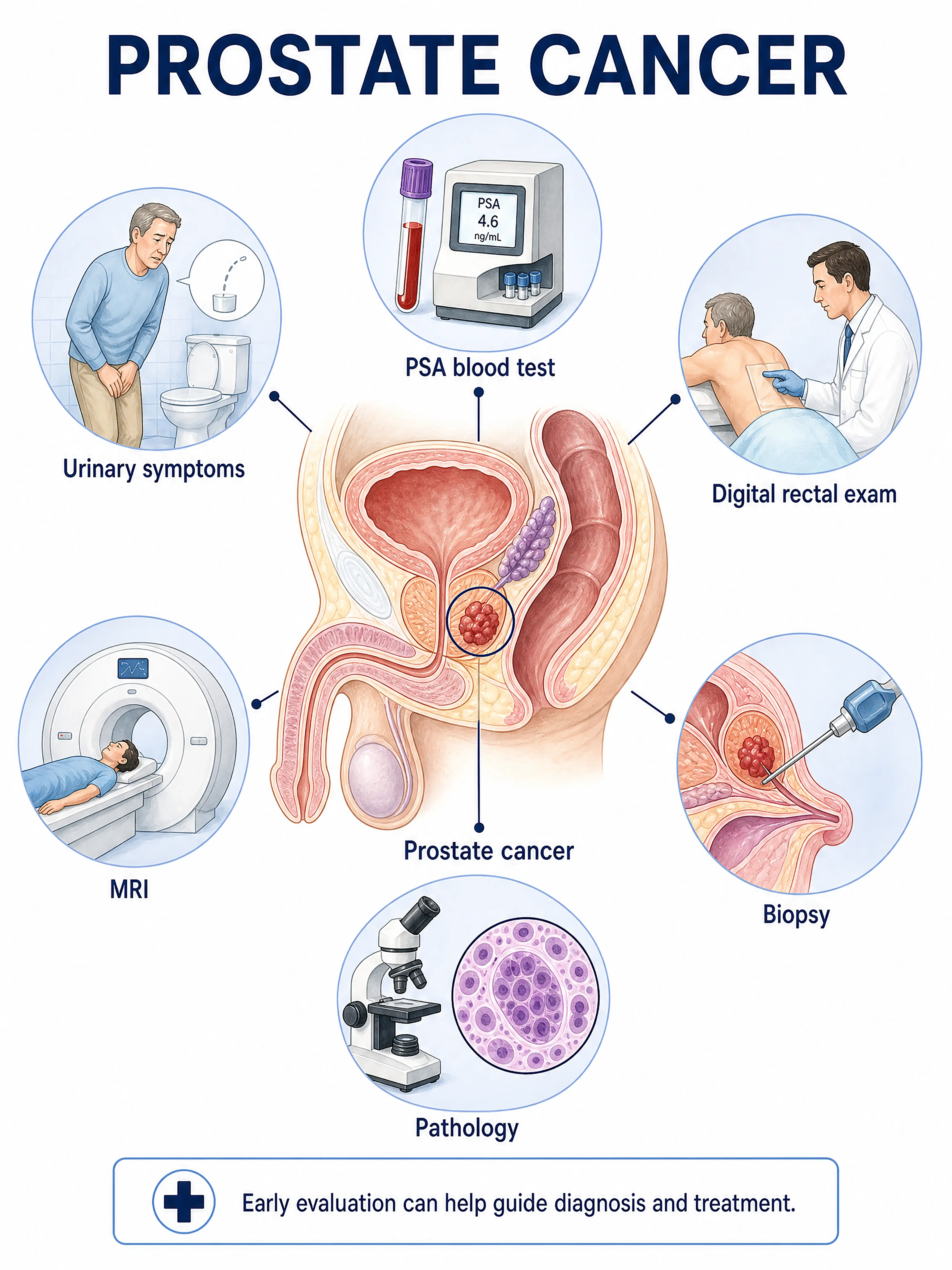
Diagnosis based on prostate cancer stages
1.Early diagnosis of prostate cancer
Tumor confined to the prostate; usually asymptomatic.Detected via elevated PSA (>4 ng/mL) or a nodule found on DRE; multiparametric MRI shows PI-RADS 3–5 lesions; diagnosis confirmed by targeted needle biopsy.
2.Diagnosis of intermediate-stage prostate cancer
Symptoms include difficulty urinating and hematuria. Digital rectal examination reveals induration;PSA levels are significantly elevated; MRI assesses for extracapsular extension and seminal vesicle involvement; and systematic needle biopsy (12+ cores) is performed.
3.Diagnosis of advanced prostate cancer
Extensive tumor metastasis; bone metastases cause bone pain.Whole-body bone scan and CT assess the extent of metastasis; PSA is significantly elevated (>100 ng/mL), and needle biopsy confirms the pathology.
If prostate cancer is not diagnosed in time, the tumor may progress and metastasize to the bone, causing bone pain, pathological fractures, and spinal cord compression, which severely impact quality of life.
When to Seek Medical Attention
Early signs of prostate cancer include difficulty urinating, urinary frequency and urgency, blood in the urine, and bone pain.Please consult a doctor via the "Chat with a Doctor" feature for early detection.During the online consultation, the doctor will ask about your urinary symptoms and family history, and guide you through PSA testing and a digital rectal exam.
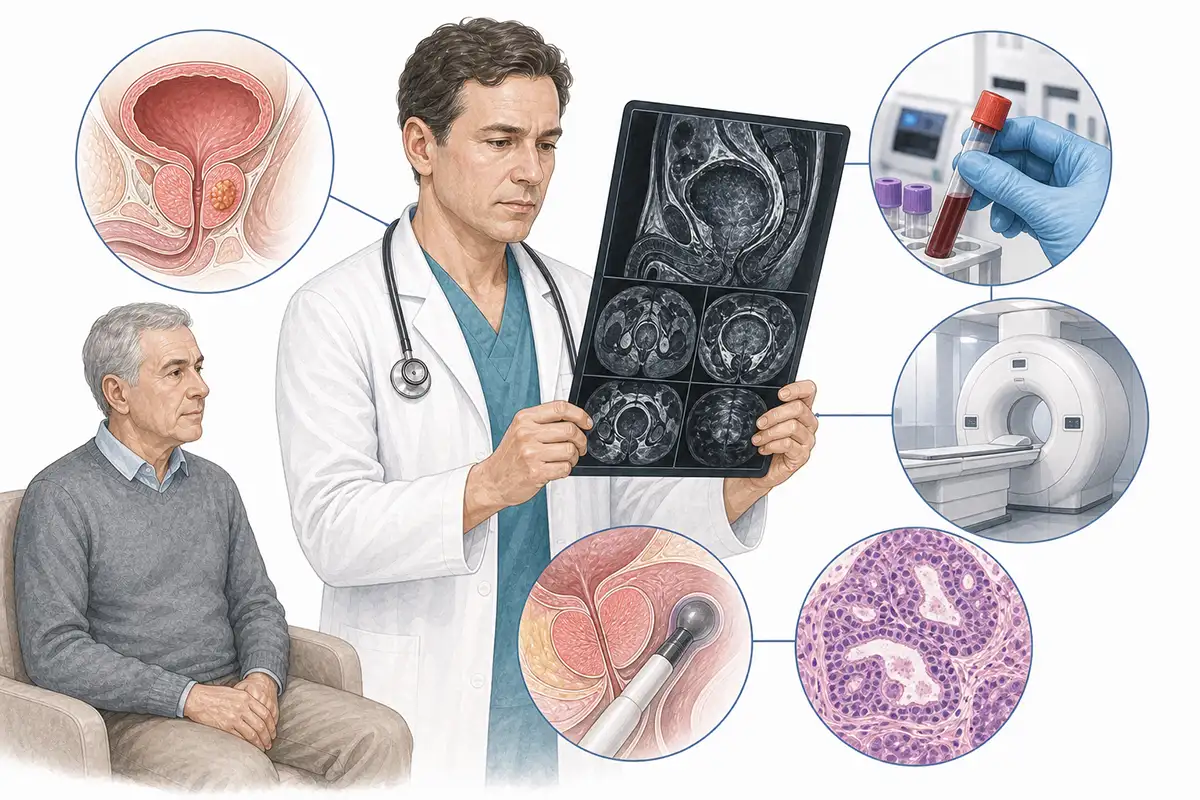
Basis for Prostate Cancer Diagnosis
1.PSA test
Prostate-specific antigen (PSA) is the most important serum marker for prostate cancer; levels >4 ng/mL are considered abnormal and serve as a key indicator for screening and monitoring.
2Digital rectal examination
A physician palpates the prostate to assess its size, texture, and the presence of nodules; this is a simple yet important preliminary examination method.
3.Prostate needle biopsy
Obtaining prostate tissue samples via transrectal or transperineal puncture—specifically a systematic biopsy involving at least 12 cores—is the gold standard for diagnosing prostate cancer.
4.Multiparametric MRI
mpMRI (T2WI, DWI, and DCE) evaluates suspicious intraprostatic lesions; PI-RADS scores guide targeted biopsies, improving the detection rate of clinically significant cancer.
5.Transrectal ultrasound
Transrectal ultrasound (TRUS)-guided prostate needle biopsy assesses prostate volume and internal echotexture, serving as the standard tool for needle localization.
6.Bone scan
Radionuclide bone scanning assesses the entire skeleton for metastases; it should be routinely performed for patients with PSA >20 ng/mL or bone pain.
7.Pelvic CT/MRI
Assesses pelvic lymph node metastasis and the extent of local tumor invasion, guiding staging and the selection of treatment regimens.
8.Whole-body PET-CT
PSMA-PET-CT demonstrates high sensitivity in detecting prostate cancer metastases and serves as an emerging tool for evaluating biochemical recurrence and distant metastasis.
9.Genetic testing analysis
Test for hereditary susceptibility genes (e.g., BRCA1/2, HOXB13) and tumor genomic characteristics to guide precision therapy and familial risk assessment.
Daily Self-Check
Men over the age of 50 should undergo annual PSA testing and a digital rectal examination.Those with a family history should begin screening earlier, at age 45. Seek medical attention promptly if you experience difficulty urinating or bone pain.
Conclusion
Prostate cancer has a high early diagnosis rate, with PSA screening and mpMRI-targeted biopsy serving as core diagnostic methods.Early treatment yields a good prognosis, while advanced cases are primarily managed through endocrine therapy and precision medicine.


