


Global disease prevalence: Pancreatic cancer is a highly malignant tumor worldwide; it has a high incidence rate in developed countries and regions and carries a very poor prognosis.
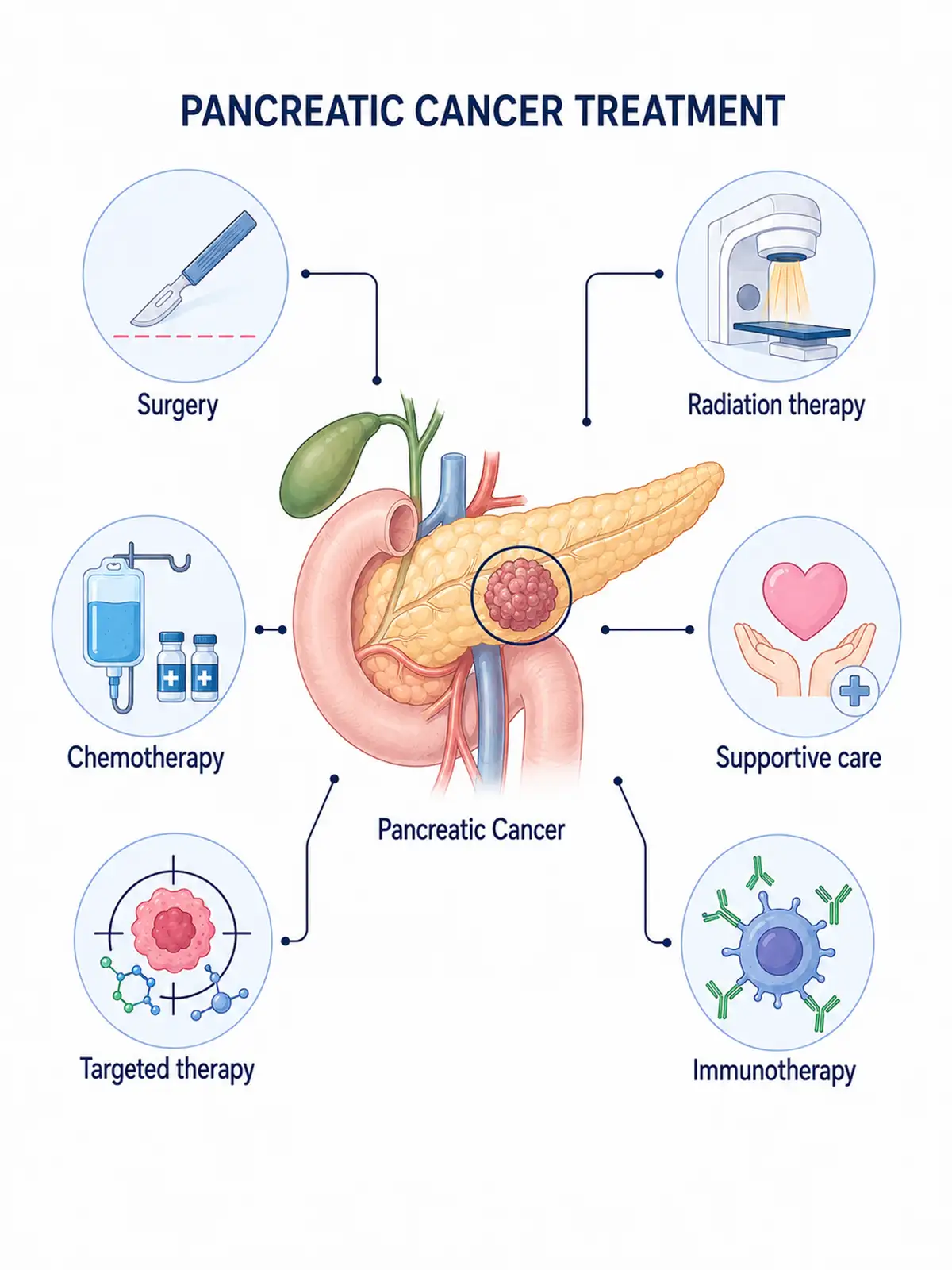
Treatment based on pancreatic cancer stages
Early treatment (involving a localized, smaller tumor with a favorable response)
consisting of surgical resection combined with adjuvant chemotherapy—can effectively control tumor progression, resulting in a relatively good prognosis for the patient.
Treatment for the intermediate stage (involving local spread; aiming to inhibit growth and delay progression)
employs a comprehensive approach—such as surgery combined with radiotherapy and chemotherapy—to control further tumor spread and slow the rate of disease deterioration.
Treatment for advanced disease (distant metastasis; aimed at symptom relief and survival prolongation)
primarily employs systemic therapies such as chemotherapy, targeted therapy, and others to alleviate clinical symptoms and extend patient survival as much as possible.
Why choose Fosun Health for pancreatic cancer treatment
Fosun Health’s pancreatic cancer diagnosis and treatment services are managed by the clinical center for pancreatic diseases, with a team experienced in robot-assisted pancreatic surgery, stereotactic radiosurgery, and multidisciplinary comprehensive treatment.Leveraging a global medical network, patients have access to cutting-edge treatment options, including da Vinci robot-assisted pancreaticoduodenectomy, laparoscopic minimally invasive surgery, CyberKnife M6 precision radiotherapy, and targeted therapy.
For complex cases such as locally advanced unresectable or borderline resectable pancreatic cancer, a Multidisciplinary Team (MDT)—comprising experts from hepatobiliary and pancreatic surgery, medical oncology, radiology, and pathology—formulates the optimal treatment plan; a cross-border consultation mechanism provides patients with second opinions from top-tier pancreatic centers abroad.
Fosun Health continues to introduce innovative technologies for pancreatic cancer treatment.In collaboration with Shanghai Ruijin Hospital, a pancreatic disease diagnosis and treatment base has been established under the leadership of Professor Shen Baiyong, with mutual institutional affiliations formalized.Foshan Fosun Chancheng Hospital is equipped with the da Vinci surgical robot and Foshan’s first sixth-generation CyberKnife M6 system, enabling stereotactic radiotherapy with 0.1mm precision.Fosun Pharma’s innovative FAK-targeting inhibitor, IN10018, has entered Phase III clinical trials.Combining surgery, precision radiotherapy, and targeted therapy, the hospital offers personalized, comprehensive care for patients at various stages of pancreatic cancer.
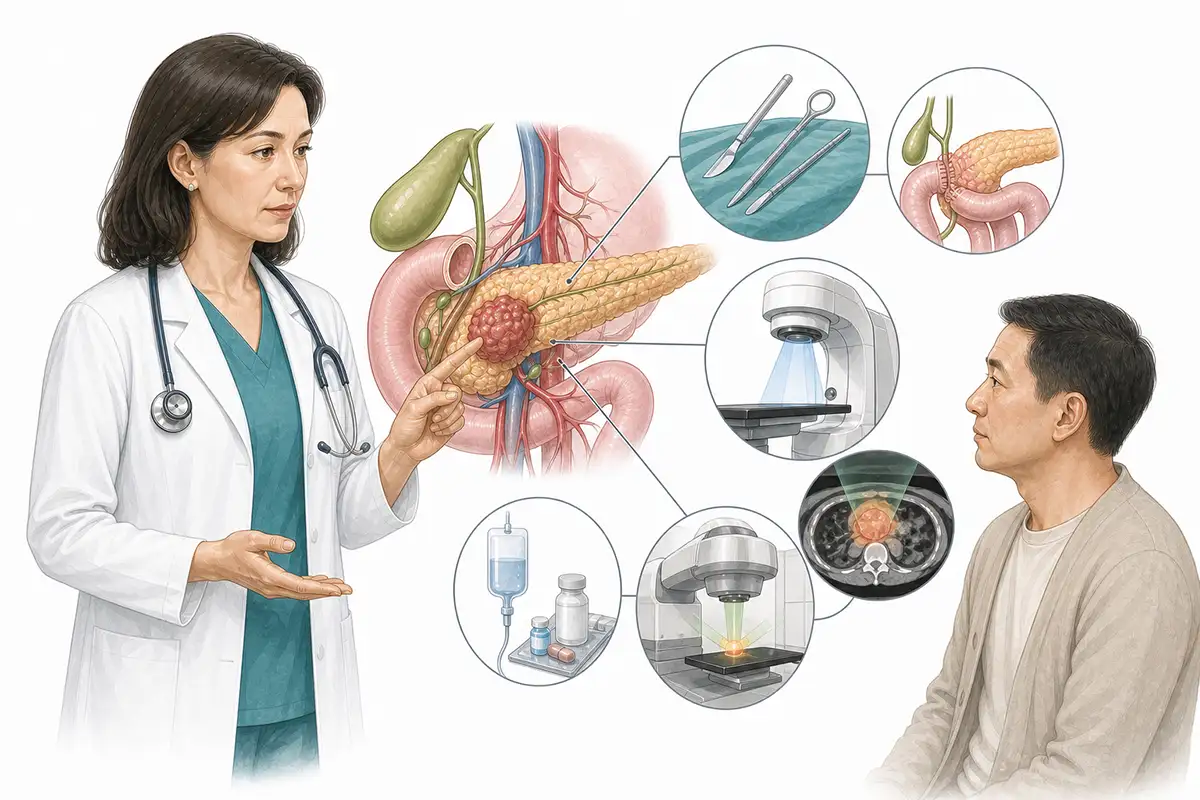
Pancreatic Cancer Treatment Methods
1.Radical surgery for pancreatic cancer
For patients with pancreatic cancer who are candidates for surgery, the surgical approach—such as pancreaticoduodenectomy or distal pancreatectomy—is selected based on the tumor's location (e.g., the head of the pancreas versus the body or tail).
Treatment advantages:
① Radical resection: For resectable pancreatic cancer, the primary tumor can be directly removed via surgery.
② Clarify pathology: The surgical specimen can be used for comprehensive pathological assessment and staging.
③ Regional management: Allows for appropriate management of regional lymph nodes and other areas during surgery, based on tumor extent.
④ Personalized surgery: Formulate a surgical plan based on tumor site, vascular invasion, and the patient's overall condition.
2.CyberKnife precision radiotherapy
For selected patients with locally advanced or recurrent pancreatic cancer, or those with specific indications for local radiotherapy, CyberKnife precision radiotherapy may be considered based on the relationship between the tumor and adjacent organs such as the gastrointestinal tract.
Treatment advantages:
① Precise localization: Formulate a radiotherapy plan based on the location of the pancreatic tumor and surrounding anatomical structures.
② Dose optimization: Optimizing the dose distribution in the target area using stereotactic techniques.
③ Protection of adjacent organs: Prioritize the control of radiation doses to vital organs such as the stomach, duodenum, and intestines.
④ Option for local control: Can provide a local treatment option for select patients with local progression or recurrence.
3.VitalBeam linear accelerator precision radiotherapy
Based on the VitalBeam linear accelerator platform, precise radiotherapy techniques can be employed based on the location and movement of the pancreatic tumor and the status of adjacent organs.
Treatment advantages:
① Precision irradiation: Formulate an individualized treatment plan based on tumor morphology and location.
② Motion management: Enhances treatment precision by incorporating techniques such as respiratory gating and image guidance.
③ Protects normal tissues: Minimizes radiation exposure to the gastrointestinal tract, liver, and other adjacent organs as much as possible.
④ Combination therapy: May be reasonably combined with treatment modalities such as chemotherapy, depending on the disease stage.
4.Interventional therapy for biliary and gastrointestinal obstruction
For patients with pancreatic cancer causing biliary or duodenal obstruction, palliative treatments—such as endoscopic biliary stent placement, biliary drainage, or gastrointestinal stent placement—may be employed depending on the specific clinical situation.
Treatment advantages:
① Relieves obstruction: Can alleviate biliary or gastrointestinal obstruction caused by tumor compression.
② Symptom improvement: Helps alleviate symptoms such as jaundice, cholestasis, and impaired oral intake.
③ Minimally invasive therapy: Certain treatments can be performed endoscopically.
④ Improves treatment conditions: Relieving obstruction creates favorable conditions for subsequent anti-tumor therapy.
5.Seed implantation
For selected patients with locally advanced, unresectable, or locally recurrent pancreatic cancer, image-guided radioactive seed implantation may be considered based on tumor size and location and the status of surrounding critical organs.
6.Chemotherapy
Kills cancer cells using anticancer drugs such as gemcitabine to effectively control the rate of tumor progression; commonly used for patients with intermediate-to-advanced pancreatic cancer to consolidate therapeutic effects.
7.Targeted therapy
Delivers precision strikes against specific molecular targets; offers good efficacy with relatively mild side effects; suitable for select patients with advanced-stage disease.Helps improve therapeutic outcomes.
8.Immunotherapy
Activates the body's immune system to recognize and attack cancer cells, providing a new treatment option for patients with advanced pancreatic cancer.Helps improve therapeutic efficacy.
9.Neoadjuvant therapy
Using chemotherapy drugs preoperatively to shrink tumor volume creates more favorable conditions for subsequent surgical resection and increases the success rate, thereby enhancing therapeutic efficacy.
10 Comprehensive treatment
Formulate an individualized comprehensive treatment plan based on the patient's specific condition, combining modalities such as surgery, radiotherapy, and chemotherapy to enhance therapeutic efficacy.
11 Supportive care
Approaches such as nutritional support, psychological counseling, and symptom management can comprehensively improve the patient's physical condition and quality of life, as well as consolidate therapeutic efficacy.
Post-treatment care
Maintain a low-fat, high-protein diet with frequent, small meals; avoid greasy foods; attend scheduled follow-up appointments; and actively cooperate with subsequent treatments.
Post-treatment examinations
Regular abdominal CT scans, CA19-9 tumor marker tests, and follow-up imaging are required after treatment to detect changes in the condition in a timely manner.
Conclusion
Pancreatic cancer poses an extremely serious threat; successful treatment hinges on early detection, diagnosis, and intervention, as well as selecting an appropriate treatment plan and adhering to follow-up care.


