


Pancreatic cancer is a tumor arising from the malignant transformation of pancreatic ductal epithelial cells. It has an insidious onset with non-specific early symptoms; common manifestations include upper abdominal pain, jaundice, and weight loss.Approximately 80%–90% of patients are already in the intermediate or advanced stage at the time of diagnosis.
Pancreatic cancer incidence across countries worldwide
The global incidence and mortality burden of pancreatic cancer is rising. Because early symptoms are subtle and progression is rapid, the number of deaths remains close to the number of new cases. Tobacco use, obesity, diabetes, chronic pancreatitis, older age, and inherited susceptibility are important risk factors. Improving early recognition and access to treatment remains a worldwide challenge.
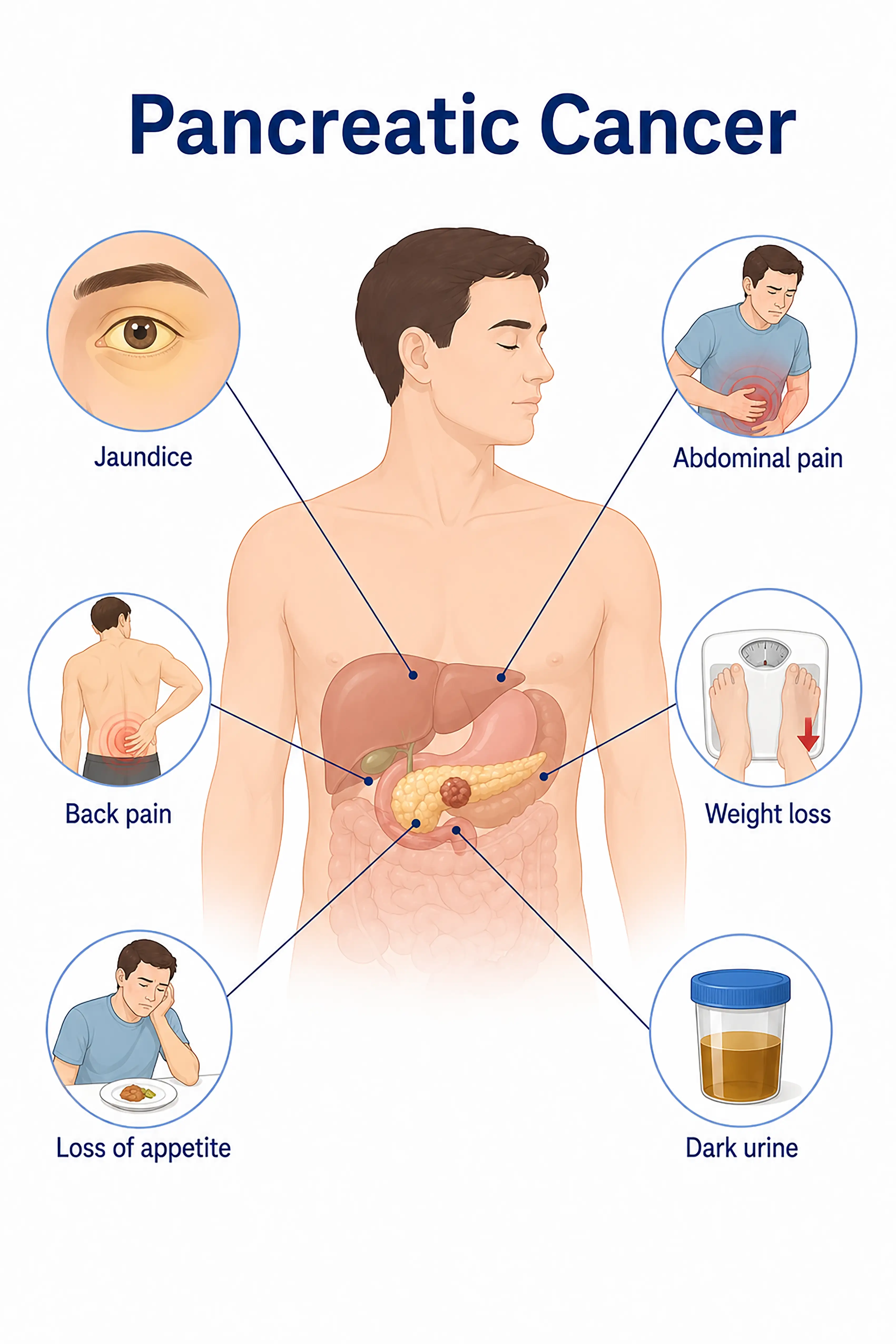
Symptoms associated with pancreatic cancer stages
1.Early symptoms of pancreatic cancer
The tumor is confined to the pancreas; there are usually no obvious symptoms, though upper abdominal discomfort or dull pain, loss of appetite, and mild indigestion may occur—symptoms easily mistaken for gastric disorders.
2.Symptoms of mid-stage pancreatic cancer
Worsening upper abdominal pain radiating to the back, accompanied by progressive jaundice, pruritus (itching), clay-colored stools, dark tea-colored urine, significant weight loss, and fatigue.
3.Symptoms of advanced pancreatic cancer
Tumor extensively invades surrounding tissues and metastasizes distantly; symptoms include persistent severe pain, severe emaciation, gastrointestinal obstruction, ascites, and new-onset, refractory diabetes.
When to Seek Medical Attention
Early signs of pancreatic cancer include persistent upper abdominal pain, jaundice, weight loss, and loss of appetite.Please consult a doctor via the "Chat with a Doctor" feature to facilitate early detection.During the online consultation, the doctor will ask about your symptoms and risk factors, and guide you through necessary tests such as abdominal CT scans and endoscopic ultrasound.
Staging of pancreatic cancer
Stage 0 pancreatic cancer
Cancer cells are confined to the pancreatic duct epithelium; this is classified as carcinoma in situ. It is often asymptomatic and may be incidentally detected via imaging screening.
Stage I pancreatic cancer
The tumor is confined to the pancreas, measures less than 2 cm in diameter, and shows no lymph node metastasis; patients may experience mild upper abdominal discomfort or remain asymptomatic.
Stage II pancreatic cancer
The tumor measures greater than 2 cm in diameter or invades surrounding tissues, accompanied by regional lymph node metastasis; abdominal pain and jaundice occur.
Stage III pancreatic cancer
Tumor invasion of major blood vessels or extensive surrounding tissues, accompanied by regional lymph node metastasis; symptoms are severe and progressively worsening.
Stage IV pancreatic cancer
Distant metastasis to the liver, lungs, and peritoneum occurs, leading to persistent severe pain, cachexia, and multiple organ failure.
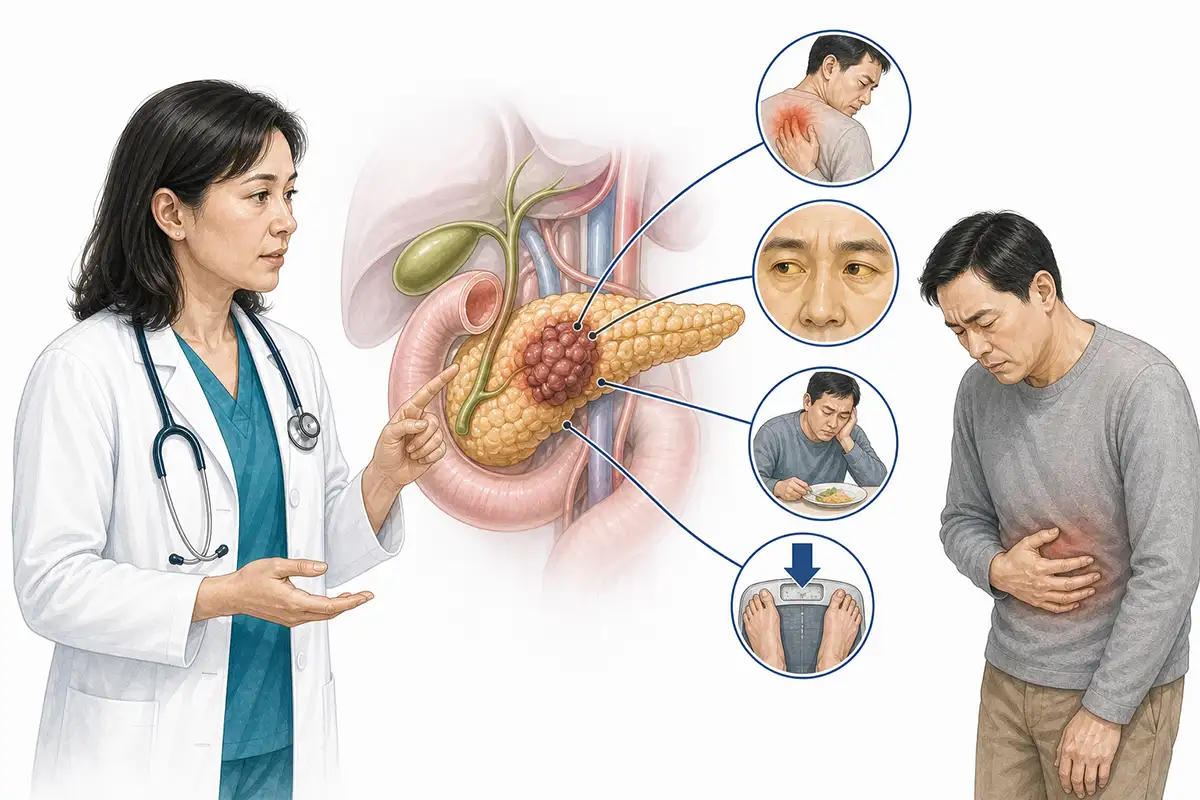
Detailed symptoms of pancreatic cancer
1.Upper abdominal pain
The most common initial symptom presents as persistent dull, aching, or distending pain in the upper abdomen; the pain worsens after eating, may radiate to the lower back, and is particularly pronounced at night.
2.Jaundice and yellowing of the skin
Compression of the common bile duct by cancer of the pancreatic head leads to obstructive jaundice, manifesting as yellowing of the skin and sclera, urine the color of strong tea, and clay-colored stools, accompanied by pruritus (itching).
3.Rapid weight loss
In the early stages of the disease, 80%–90% of patients exhibit emaciation and fatigue, resulting from a combination of loss of appetite, indigestion, and tumor-induced wasting.
4.Indigestion
Obstruction of the pancreatic duct by the tumor leads to exocrine pancreatic insufficiency, resulting in dyspeptic symptoms such as abdominal bloating, diarrhea, steatorrhea, and nausea.
5Abnormal blood glucose
Impairment of pancreatic endocrine function leading to new-onset diabetes or sudden difficulty in controlling pre-existing diabetes;particular vigilance is warranted in patients without obesity or a family history.
6.Severe skin itching
Cholestasis causes bile salts to deposit in the skin, resulting in generalized, intractable pruritus that is difficult to relieve by scratching.
7.Clay-colored stool
Following complete biliary obstruction, bile cannot enter the intestine, causing stool to become pale (gray-white or clay-colored); this is a characteristic sign of obstructive jaundice.
8.Frequent nausea and vomiting
Tumor compression of the stomach or duodenum causes gastrointestinal obstruction, resulting in frequent nausea and vomiting; the vomitus contains bile or retained food.
9.Abdominal mass present
In the advanced stage, a hard, deep-seated mass with an irregular surface and tenderness may be palpable in the upper abdomen, suggesting a large tumor.
Conclusion
Early symptoms of pancreatic cancer are atypical, and the prognosis for mid-to-late-stage disease is poor.Quitting smoking, weight control, and regular health check-ups help reduce the risk of developing the disease.Surgery is the only potentially curative treatment, yet most patients are no longer eligible for surgery by the time of diagnosis.


