


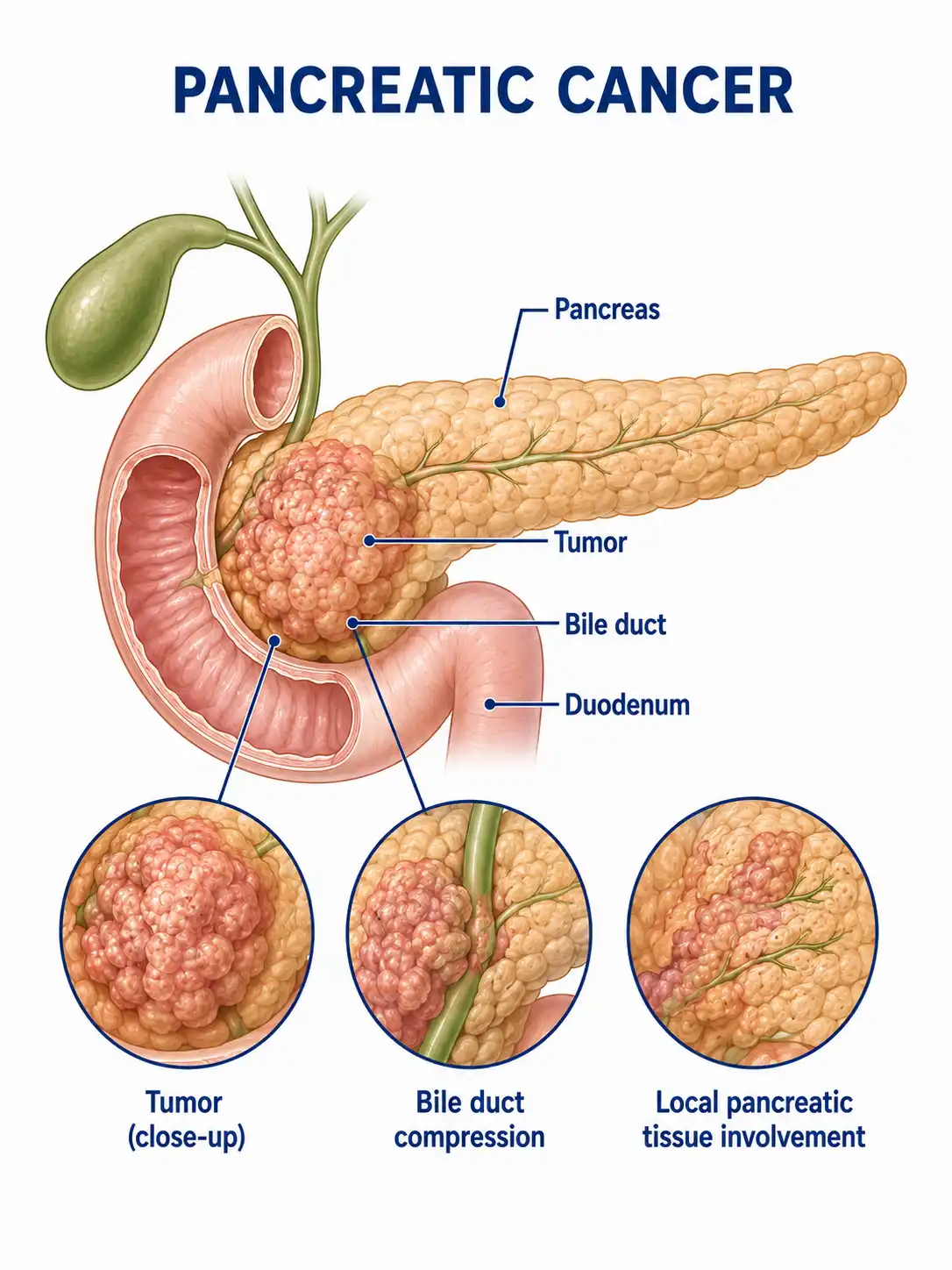
Pancreatic cancer is a tumor resulting from the malignant proliferation of pancreatic ductal epithelial cells.The pancreas is located in the retroperitoneum of the upper abdomen and is divided into four parts—head, neck, body, and tail—serving both exocrine and endocrine functions.
Global status of pancreatic cancer
The global incidence of pancreatic cancer is increasing.In my country, the incidence rate is rising year by year, and it ranks sixth among causes of death from malignant tumors;incidence is higher in men than in women, and it most commonly affects people over the age of 60.
Consult a doctor regarding cancer-related issues
Individuals experiencing symptoms such as persistent upper abdominal pain, jaundice, weight loss and fatigue, or new-onset diabetes—particularly those with a family history of pancreatic cancer or a history of long-term smoking—should promptly consult a gastroenterologist or a hepatobiliary-pancreatic surgeon.
Main types of pancreatic cancer
1. Ductal adenocarcinoma
It is the most common type of pancreatic cancer, accounting for approximately 85%–90% of cases; it originates from pancreatic ductal epithelial cells, is highly malignant, and carries a poor prognosis.
2. Acinic cell carcinoma
Originates from pancreatic acinar cells; relatively rare; may secrete lipase, leading to subcutaneous fat necrosis and polyarthralgia.
3. Neuroendocrine tumor
Originates from pancreatic endocrine cells; classified as functional or non-functional; grows relatively slowly; prognosis is better than that of ductal adenocarcinoma.
4. Mucinous cystadenocarcinoma
Arises from the malignant transformation of a mucinous cystadenoma; it is predominantly located in the tail of the pancreas and is more common in women;surgical resection yields a favorable prognosis.
5. Solid pseudopapillary neoplasm
It commonly affects young women, is low-grade malignant with slow growth, and has a good prognosis following complete surgical resection.
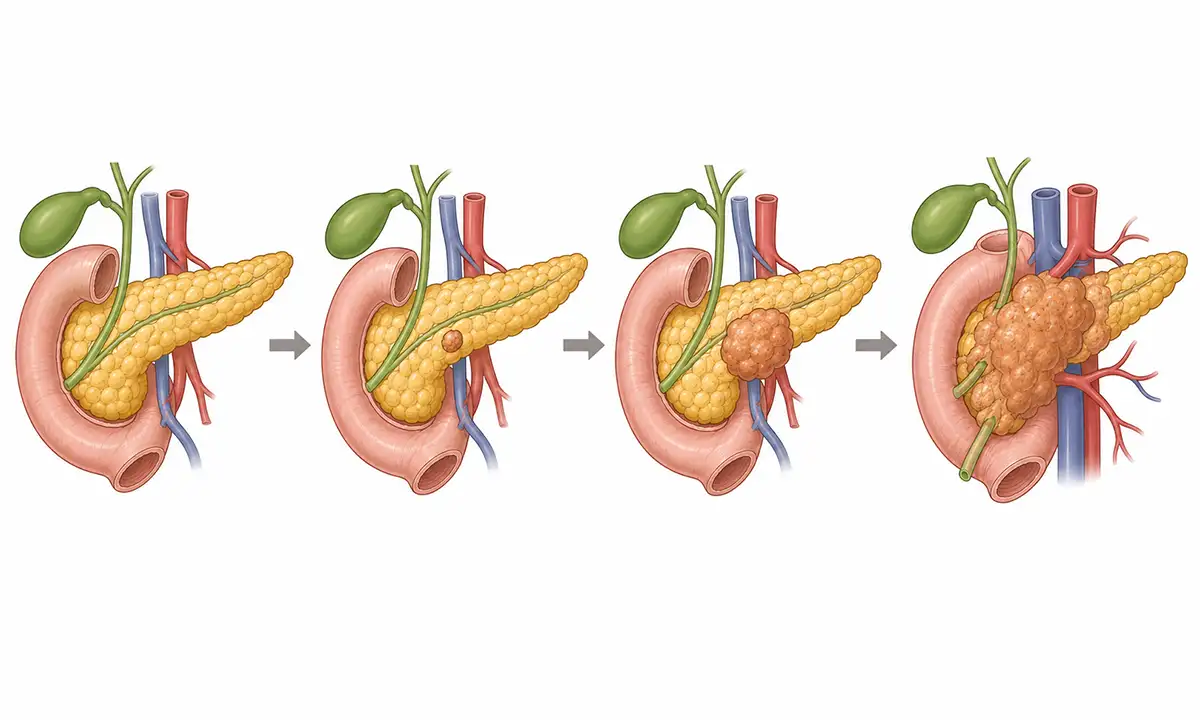
Typical symptoms and signs of pancreatic cancer
1. Epigastric pain
Persistent dull or aching upper abdominal pain is the most common initial symptom; it may radiate to the lower back, worsen at night, and be alleviated by sitting in a forward-leaning position.
2. Jaundice
Compression of the distal common bile duct by cancer of the pancreatic head leads to obstructive jaundice, manifesting as yellowing of the skin and sclera, darkened urine, and clay-colored stools, accompanied by pruritus (itching).
3. Weight loss and fatigue
In the early stages of the disease, 80%–90% of patients experience unexplained weight loss, fatigue, and loss of appetite; these symptoms are associated with tumor-induced wasting and impaired digestion and absorption.
4. Gastrointestinal symptoms
Presents with symptoms of indigestion—such as loss of appetite, nausea, vomiting, abdominal distension, and diarrhea—associated with exocrine pancreatic insufficiency.
5. Newly diagnosed diabetes
Newly diagnosed diabetic patients over the age of 50 who do not present with obesity should be alert to the possibility of pancreatic cancer, as the condition may be associated with the destruction of pancreatic islet cells by the tumor.
6. Abdominal mass
In advanced-stage patients, a hard, irregular mass is palpable in the upper abdomen, often indicating that the tumor has reached an advanced stage.
What are the diagnostic methods for pancreatic cancer
1. Contrast-enhanced CT scan
Contrast-enhanced abdominal CT is the preferred method for diagnosing pancreatic cancer, allowing for the assessment of tumor location, size, vascular invasion, and distant metastasis.
2. Tumor markers
CA19-9 is the most commonly used serum marker for pancreatic cancer; the degree of elevation correlates with tumor burden, and it can be used for auxiliary diagnosis and postoperative monitoring.
3. Endoscopic ultrasonography
Endoscopic ultrasonography clearly visualizes pancreatic lesions; ultrasound-guided fine-needle aspiration biopsy allows for pathological diagnosis, serving as a crucial method for preoperative confirmation.
4. Magnetic resonance imaging
MRI provides visualization of pancreatic lesions comparable to CT; MRCP clearly displays the pancreaticobiliary ductal system and allows for the assessment of biliary obstruction.
5. PET-CT scan
Whole-body PET-CT can detect distant metastases that are difficult to identify via conventional imaging, aiding in accurate staging.
6. Laparoscopic exploration
For patients with early-stage disease on imaging but suspected peritoneal metastasis, laparoscopic exploration can determine the presence of micrometastases.
What are the treatments for pancreatic cancer
1. Pancreaticoduodenectomy
The Whipple procedure is the standard surgical treatment for pancreatic head cancer, involving the resection of the pancreatic head, duodenum, distal stomach, distal common bile duct, and gallbladder.
2. Distal pancreatectomy
Indicated for cancer of the pancreatic body and tail; involves resection of the pancreatic body, tail, and spleen, with laparoscopic surgery offering minimal trauma and rapid recovery.
3. Chemotherapy
The combination of gemcitabine and albumin-bound paclitaxel is a first-line chemotherapy regimen for advanced pancreatic cancer and can control disease progression.
4. Neoadjuvant chemotherapy
For borderline resectable tumors, preoperative chemotherapy can downstage the tumor and increase the rate of surgical resection.
5. Targeted therapy
Targeted drugs addressing specific gene mutations, such as PARP inhibitors, can be used for patients with BRCA mutations.
6. Immunotherapy
PD-1 inhibitor therapy may be considered for MSI-H/dMMR pancreatic cancer, though the patient population that benefits is limited.
7. Pain management
Celiac plexus block can effectively control intractable pain and improve the quality of life for patients with advanced-stage disease.
8. Nutritional support
Pancreatic enzyme replacement therapy improves digestion and absorption, while enteral nutritional support improves nutritional status; these measures are implemented throughout the entire course of treatment.
Conclusion
Pancreatic cancer is a highly malignant tumor of the digestive system that is difficult to diagnose early.Screening high-risk populations, standardized surgery, and comprehensive treatment can help improve the prognosis for some patients.


