


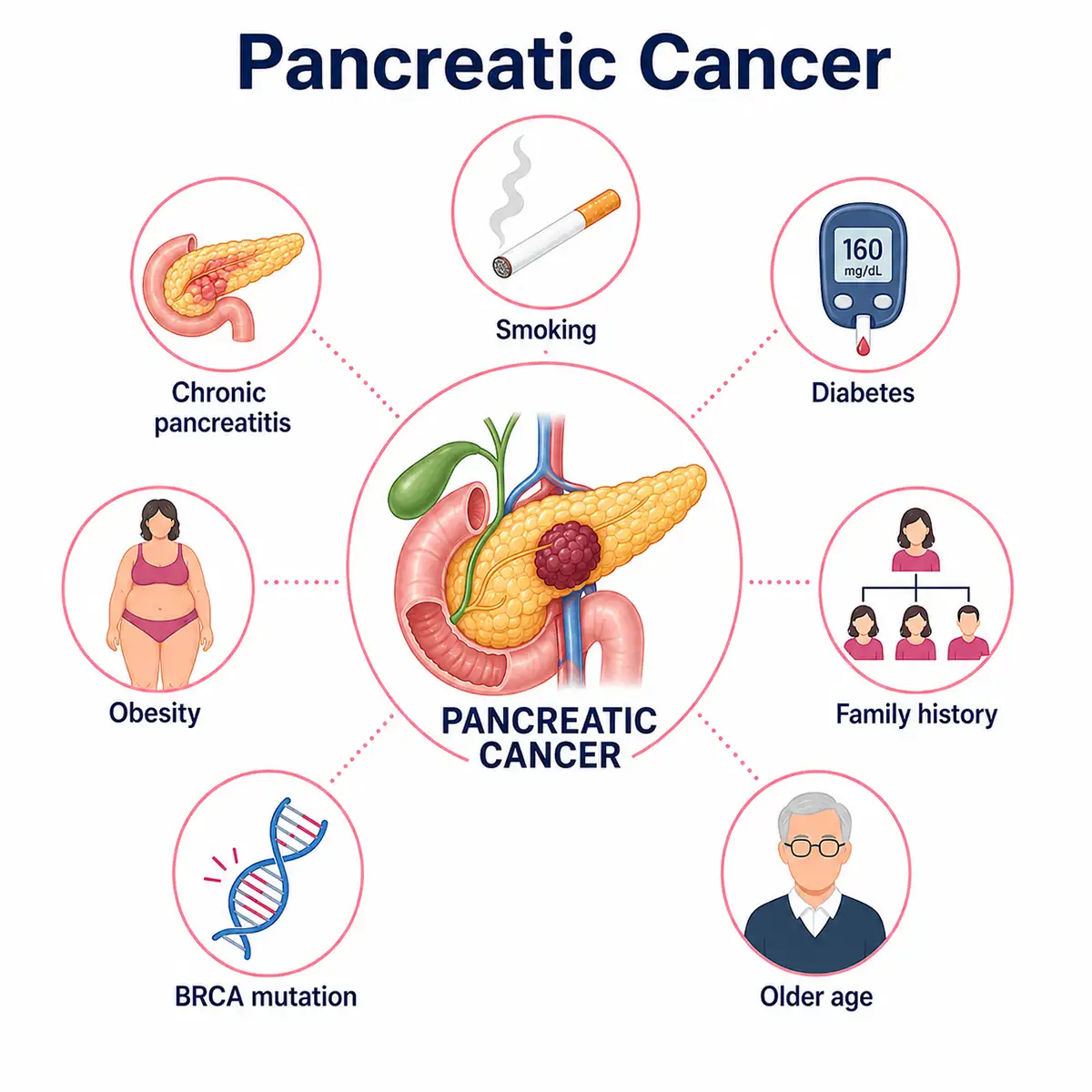
1. Smoking factor
Smoking is the most significant modifiable risk factor for pancreatic cancer; smokers face a risk two to three times higher than non-smokers, though the risk can drop to near-normal levels ten years after quitting.
2. Chronic pancreatitis
In patients with long-term chronic pancreatitis—particularly familial pancreatitis—repeated inflammation and repair of pancreatic tissue can increase the risk of malignant transformation in the ductal epithelium.
3. Diabetes-related factors
A history of diabetes exceeding ten years increases the risk of pancreatic cancer by 50%, as a hyperglycemic environment may promote cancer cell growth.
4. Genetic factors
Approximately 10% of pancreatic cancers are linked to genetics; carriers of mutations in genes such as *BRCA2* and *PALB2* face a significantly increased lifetime risk of developing the disease.
5. High-fat diet
A long-term diet high in fat and protein but low in fiber increases the risk of pancreatic cancer; obesity—particularly abdominal obesity—is also a significant risk factor.
6. Alcohol-related factors
Long-term, heavy alcohol consumption can lead to chronic pancreatitis, thereby increasing the risk of pancreatic cancer; alcohol exerts a direct toxic effect on the pancreas.
7. Chemical exposure
Long-term exposure to chemical substances such as N-nitrosodimethylamine and hydrocarbons, as well as certain pesticides, increases the risk of developing pancreatic cancer.
Conclusion
Pancreatic cancer is caused by a combination of factors, such as smoking and chronic pancreatitis;it is highly malignant, with insidious early symptoms and severe health risks.Quitting smoking, limiting alcohol intake, controlling blood sugar levels, and undergoing regular medical check-ups are crucial for early detection and timely intervention.


