


Prevalence worldwide
Ovarian cancer is a common female malignancy worldwide, occurring more often in developed countries and regions. Subtle early symptoms mean it is often advanced when discovered.
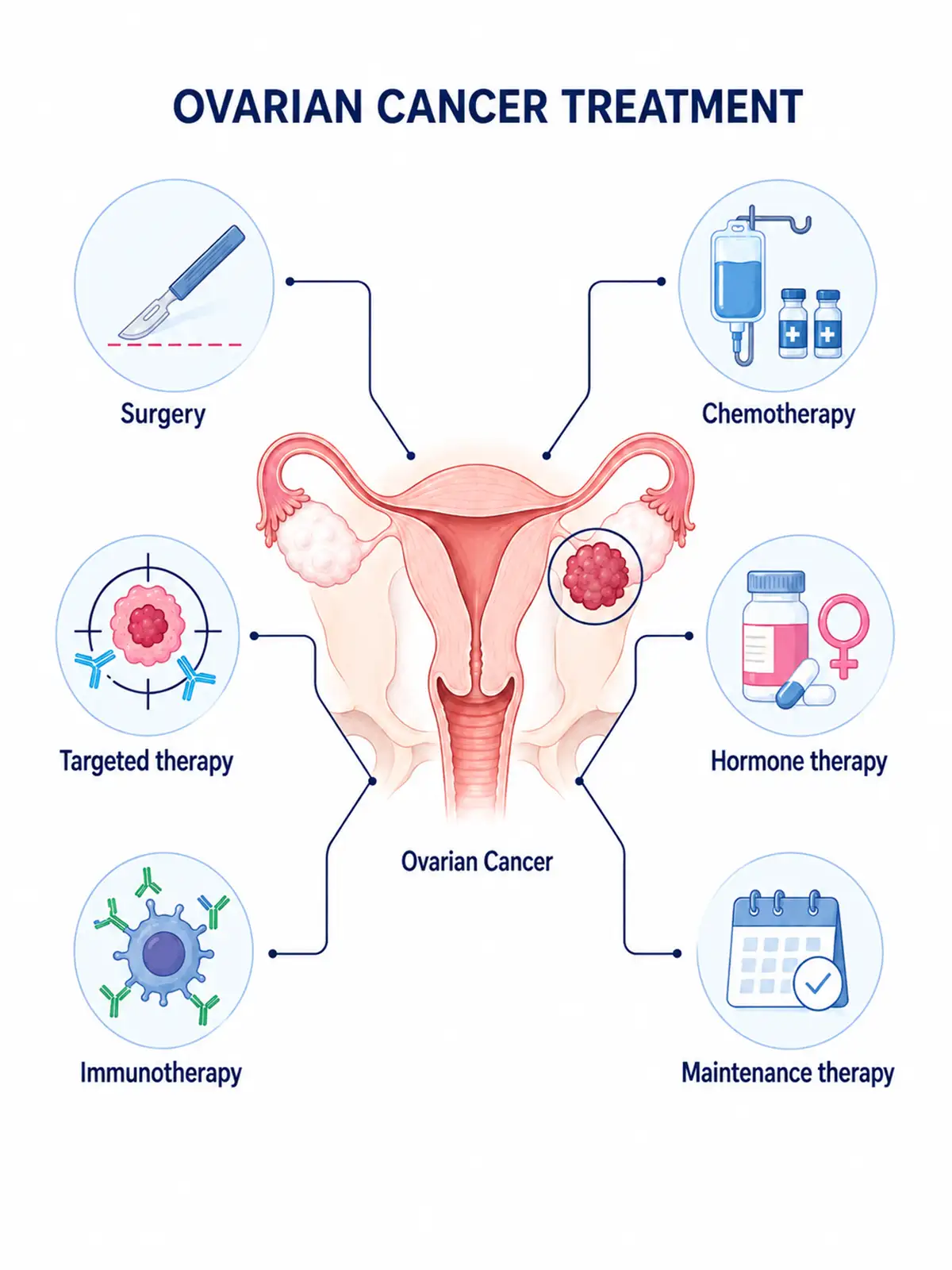
Ovarian cancer treatment by stage
Early treatment (involving a localized, smaller tumor with a favorable response)
consisting of surgical resection combined with adjuvant chemotherapy—can effectively control tumor progression, resulting in a relatively good prognosis for the patient.
Intermediate-stage treatment (addressing local spread, inhibiting growth, and delaying progression)
employs a comprehensive approach—such as surgery combined with chemotherapy and targeted therapy—to control further tumor spread and slow the rate of disease deterioration.
Treatment for advanced disease (distant metastasis; aimed at symptom relief and survival prolongation)
primarily employs systemic therapies such as chemotherapy, targeted therapy, and others to alleviate clinical symptoms and extend patient survival as much as possible.
Why choose Fosun Health for ovarian cancer treatment
Fosun Health draws on gynecologic oncology surgery, pathology and molecular testing, medical oncology, and precision radiotherapy platforms at its hospitals. Specialists in gynecologic oncology, imaging, pathology, radiotherapy, and medical oncology conduct multidisciplinary consultations. Cytoreductive surgery, chemotherapy, and targeted maintenance therapy are assessed according to stage, pathological type, platinum sensitivity, and BRCA and HRD results.
For localized recurrence or oligometastatic disease, local treatments such as VitalBeam or M6 CyberKnife may be assessed, minimizing exposure of bowel, ureters, kidneys, and bone marrow to reduce some treatment-related adverse-event risks. From initial treatment through recurrence management, Fosun Health also provides ascites control, nutritional support, thrombosis risk management, and regular follow-up.
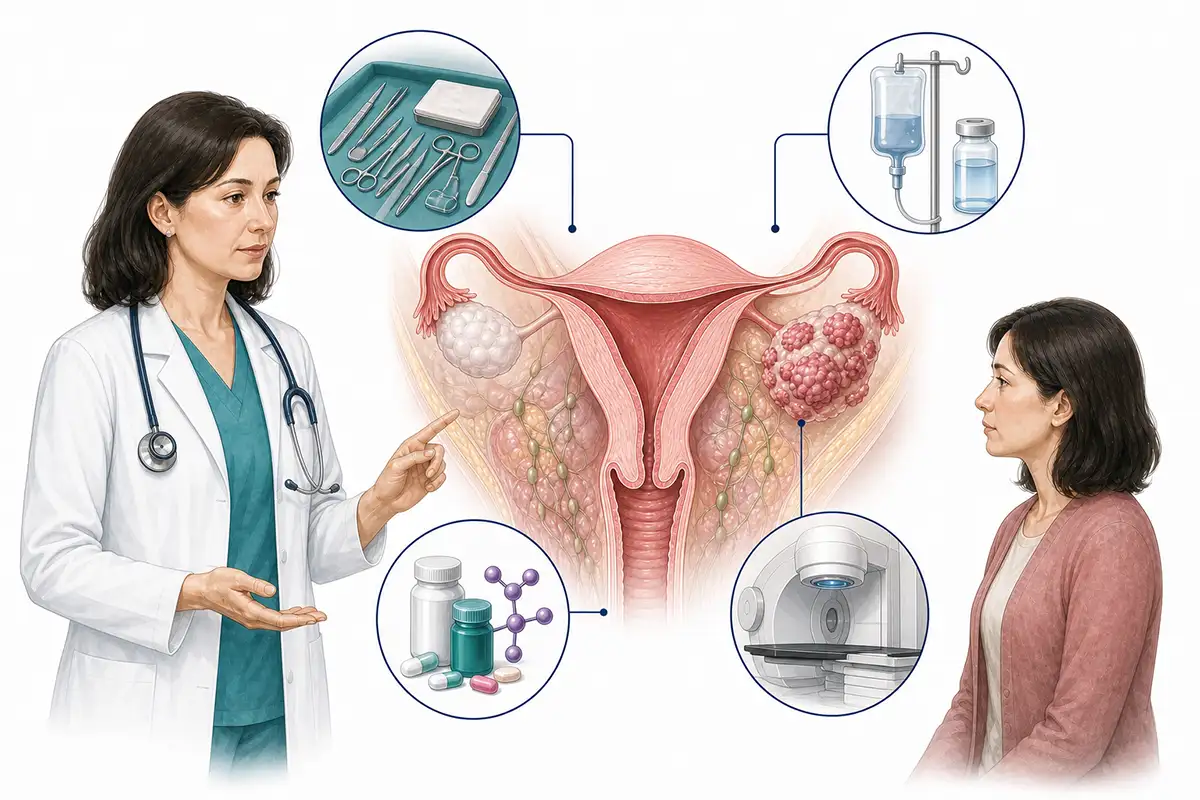
Ovarian cancer treatment methods
1.M6 CyberKnife treatment
Real-time image verification and robotic radiation delivery from multiple angles treat small isolated recurrences, oligometastases, or selected lesions for reirradiation following multidisciplinary confirmation.
Treatment advantages:
① Focused local treatment: Suitable for a limited number of recurrent or metastatic lesions with relatively clear boundaries.
② Abdominal and pelvic organ protection: Reduces doses to bowel, kidneys, and previously irradiated tissues.
③ Shorter treatment course: Reduces disruption of systemic treatment schedules by local therapy.
④ Strict indications: Does not replace cytoreductive surgery, chemotherapy, or maintenance treatment.
2.VitalBeam precision radiotherapy
Suitable for local treatment and symptom control of isolated pelvic or abdominal recurrence, postoperative residual disease, nodal metastases, and bone or brain metastases.
Treatment advantages:
① Conformal targeting: Shapes the dose according to the lesion's relationship with bowel and ureters.
② Organ protection: Reduces doses to the small bowel, rectum, bladder, kidneys, and bone marrow.
③ Controlling local symptoms: Can be used to alleviate pain, bleeding, or local compression.
④ Convenient combinations: Can be coordinated with chemotherapy, maintenance treatment, or repeat surgery.
3.Ovarian cancer staging and cytoreductive surgery
Suitable for early-stage patients able to tolerate staging surgery and patients with advanced disease considered likely to achieve satisfactory cytoreduction.
4.Platinum chemotherapy and maintenance therapy
Platinum chemotherapy, PARP inhibitors, or antiangiogenic treatment are selected according to pathological type, platinum sensitivity, and BRCA1/2 and HRD status.
5.Chemotherapy
Anticancer drugs systemically destroy potential cancer cells and effectively control progression. They are commonly used in combined treatment for intermediate and advanced ovarian cancer.
6.Neoadjuvant therapy
Chemotherapy before surgery shrinks the tumor, creates more favorable conditions for subsequent resection, and improves the likelihood of complete removal.
Follow-up care after treatment
Maintain a regular daily routine and balanced diet, exercise moderately, attend scheduled examinations as advised, and cooperate actively with subsequent treatment.
Post-treatment examinations
Regular pelvic ultrasound, CA125 testing, and imaging follow-up are needed to detect abnormalities promptly.
Conclusion
Ovarian cancer is a serious disease. Early detection, diagnosis, and intervention are central to treatment. An appropriate treatment plan and continued follow-up help improve quality of life and prolong survival.


