


Ovarian cancer arises from malignant transformation of ovarian epithelial or germ cells. Early disease often has no obvious symptoms; common manifestations include abdominal bloating and pain, indigestion, and menstrual changes. Seventy percent of patients have advanced disease at diagnosis.
Ovarian cancer prevalence worldwide
Ovarian cancer has the highest mortality among female reproductive malignancies worldwide, with incidence below cervical and endometrial cancer. Subtle early symptoms and a lack of effective screening mean approximately 70% of patients are diagnosed at an advanced stage, earning it the name "silent killer."
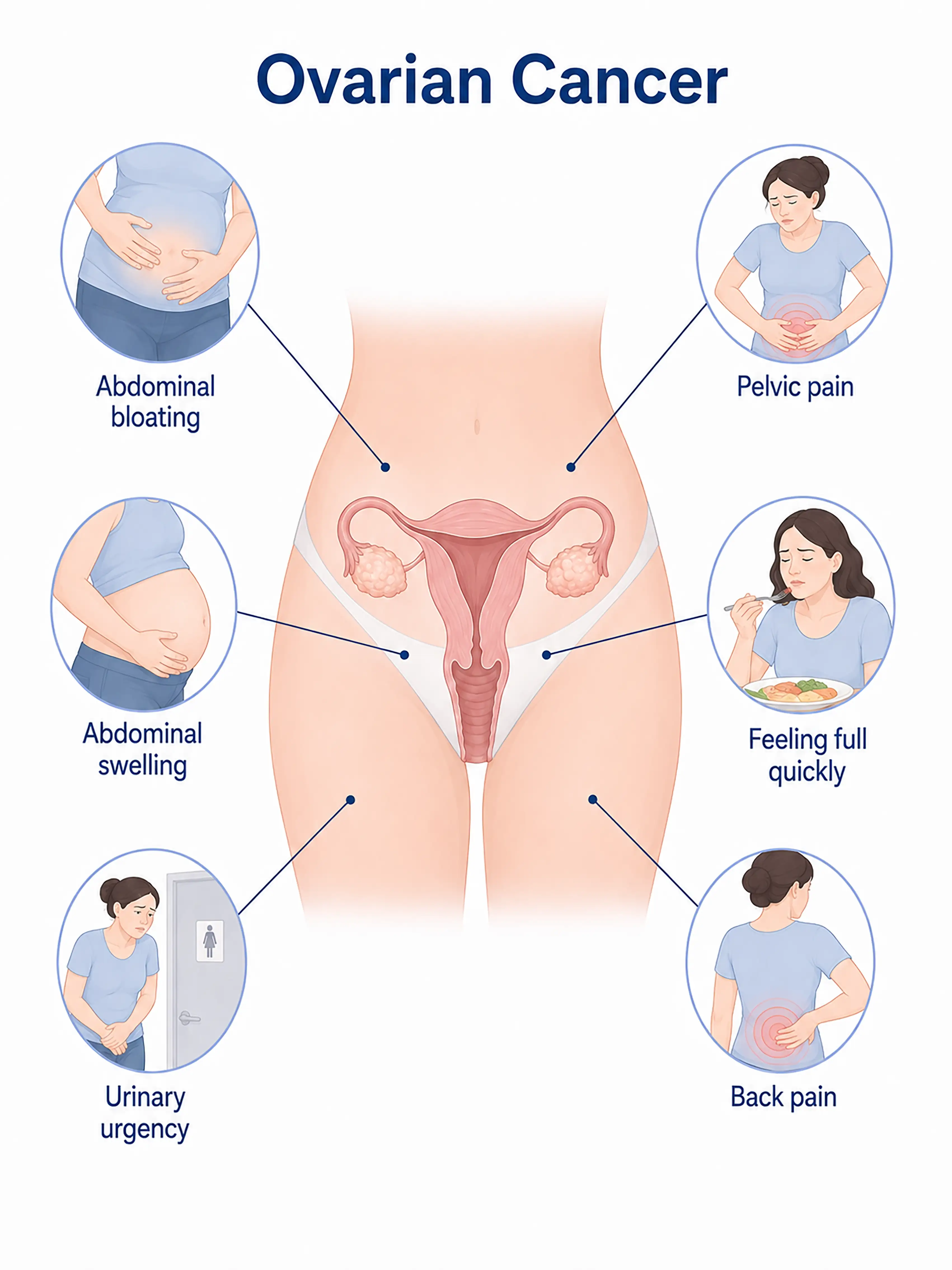
Ovarian cancer symptoms by stage
1.Early-stage ovarian cancer symptoms
Small tumors confined to the ovary usually cause no obvious symptoms. Some patients have mild abdominal discomfort, bloating, early satiety, or slight menstrual changes, easily mistaken for indigestion.
2.Intermediate-stage ovarian cancer symptoms
Tumor growth and ascites cause marked abdominal distension and persistent bloating pain, with appetite loss, nausea, urinary frequency, and urgency. A lower abdominal mass may be palpable.
3.Advanced-stage ovarian cancer symptoms
Extensive peritoneal implantation causes extreme distension, large-volume ascites, bowel obstruction, severe weight loss, anemia, and distant organ dysfunction, producing cachexia.
When to Seek Medical Attention
Early warning signs include persistent bloating, an abdominal or pelvic mass, indigestion, urinary frequency and urgency, and unexplained weight loss. Please consult a doctor through "Chat with a Doctor" to support early detection. The doctor will ask about symptoms and family history and guide you through gynecological examination and ultrasound assessment.
Ovarian cancer stages
Stage 0 ovarian cancer
This staging category does not apply to ovarian cancer. There is no concept of carcinoma in situ in epithelial ovarian cancer. Borderline tumors have low malignant potential and a relatively favorable prognosis.
Stage I ovarian cancer
The tumor is confined to one or both ovaries and fallopian tubes. Early disease usually has no obvious symptoms, although mild abdominal discomfort and menstrual changes may occur.
Stage II ovarian cancer
The tumor affects one or both ovaries and spreads within the pelvis, causing persistent lower abdominal bloating pain, painful intercourse, and menstrual irregularities.
Stage III ovarian cancer
The tumor involves one or both ovaries with peritoneal implants outside the pelvis and regional nodal metastases, causing marked abdominal distension and large-volume ascites.
Stage IV ovarian cancer
Distant metastases commonly involve the liver, lungs, pleura, and bones, causing corresponding organ damage and systemic wasting symptoms.
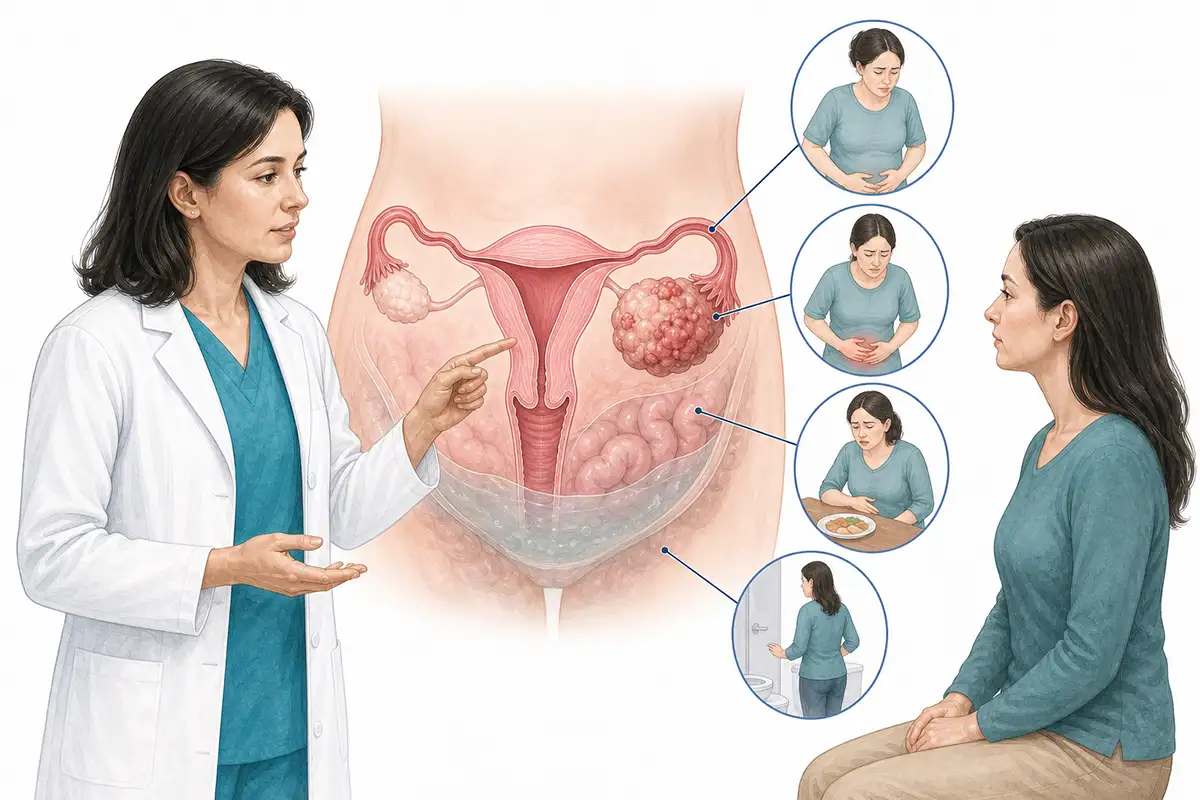
Ovarian cancer symptoms in detail
1.Persistent bloating
One of the most common early symptoms is abdominal fullness and discomfort with increased circumference, often mistaken for indigestion or weight gain. Cancer cells irritate the peritoneum, producing fluid and abdominal swelling.
2.Palpable abdominal mass
When the tumor grows beyond the pelvis, a solid or mixed cystic-solid lower abdominal mass may be palpable, with an irregular surface, firm texture, and poor mobility.
3.Rapidly increasing ascites
Peritoneal tumor implants produce copious ascites, causing marked distension, breathlessness, and tense abdominal pain. Abdominal circumference increases significantly over a short period.
4.Multiple gastrointestinal symptoms
Compression of the gastrointestinal tract causes appetite loss, nausea, early satiety, constipation, or diarrhea, often misdiagnosed as gastrointestinal disease.
5.Urinary frequency and urgency
Bladder compression causes urinary frequency and urgency. Ureteric compression may cause hydronephrosis and distending lower back pain, requiring differentiation from urinary tract infection.
6.Menstrual irregularities
Functioning ovarian tumors may secrete hormones and cause irregular menstruation. Granulosa cell tumors can cause endometrial hyperplasia and irregular bleeding. Postmenopausal bleeding requires particular vigilance.
7.Lumbosacral pain
Tumor growth or increasing ascites raises pelvic pressure, causing persistent dull lumbosacral pain or a dragging sensation that may radiate to the buttocks and legs.
8.Lower extremity edema
Compression of iliac veins or lymphatic vessels causes leg swelling. Advanced disease may cause pain and limited movement, particularly in the distal legs.
9.Rapid weight loss
Tumor-related wasting and reduced food intake cause marked weight loss over a short period, with fatigue, anemia, and malnutrition, indicating progression.
Conclusion
Ovarian cancer is often detected late because early symptoms are atypical, and advanced prognosis is poor. High-risk individuals with a family history should receive genetic counseling and risk assessment. Regular examinations help detect abnormalities earlier.


