


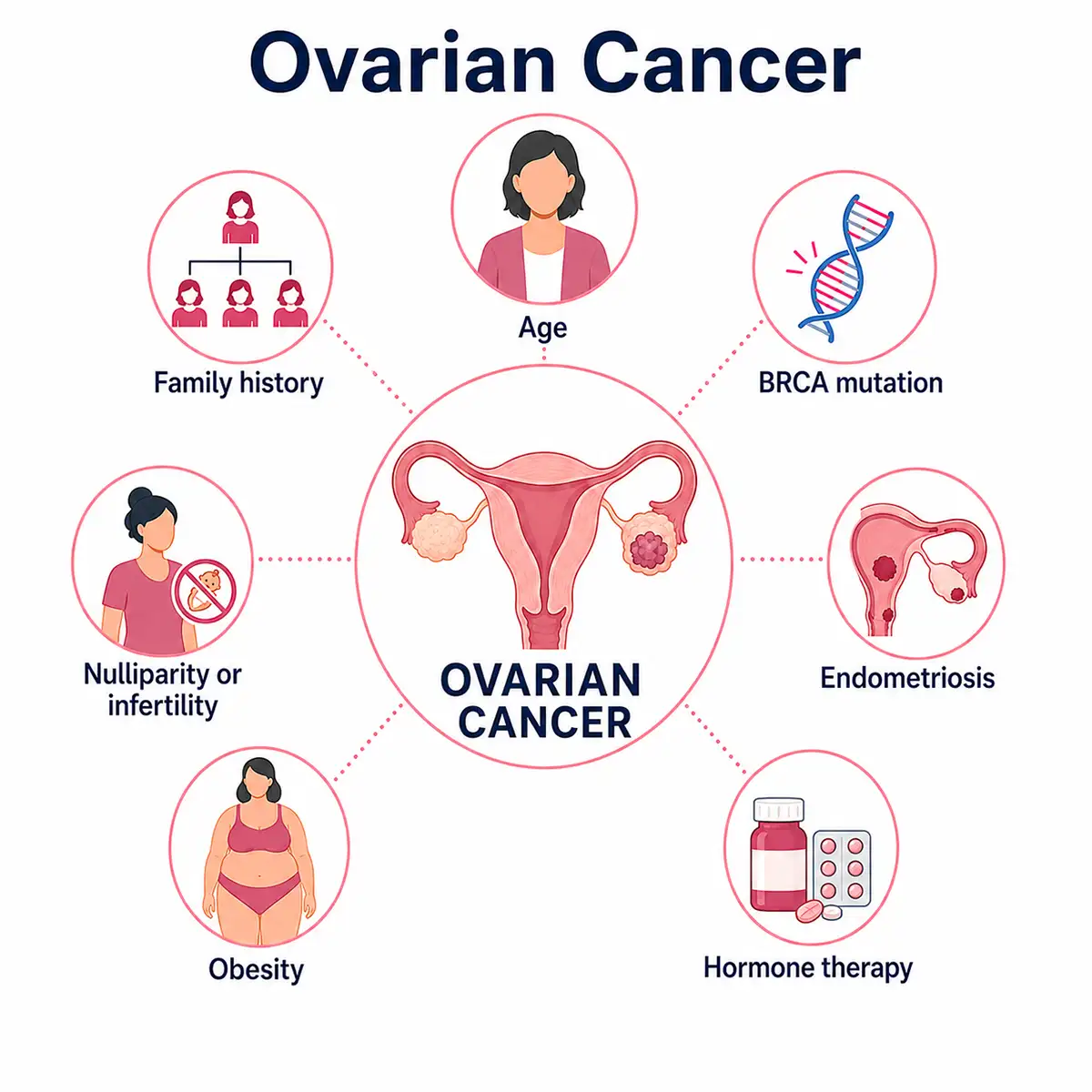
1. Genetic factors
Approximately fifteen to twenty percent of ovarian cancers are hereditary. BRCA1 and BRCA2 mutation carriers have a markedly increased lifetime risk.
2. Hormonal factors
Estrogens and androgens stimulate ovarian epithelial cells. Long-term use of estrogen-containing medication may increase ovarian cancer risk.
3. Age
Incidence increases with age, and most patients develop disease after menopause. Middle-aged and older women are a high-incidence group requiring greater screening attention.
4. Childbearing factors
Having no children or a later first birth increases risk, while multiple pregnancies and prolonged breastfeeding reduce ovarian cancer risk.
5. Endometriosis
Endometriosis is an important ovarian cancer risk factor, particularly associated with endometrioid and clear-cell carcinoma.
6. Obesity-related factors
Obesity increases ovarian cancer risk. Adipose tissue produces estrogen, promoting abnormal proliferation and malignant transformation of ovarian epithelial cells.
7. Environmental factors
Long-term exposure to harmful substances such as asbestos and talc may increase risk. A high-fat diet and lack of exercise are also associated with disease.
Conclusion
Ovarian cancer results from interacting genetic, hormonal, environmental, and other factors. Its subtle early symptoms make it particularly harmful. High-risk individuals should prioritize regular screening, early detection, and timely intervention to improve prognosis.


