


Global prevalence: Oral cancer is a common head and neck malignancy worldwide; incidence is higher in certain parts of Asia, and it affects significantly more men than women.
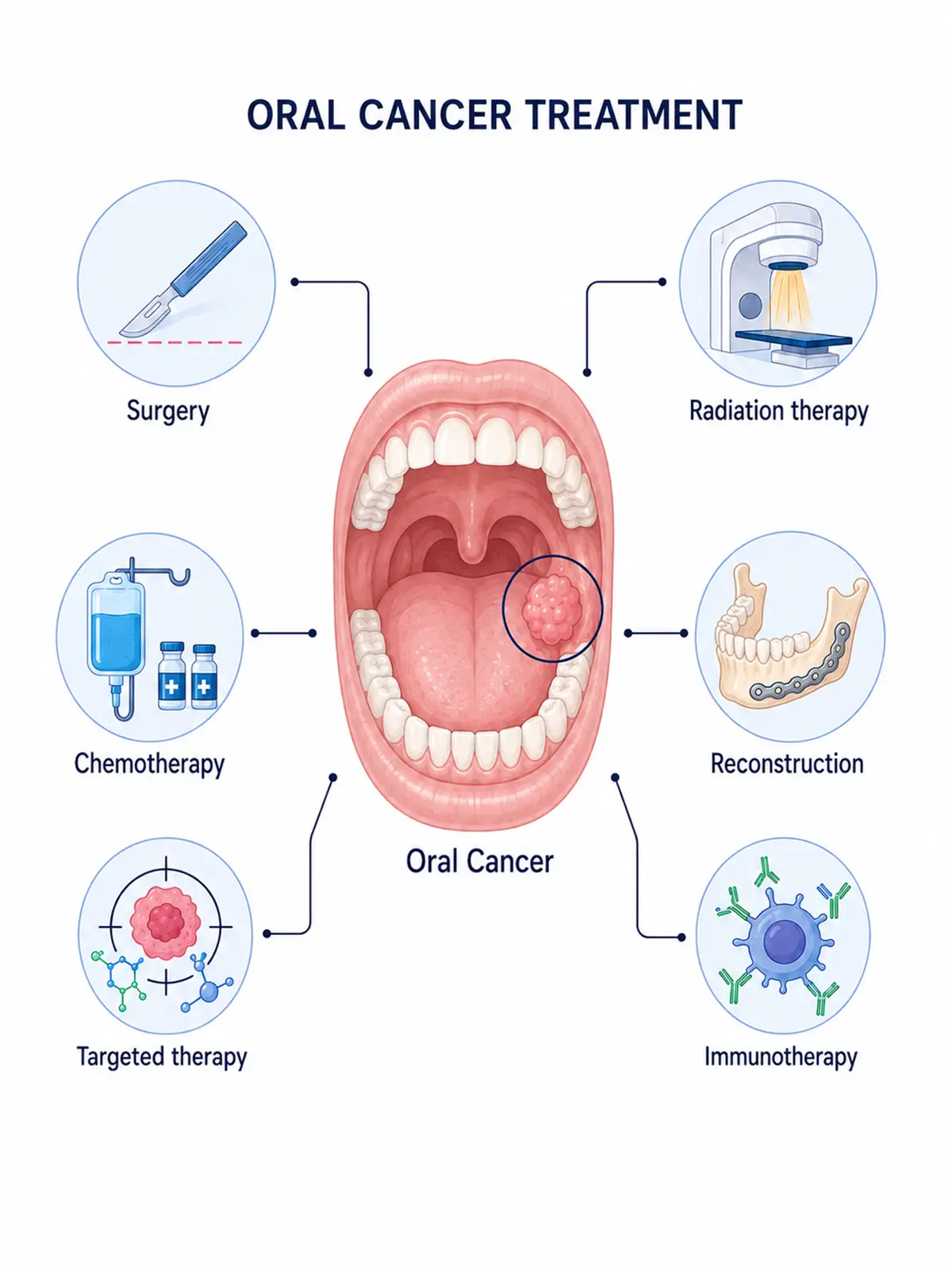
Treatment based on oral cancer stages
Early treatment (involving a localized, smaller tumor with a favorable response)
consisting of surgical resection combined with adjuvant therapy—can effectively control tumor progression while preserving oral function.
Intermediate-stage treatment (addressing local spread, inhibiting growth, and delaying progression)
employs a comprehensive approach—such as surgery combined with chemoradiotherapy—to control further tumor spread and preserve oral chewing and speech functions to the greatest extent possible.
Treatment for advanced disease (distant metastasis; aimed at symptom relief and survival prolongation)
primarily employs systemic therapies such as chemoradiotherapy, targeted therapy, and others to alleviate clinical symptoms and extend patient survival as much as possible.
Why choose Fosun Health for oral cancer treatment
Fosun Health’s oral cancer care is managed by a specialized head and neck oncology center; the team has extensive experience in function-preserving surgery, intensity-modulated radiotherapy (IMRT), and multidisciplinary comprehensive treatment.Leveraging a global medical network, patients have access to advanced international treatment options, including radical resection, free flap reconstruction, IMRT, brachytherapy, targeted therapy, and immunotherapy.
For complex cases such as advanced or recurrent oral cancer, an MDT—comprising experts from head and neck surgery, radiation oncology, medical oncology, and plastic/reconstructive surgery—formulates the optimal treatment plan; a cross-border consultation mechanism provides patients with second opinions from top-tier head and neck tumor centers abroad.
Foshan Fosun Chancheng Hospital is equipped with the CyberKnife M6 precision radiotherapy system and the VitalBeam linear accelerator, enabling the delivery of stereotactic radiosurgery (SRS) and intensity-modulated radiotherapy (IMRT).The hospital's head and neck oncology team is highly experienced in function-preserving surgery and precision reconstruction for oral cancer; by integrating surgery, precision radiotherapy, and systemic therapies, they maximize the preservation of chewing, swallowing, and speech functions while improving survival rates.
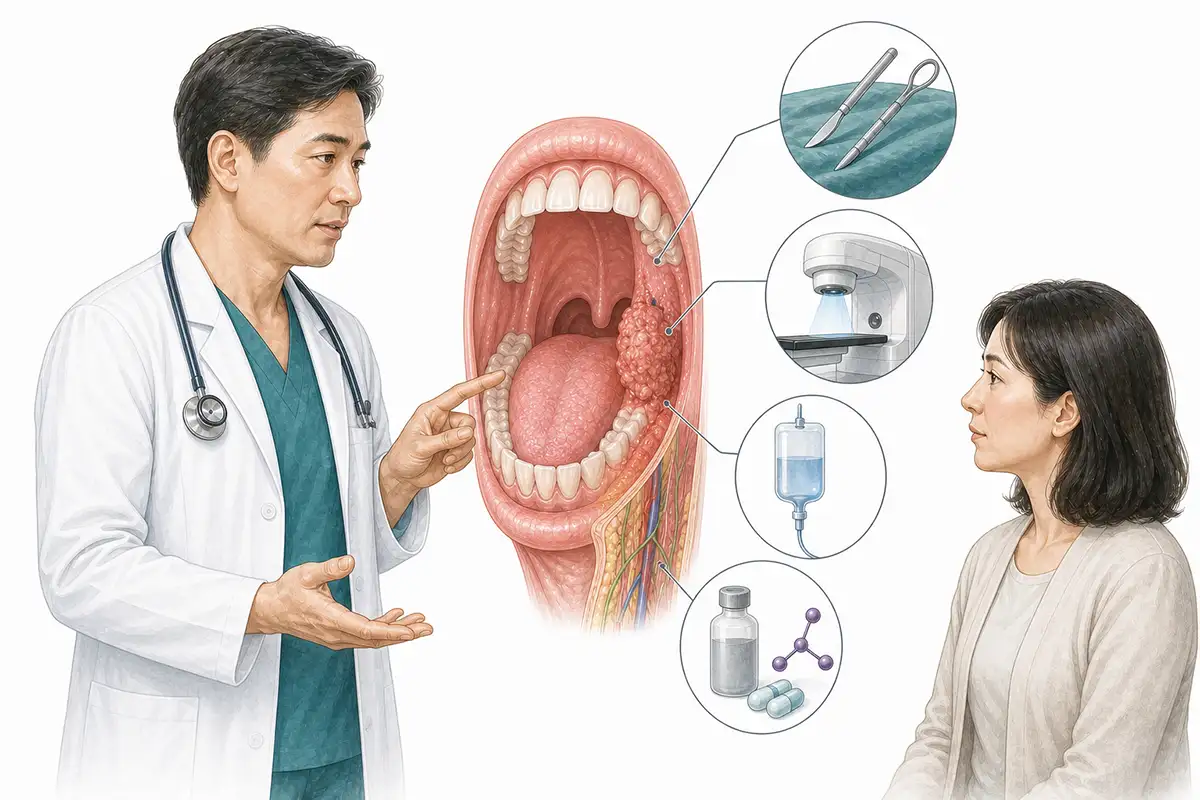
Oral Cancer Treatment Methods
1.Da Vinci robot-assisted oral tumor surgery
For lesions located in areas such as the oropharynx that are amenable to transoral robotic surgery, da Vinci robot-assisted transoral tumor resection may be considered based on tumor location, size, and anatomical relationships.
Treatment advantages:
① Precise operation: The robotic system provides a high-definition 3D view and allows for flexible instrument manipulation.
② Transoral approach: Reduces the need for external incisions in suitable cases.
③ Delicate resection: Facilitates the treatment of tumors in narrow anatomical regions such as the oropharynx.
④ Functional preservation: Helps minimize damage to surrounding normal tissue while adhering to the principles of tumor resection.
2.Radical resection for oral cancer
For localized or locally advanced oral cancer in patients eligible for surgery, resection of the primary tumor may be selected based on tumor site and extent of invasion, and neck lymph node dissection may be performed based on an assessment of lymph node risk.
Treatment advantages:
① Local control: Direct resection of the primary oral tumor.
② Extended resection: Resection of an appropriate scope can be performed for lesions invading adjacent tissues.
③ Neck management: Assessment or dissection of cervical lymph nodes may be performed concurrently, depending on the risk of lymph node metastasis.
④ Functional reconstruction: For extensive resections, reconstructive methods such as skin flaps and bone grafts can be used to improve chewing, swallowing, and aesthetic outcomes.
3. VitalBeam linear accelerator precision radiotherapy
For patients with locally advanced oral cancer—including those at high risk of postoperative recurrence or those unsuitable for surgery—precision radiotherapy may be administered based on the extent of the lesion and lymph node status.
Treatment advantages:
① Precision irradiation: Formulate an individualized radiotherapy plan targeting the primary lesion and regional lymph nodes.
② Postoperative adjuvant therapy: May be used for selected patients with positive margins, lymph node involvement, or other high-risk factors.
③ Protection of normal tissue: Minimizes radiation exposure to vital structures such as salivary glands and the spinal cord through dose optimization.
④ Combination therapy: May be administered concurrently with drug therapies such as chemotherapy, depending on the disease status.
4.Seed implantation
For selected patients with oral cancer who have local recurrence, are ineligible for surgical resection, or have specific needs for local therapy, radioactive seed implantation may be considered based on lesion size and location, prior radiotherapy history, and the status of surrounding critical tissues.
5.Chemotherapy
Systemic elimination of potential cancer cells using anti-cancer drugs; often combined with radiotherapy to enhance efficacy and control distant metastasis.
6.Targeted therapy
Precision targeting of specific molecular targets such as EGFR offers good efficacy and relatively mild side effects, making it suitable for patients with advanced disease.
7.Immunotherapy
Activates the body's immune system to recognize and attack cancer cells, offering a new, effective treatment option for patients with advanced oral cancer to improve therapeutic outcomes.
8.Comprehensive therapy
Formulate an individualized comprehensive treatment plan based on the patient's specific condition, combining modalities such as surgery, radiotherapy, and chemotherapy to enhance therapeutic efficacy.
9.Supportive care
Approaches such as nutritional support, psychological counseling, and symptom management can comprehensively improve the patient's physical condition and quality of life.
Post-treatment care
After treatment, you must quit smoking and limit alcohol intake, maintain oral hygiene, follow a balanced and nutritious diet, attend regular follow-up appointments as instructed, and actively cooperate with subsequent treatment.
Post-treatment examinations
After treatment, regular oral examinations, tumor marker testing, and imaging follow-ups are required to detect tumor recurrence or changes in the condition in a timely manner.
Conclusion
Oral cancer poses a serious threat; the key to treatment lies in early detection, diagnosis, and intervention. Selecting an appropriate treatment plan and adhering to follow-up care helps improve quality of life.


