


Oral cancer is a tumor resulting from the malignant transformation of oral mucosal epithelial cells; the vast majority are squamous cell carcinomas.Early symptoms are non-specific—often manifesting as oral ulcers, leukoplakia, or erythroplakia—and are easily mistaken for common oral conditions.
Global prevalence of oral cancer
Oral cancer is the 16th most common cancer globally, accounting for 2%–3% of all cancer cases.Major risk factors include smoking, heavy alcohol consumption, betel nut chewing, and HPV infection.The incidence rate in men is 2–3 times that of women, and the average age at diagnosis is 63. Oral cancer can develop in various locations, including the lips, tongue, buccal mucosa, gums, floor of the mouth, and hard palate.
Symptoms associated with oral cancer stages
1.Early symptoms of oral cancer
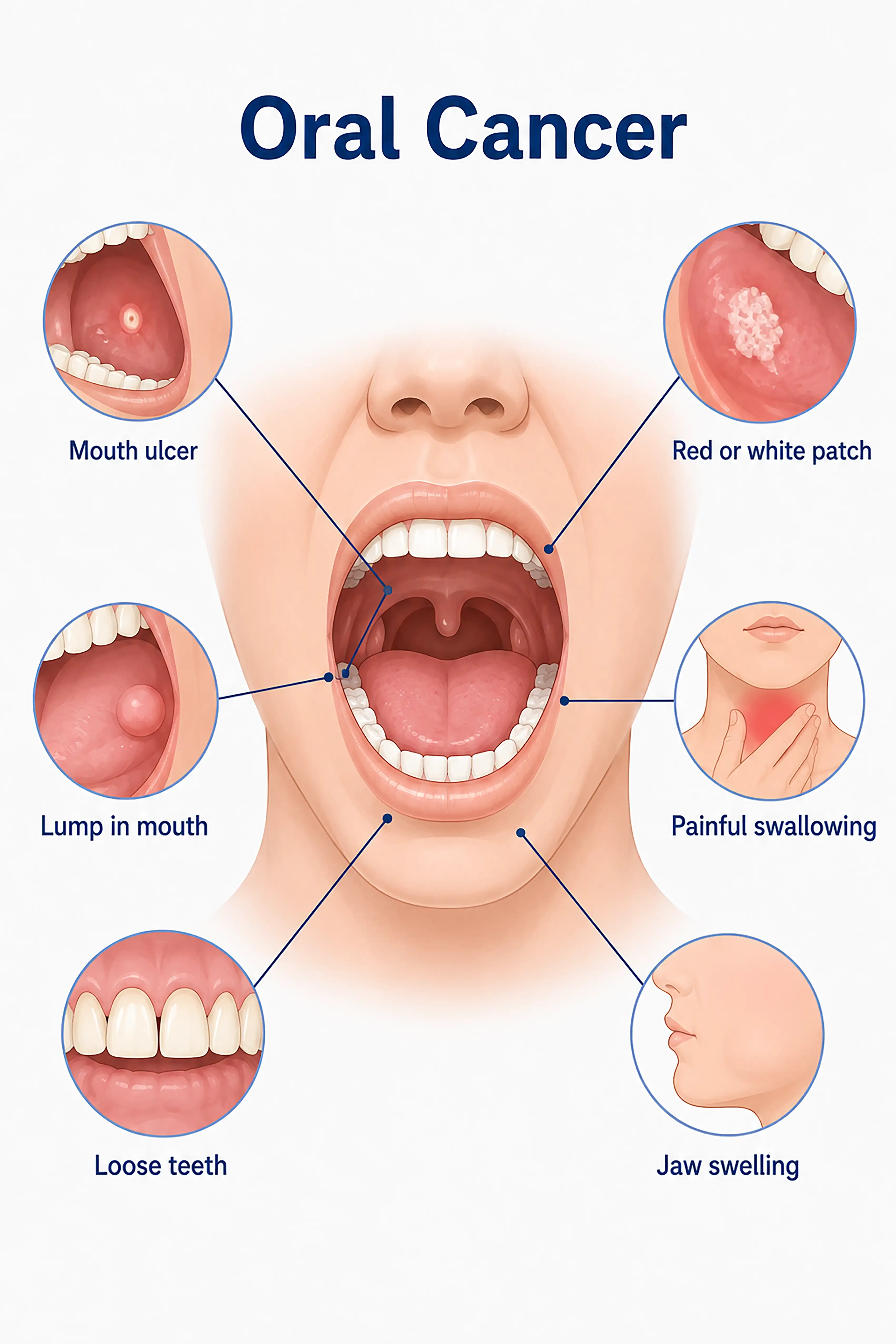
Persistent oral ulcers, white or red patches, and mild pain or discomfort may appear; these symptoms resemble those of benign lesions and are easily overlooked.
2.Intermediate-stage symptoms of oral cancer
The ulcer enlarges with thickened, rolled edges; a local induration or mass develops; pain intensifies and radiates to the ear; and symptoms such as difficulty opening the mouth, dysphagia (difficulty swallowing), and loose teeth occur.
3.Symptoms of advanced oral cancer
Extensive tumor invasion of deep tissues and bone, presenting with severe pain, halitosis, cervical lymphadenopathy, facial deformity, and symptoms of distant metastasis.
When to Seek Medical Attention
Early signs of oral cancer include mouth ulcers that do not heal for more than three weeks, white or red patches in the mouth, lumps, and pain.Please consult a doctor via "Chat with a Doctor" for early detection.During the online consultation, the doctor will ask about your oral hygiene habits and symptoms, and guide you through oral examinations and biopsies.
Staging of oral cancer
Stage 0 oral cancer
Cancer cells are confined to the oral mucosal epithelium; this is classified as carcinoma in situ. It manifests as leukoplakia, erythroplakia, or erosion, without a distinct mass.
Stage I oral cancer
Tumor diameter <2 cm, confined to the mucosa or submucosa; presents as small ulcers or induration, with mild pain.
Stage II oral cancer
The tumor measures 2–4 cm in diameter and invades the submucosa; the ulcer enlarges, pain intensifies, and tooth loosening may occur.
Stage III oral cancer
Tumor diameter >4 cm or invasion of adjacent tissues, with ipsilateral cervical lymph node metastasis; presents with difficulty opening the mouth.
Stage IV oral cancer
The tumor invades the skull base or extensive soft tissues, or metastasizes to distant sites such as the lungs or liver, causing severe facial deformity and systemic wasting.

Detailed symptoms of oral cancer
1.Non-healing ulcer
An oral ulcer that fails to heal for more than 2–3 weeks—characterized by raised, everted edges, an irregular base, and significant pain or bleeding upon contact—is the most common early sign of oral cancer.
2.Leukoplakia or erythroplakia
The appearance of white plaques (leukoplakia) or red patches (erythroplakia) on the oral mucosa—characterized by a rough, thickened surface that persists without resolving—indicates a precancerous lesion.
3.Presence of oral mass
Hard masses or nodules appear in the oral cavity; the surface may resemble a cauliflower or have a papillary appearance. Pain and functional impairment may develop as the tumor grows.
4.Radiating pain
Tumor invasion of nerves causes localized pain that may radiate to the ipsilateral ear and temporal region; in advanced stages, the pain is severe, interfering with eating and sleeping.
5.Limited mouth opening
Tumor invasion of the muscles of mastication or the pterygomandibular space causes difficulty opening the mouth; in severe cases, the mouth cannot be opened at all, interfering with eating and oral examination.
6.Difficulty swallowing
When the tumor is located at the base of the tongue, the floor of the mouth, or the pharynx, it causes difficulty swallowing, accompanied by a sensation of a foreign body and pain, severely affecting nutritional intake.
7.Loose teeth
Tumor invasion of the alveolar bone causes loosening, displacement, and pain in ipsilateral teeth, as well as a failure of the extraction wound to heal over a prolonged period.
8.Enlarged cervical lymph nodes
Oral cancer is prone to metastasis to cervical lymph nodes, manifesting as a painless, hard neck mass that progressively enlarges.
9.Oral malodor
Tumor necrosis complicated by infection causes a foul oral odor and profuse purulent-bloody discharge, affecting eating and social interactions.
Conclusion
Early symptoms of oral cancer are often atypical;seek medical attention promptly if an oral ulcer persists without healing.Quitting smoking, limiting alcohol intake, avoiding betel nut chewing, and undergoing regular oral check-ups are key to prevention.


