


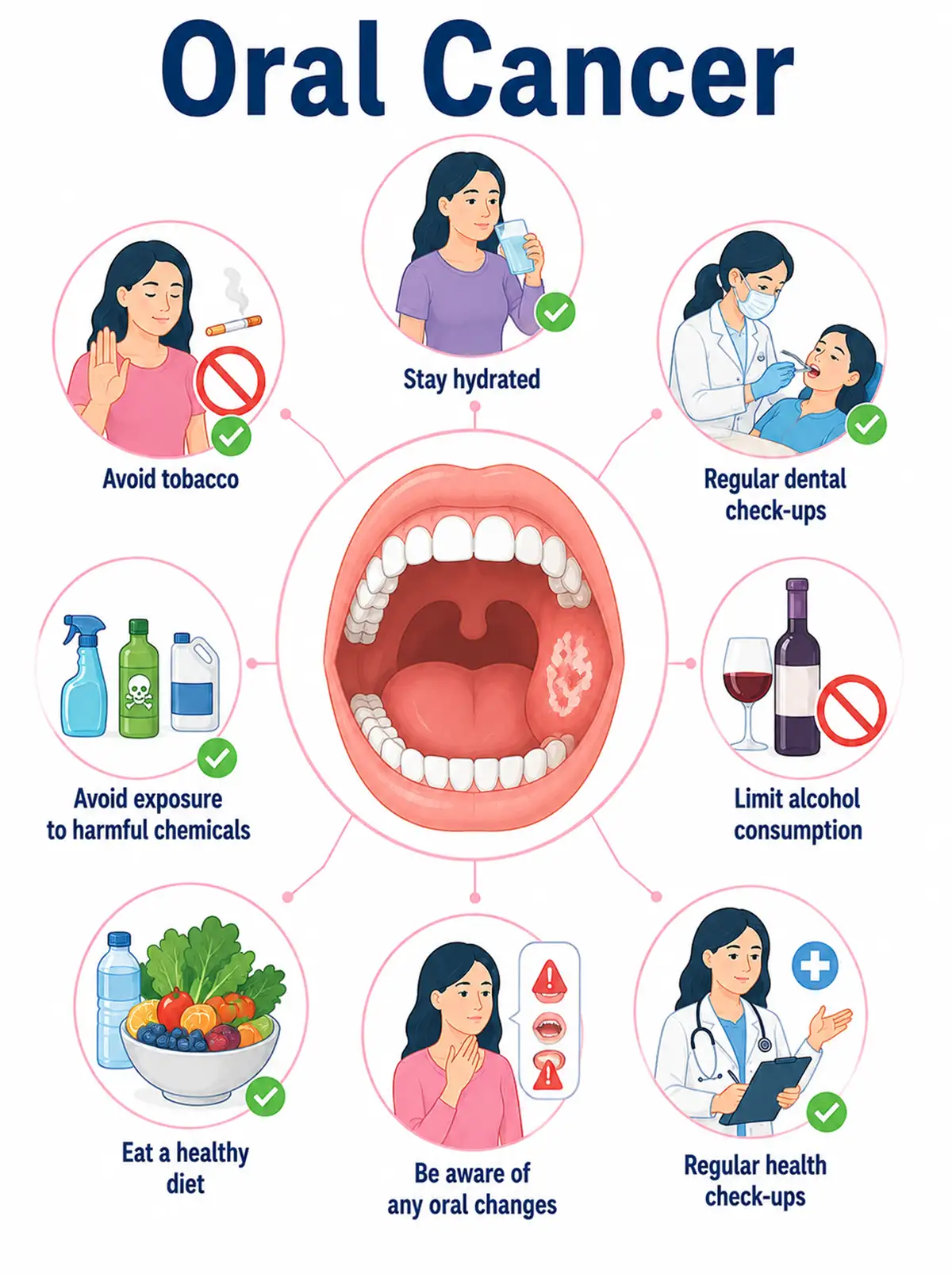
1. Quitting betel nut chewing
Arecoline is a known carcinogen; long-term betel nut chewing is the primary risk factor for oral cancer, and the habit should be stopped immediately to prevent malignant transformation.
2. Smoking cessation and alcohol restriction
Carcinogens in tobacco and alcohol can directly irritate the oral mucosa; approximately 90% of oral cancer patients have a history of smoking, making smoking cessation and alcohol limitation urgent priorities.
3. Oral hygiene
Brush and floss twice daily, and undergo regular dental cleanings and cavity treatment to reduce oral bacterial growth and chronic inflammatory irritation.
4. Removal of irritants
Sharp tooth cusps and residual roots are extracted, and ill-fitting dental prostheses are replaced to prevent malignant transformation caused by chronic mechanical irritation of the oral mucosa.
5. Balanced diet
Increase the intake of fresh fruits and vegetables rich in iron and vitamins to prevent atrophic glossitis caused by malnutrition and to enhance mucosal resistance.
6. Focus on white spots
Seek medical attention promptly if oral leukoplakia, erythroplakia, or non-healing ulcers are detected; if left untreated, these precancerous lesions can progress to invasive carcinoma.
7. Regular oral examinations
Oral examinations should be performed every six to twelve months; individuals with a history of betel nut chewing or smoking, in particular, should undergo enhanced screening for the early detection of lesions.
Conclusion
Oral cancer is caused by the combined effects of multiple factors, such as betel nut chewing, smoking, and alcohol consumption;it is a prevalent and serious malignant tumor of the head and neck.Quitting betel nut use, maintaining oral hygiene, and undergoing regular oral examinations are crucial for early detection and timely intervention.


