


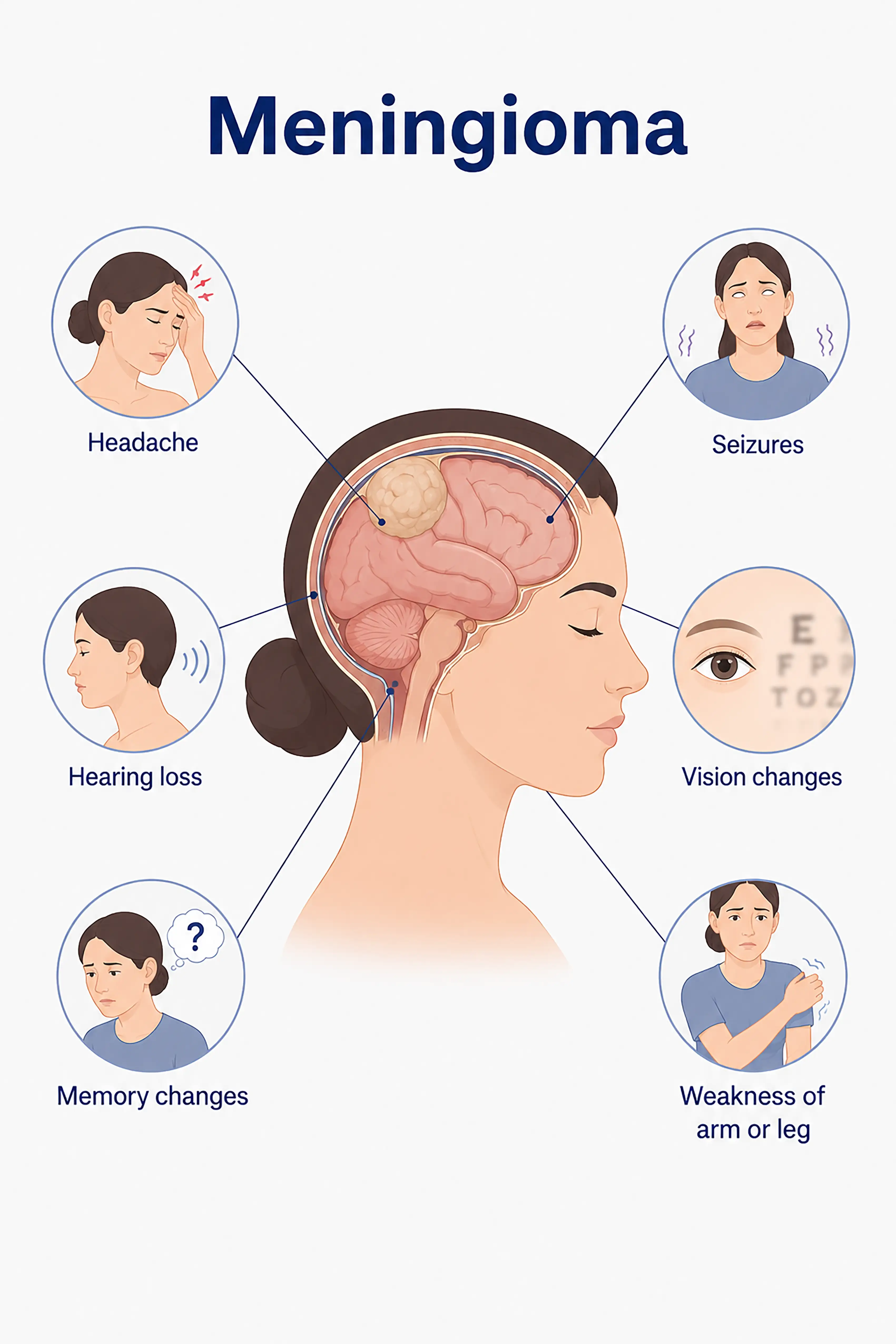
Meningiomas are tumors formed by the proliferation of meningeal cells. The vast majority are benign and slow-growing. Symptoms depend on the site of compression, with common manifestations including headache, seizures, and visual changes.
Global prevalence of meningioma
Meningioma is one of the most common primary brain tumors, accounting for approximately 30%–40% of all intracranial tumors.The incidence is higher in women than in men, with a ratio of about 2:1.It most commonly affects middle-aged individuals (40–70 years old).Most meningiomas are benign (WHO Grade I), while about 5%–10% are atypical or malignant.They grow slowly, and some patients may remain asymptomatic for a long time.
Symptoms associated with meningioma stages
1.Early symptoms of meningioma
The tumor is small, slow-growing, and often asymptomatic; mild headache may occur, or it may be discovered incidentally during a physical examination. Some patients remain asymptomatic for a long period.
2.Symptoms of intermediate-stage meningioma
Worsening headache, seizures, facial numbness and tingling, unilateral hearing loss or tinnitus, loss of sense of smell, and limb weakness or numbness.
3.Symptoms of advanced meningioma
A massive tumor causes severe elevation of intracranial pressure, leading to persistent severe pain, profound neurological deficits, coma, and a crisis of cerebral herniation.
When to Seek Medical Attention
Early signs of meningioma include persistent headaches, seizures, facial numbness, and hearing loss.Please consult a doctor via the "Chat with a Doctor" feature for early detection.During the online consultation, the doctor will ask about your symptoms and their duration, and guide you through the process of getting a cranial MRI.
Staging of meningioma
Meningioma Stage 0
This staging system is not applicable to meningiomas.Meningiomas are graded using the WHO grading system (Grades I–III), based on cellular atypia and proliferative activity.
Meningioma: Stage I
WHO Grade I; a benign, slow-growing tumor; symptoms are mild or absent; low recurrence rate following complete surgical resection; prognosis is favorable.
Meningioma Stage II
WHO Grade II (atypical); moderate growth rate; symptoms worsen gradually; postoperative recurrence rate is approximately 15%–20%.
Meningioma Stage III
WHO Grade III (anaplastic/malignant); characterized by rapid growth, severe symptoms, a high rate of postoperative recurrence, and a poor prognosis.
Meningioma Stage IV
Meningiomas are not classified as Grade IV.Malignant meningiomas can metastasize to distant sites, though this is rare.

Detailed description of meningioma symptoms
1.Headache occurring in the morning
Persistent headache—most noticeable in the morning and worsening over time, with limited relief from standard painkillers—is one of the most common symptoms of meningioma.
2.Epileptic seizures
Tumor irritation of the surrounding cerebral cortex triggers epileptic seizures—which may be focal or generalized—serving as a common initial symptom of meningioma.
3Facial numbness and pain
Tumor compression of the trigeminal nerve causes numbness, tingling, or pain on one side of the face; severe cases may affect chewing and facial sensation.
4.Hearing loss and tinnitus
Tumor compression of the auditory nerve causes unilateral hearing loss, tinnitus, and a sensation of fullness in the ear, resembling the presentation of an acoustic neuroma.
5.Visual changes
Tumor compression of the optic nerve or visual pathways causes blurred vision, diplopia, or visual field defects; parasellar meningiomas can cause vision loss.
6.Limb weakness and numbness
Compression of the motor cortex by the tumor causes weakness or numbness in the arm or leg on one side of the body, affecting the ability to perform daily activities.
7.Loss of sense of smell
Olfactory groove meningiomas compress the olfactory nerve, leading to a diminished or lost sense of smell; this is often unilateral, and patients are frequently unaware of it.
8.Personality and memory changes
Large meningiomas affecting frontal lobe function can cause personality changes, memory decline, and slowed thinking; family members are often the first to notice these changes.
9.Hyposmia (reduced sense of smell)
Anterior skull base meningiomas can compress the olfactory nerve, leading to diminished or complete loss of the sense of smell, potentially accompanied by nasal congestion and rhinorrhea.
Conclusion
Most meningiomas are benign, slow-growing tumors with a good prognosis. Complete surgical resection is the preferred treatment;small, asymptomatic meningiomas may be managed through regular observation and follow-up.


