


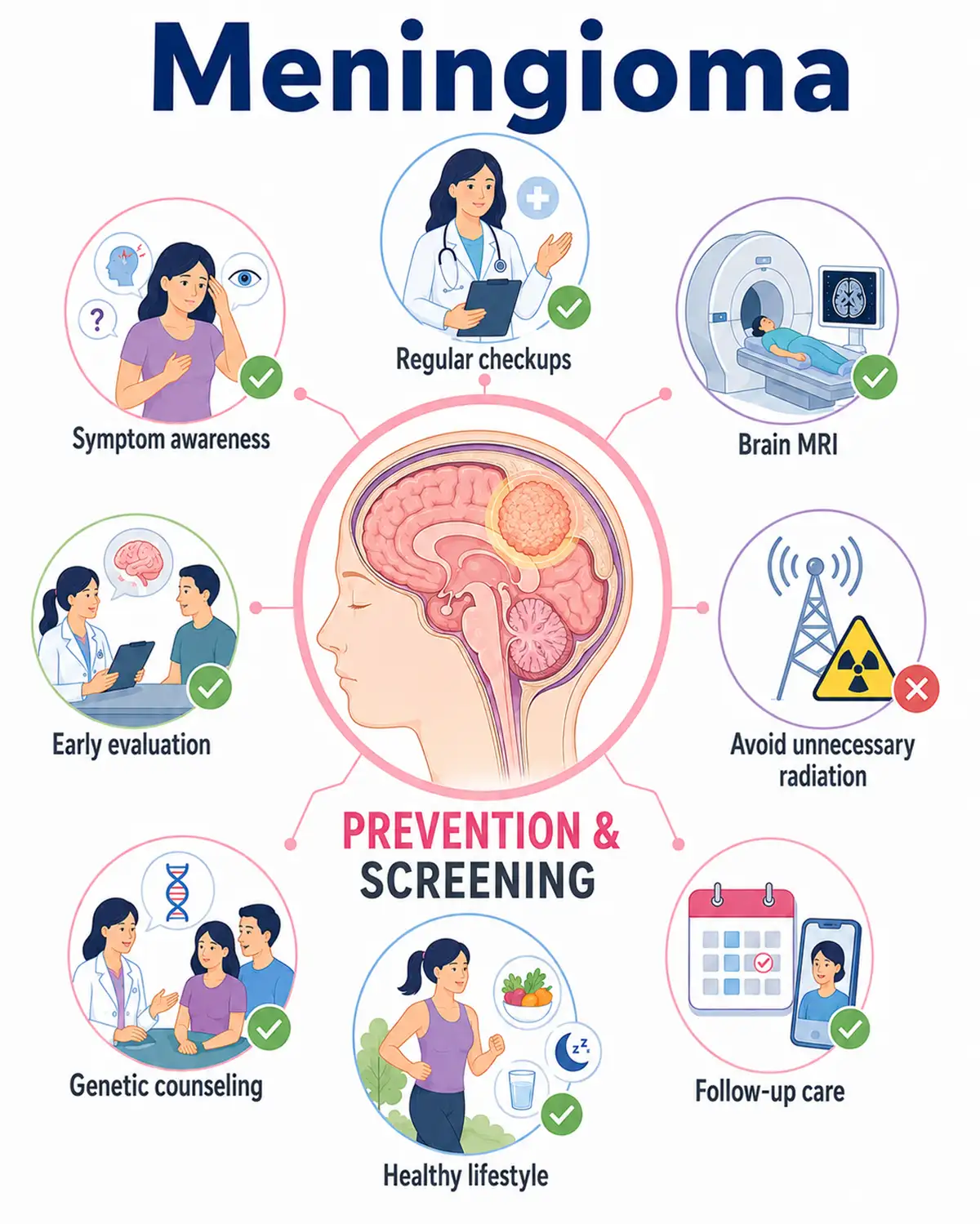
1. Avoidance of radiation
Minimize unnecessary radiological examinations of the head and neck; ionizing radiation is the most significant acquired risk factor for meningioma and warrants serious attention.
2. Hormone management
Women should be mindful of hormonal fluctuations; since meningioma cells possess progesterone receptors, hormone replacement therapy should be used cautiously after weighing the risks and benefits.
3. Genetic screening
Individuals with a family history of neurofibromatosis type 2 (NF2) should undergo NF2 gene testing; almost all NF2 patients develop meningiomas, necessitating regular monitoring.
4. Weight control
Maintain a healthy weight and engage in regular exercise; obesity may be associated with the development of meningiomas, and exercise helps regulate hormone levels, thereby reducing risk.
5. Minimizing trauma
Take care to protect the head and avoid repeated head trauma; although a definitive causal link is not yet established, minimizing head injuries benefits the nervous system.
6. Healthy lifestyle
Quitting smoking, limiting alcohol intake, maintaining a balanced diet, and keeping a regular daily routine help maintain overall health and boost immune system function to resist tumor development.
7. Regular imaging
High-risk individuals should undergo regular cranial MRI scans; since meningiomas grow slowly, early detection allows for options such as observation or elective surgery.
Conclusion
Meningiomas result from the combined effects of various factors, such as ionizing radiation and hormonal influences. Although mostly benign, they can compress brain tissue and cause serious harm.Avoiding radiation, monitoring hormone levels, and undergoing regular imaging examinations to ensure early detection and timely intervention are crucial.


