


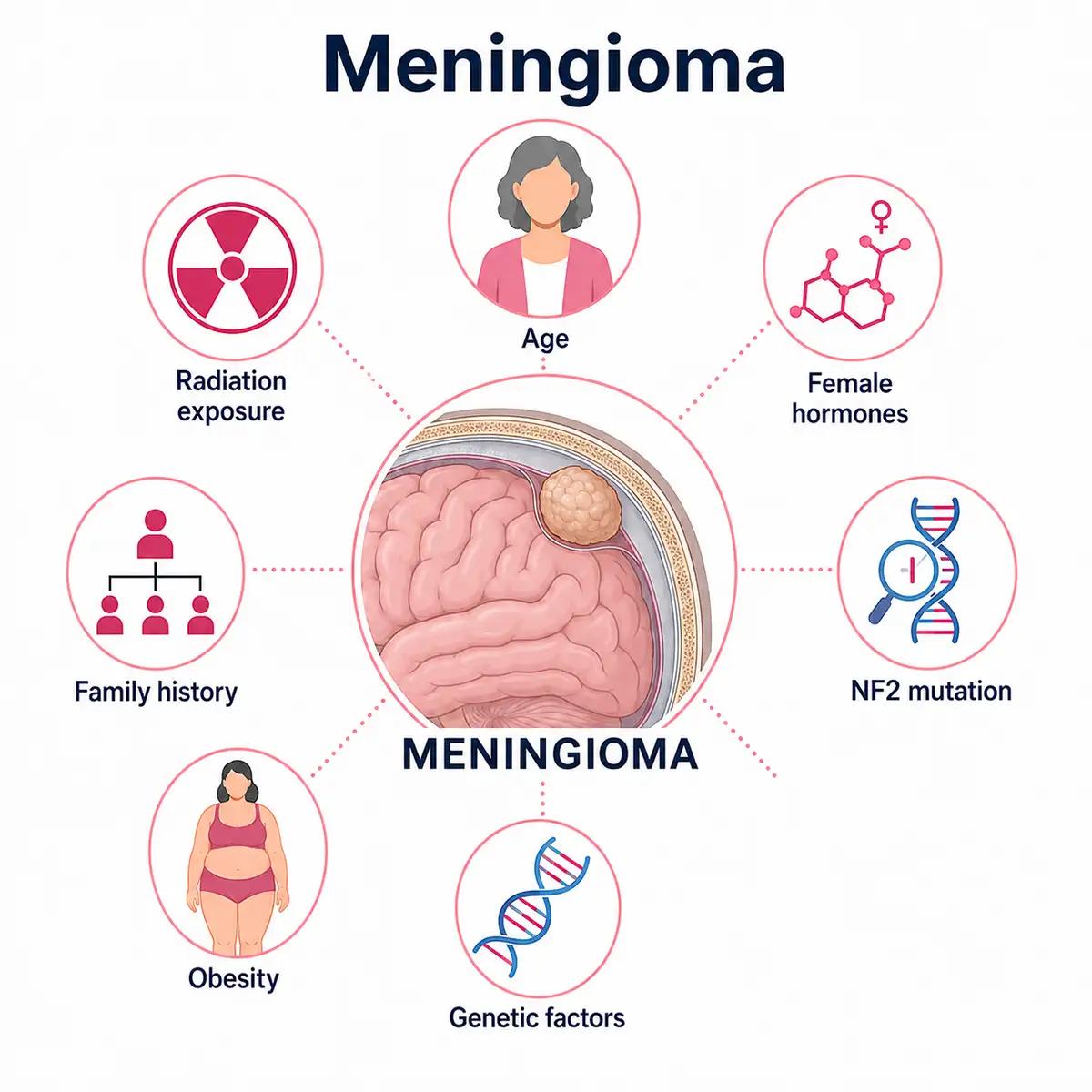
1. Ionizing radiation
Exposure to ionizing radiation is the most significant acquired risk factor for meningioma; the latency period for developing a meningioma following radiotherapy can exceed twenty years.
2. Hormonal factors
Meningioma cells possess estrogen and progesterone receptors; the incidence in women is approximately two to three times that in men, and tumor growth may accelerate during pregnancy.
3. Genetic factors
Patients with neurofibromatosis type 2 harbor *NF2* gene mutations and face a significantly increased risk of developing meningiomas, which may present as multiple meningiomas.
4. Age factor
Meningioma is most common in middle-aged and older adults (aged 40 to 70);incidence increases with age, and the condition is rare in children.
5. Gender differences
The incidence of meningiomas is significantly higher in women than in men, with a ratio of approximately 2:1 to 3:1; hormonal factors play a key role in their development.
6. Obesity-related factors
Obesity and a high body mass index (BMI) may be linked to the development of meningiomas; factors such as insulin-like growth factor may promote tumor growth.
7. Head trauma
Some studies suggest a possible link between a history of head trauma and the development of meningioma, though a causal relationship has not been fully established.
Conclusion
Meningiomas result from the combined effects of various factors, such as ionizing radiation and hormonal influences.Although mostly benign, they can compress brain tissue and cause serious harm.Avoiding radiation exposure and seeking medical attention promptly when symptoms arise—thereby ensuring early detection and timely intervention—are crucial.


