


Global disease prevalence: Lymphoma is a common hematologic malignancy worldwide; it can occur at any age, and some subtypes have a relatively favorable prognosis.
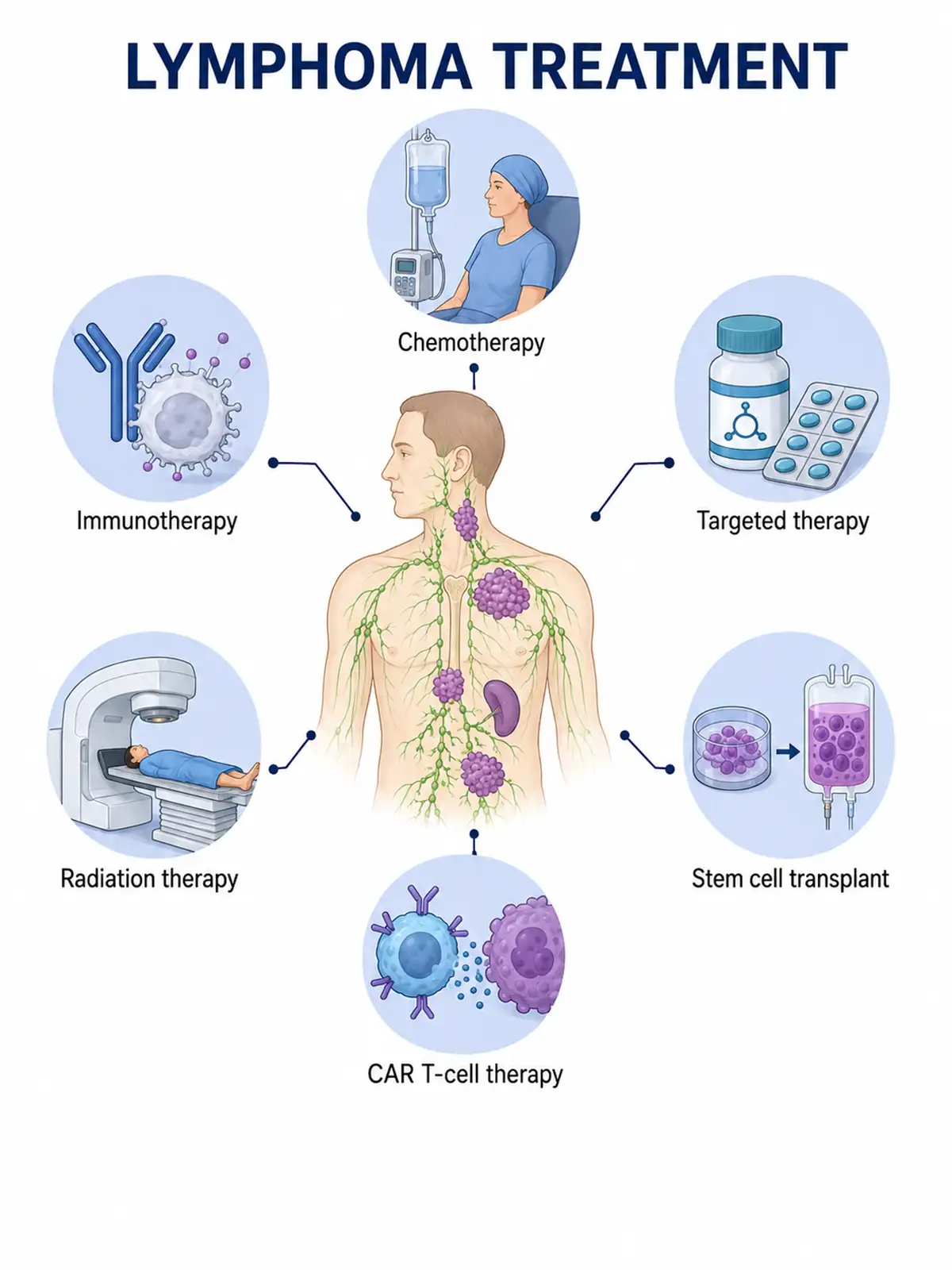
Lymphoma staging and treatment
Early treatment (localized tumor, reduced volume, favorable outcome)
Chemotherapy combined with radiotherapy can effectively control tumor progression; patients diagnosed at an early stage generally have a relatively favorable prognosis.
Intermediate-stage treatment (addressing local spread, inhibiting growth, and delaying progression)
A comprehensive approach combining chemotherapy, radiotherapy, and immunotherapy is used to control further tumor spread and slow the rate of disease progression.
Advanced-stage treatment (addressing extensive metastasis, alleviating symptoms, and prolonging survival)
primarily employs systemic therapies such as chemotherapy, immunotherapy, and targeted therapy to alleviate clinical symptoms and maximize patient survival time.
Consequences of failing to receive timely treatment in the early stage: If standardized treatment is not administered promptly in the early stage, the tumor will continue to grow and spread to lymph nodes throughout the body and to distant organs, resulting in a missed opportunity for optimal intervention.
Why choose Fosun Health for lymphoma treatment
Fosun Health’s lymphoma diagnosis and treatment services are managed by a specialized hematology-oncology center; the team possesses extensive experience in chemotherapy, targeted therapy, immunotherapy, and hematopoietic stem cell transplantation.Leveraging a global medical network, patients have access to cutting-edge international treatment regimens, including standard R-CHOP chemotherapy, CD20 monoclonal antibody targeted therapy, Fosun Kite CAR-T cell therapy, PD-1/PD-L1 immunotherapy, and bispecific antibodies.
For complex cases such as relapsed/refractory lymphoma, an MDT—comprising experts in hematology, medical oncology, radiation oncology, and radiology—collaborates to formulate the optimal treatment plan; a cross-border consultation mechanism enables patients to obtain second opinions from leading international medical centers.
YiKaiDa® (axicabtagene ciloleucel injection), independently developed by Fosun Kite, is China's first approved CAR-T product for the treatment of relapsed/refractory large B-cell lymphoma. It has demonstrated an overall response rate (ORR) of 83%, a complete response (CR) rate of 58%, and a 4-year overall survival (OS) rate of 44%.The product has reached 38 countries and regions, with nearly 5,000 patients treated, delivering durable remission for lymphoma patients.
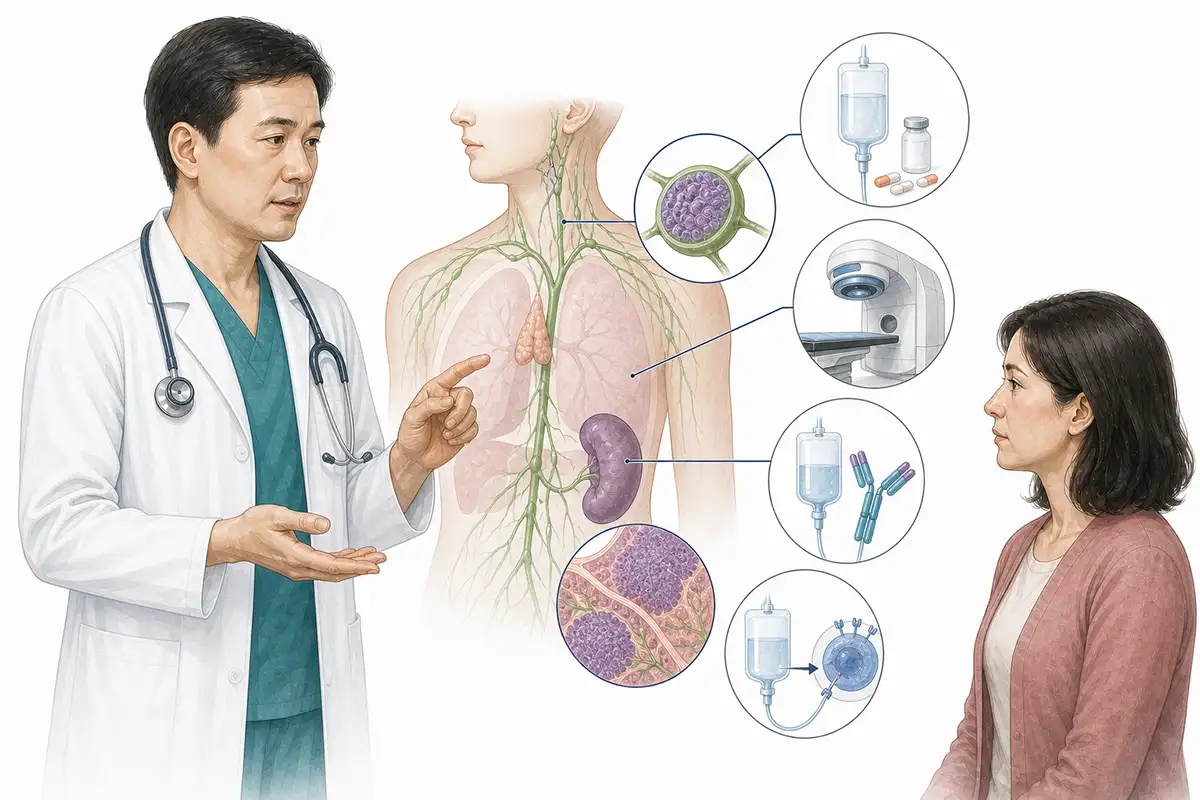
Lymphoma Treatment Methods
1.CyberKnife precision radiotherapy
For selected patients with localized lymphoma, as well as those with residual disease, local recurrence, or specific needs for local therapy, CyberKnife precision radiotherapy may be evaluated based on the pathological subtype, lesion location and extent, and prior treatment history.CyberKnife is better suited for localized lesions requiring highly focused irradiation and is not the generally preferred standard radiotherapy modality for lymphoma.
Treatment advantages:
① Precise focusing: Using image guidance and stereotactic techniques to precisely concentrate the therapeutic dose on localized lymphoma lesions.
② Suitable for localized lesions: Can be considered for certain localized, residual, or recurrent lesions, based on lesion location and prior treatment history.
③ Protection of normal tissue: Minimize radiation exposure to surrounding normal tissues and vital organs through precise dose distribution.
④ Flexible treatment approach: Personalized radiotherapy plans can be developed based on lesion size, location, and the patient's prior treatment history.
2.CAR-T cell therapy
For certain patients with B-cell lymphoma that has recurred or proven refractory after multiple lines of therapy, CAR-T cell therapy targeting markers such as CD19 may be evaluated, provided the relevant indications are met.
Treatment advantages:
① Targeted recognition: Genetically modified T cells recognize specific antigens on the surface of lymphoma cells.
② Suitable for relapsed/refractory cases: Offers new treatment options for patients who have responded poorly to standard therapies.
③ Personalized cell therapy: Involves collecting the patient's own T cells, genetically modifying and expanding them, and then reinfusing them.
④ Deep remission: Some patients may achieve deep disease remission.
3. Chemotherapy
Chemotherapy is a crucial systemic treatment modality for certain lymphomas, particularly aggressive lymphomas and some forms of Hodgkin lymphoma.Regimens are selected based on the pathological subtype, disease stage, International Prognostic Index (IPI) score, patient age, and physical condition; combination therapies incorporating anthracyclines, alkylating agents, vinca alkaloids, antimetabolites, and other cytotoxic drugs may be used.
4.Autologous hematopoietic stem cell transplantation
For selected patients with relapsed or refractory lymphoma, autologous hematopoietic stem cell transplantation may be evaluated if an appropriate response to salvage therapy has been achieved and the patient's physical condition permits.
5.Immunotherapy
Select appropriate immunotherapy based on the lymphoma's pathological subtype and the stage of treatment.For certain patients with Hodgkin lymphoma or specific types of non-Hodgkin lymphoma, immune checkpoint inhibitors (such as PD-1 inhibitors) may be used according to indications; these agents exert therapeutic effects by relieving immunosuppression and enhancing T-cell-mediated anti-tumor immune responses.
6.Targeted therapy
Precision targeting of specific markers, such as CD20, offers good efficacy with manageable side effects, making it suitable for patients with B-cell lymphoma.
7.Comprehensive therapy
Formulate an individualized comprehensive treatment plan—combining chemotherapy, radiotherapy, immunotherapy, and other modalities based on the patient's specific condition—to enhance therapeutic efficacy.
8.Supportive care
Approaches such as nutritional support, psychological counseling, and symptom management can comprehensively improve the patient's physical condition and quality of life.
Post-treatment care
Maintain a regular daily routine and a balanced diet; avoid infection and excessive fatigue; attend scheduled follow-up appointments and actively cooperate with subsequent treatment as advised.
Post-treatment examinations
Periodic lymph node palpation, CT or PET-CT scans, and tumor marker re-testing are required after treatment to timely detect changes in the disease status.
Conclusion
Lymphoma poses a serious threat; the key to treatment lies in early detection, diagnosis, and intervention. Selecting an appropriate treatment plan and adhering to follow-up care helps improve quality of life.


