


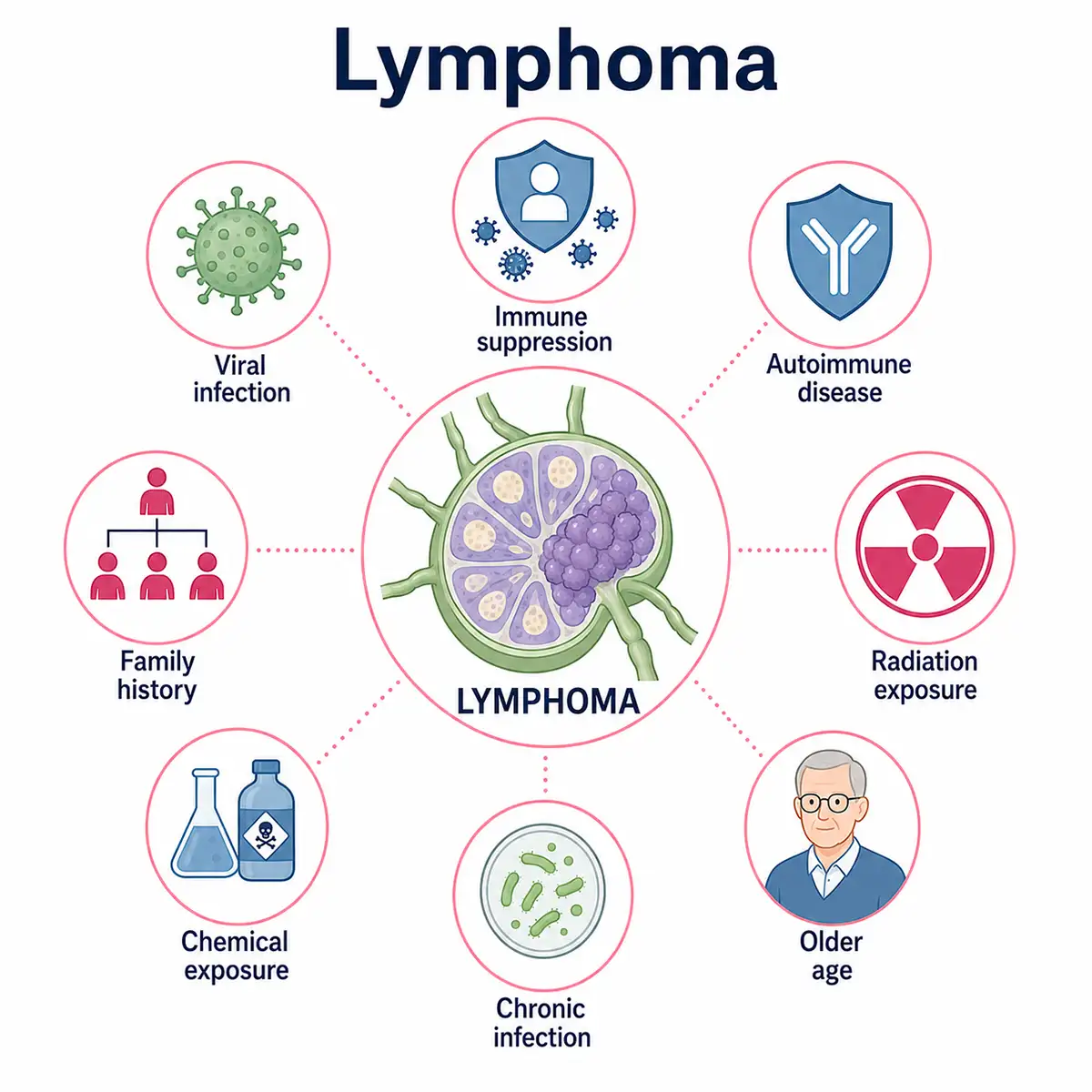
1. Epstein-Barr virus (EBV) infection
Epstein-Barr virus (EBV) is closely associated with the development of Hodgkin lymphoma and Burkitt lymphoma; the virus can integrate into the host genome and promote oncogenesis.
2. Helicobacter pylori
*Helicobacter pylori* infection is closely associated with gastric mucosa-associated lymphoid tissue (MALT) lymphoma; eradication of the bacteria can lead to remission in some early-stage patients.
3. Immunosuppression
Individuals with HIV infection and those using immunosuppressants following organ transplantation face a significantly increased risk of developing non-Hodgkin lymphoma.
4. Chemical exposure
Long-term exposure to organic solvents such as benzene, herbicides, and pesticides can increase the risk of developing non-Hodgkin lymphoma.
5. Radiation exposure
Individuals with a history of radiation therapy or atomic bomb survivors face an increased risk of developing lymphoma, particularly Hodgkin lymphoma.
6. Autoimmune disease
Patients with autoimmune diseases, such as rheumatoid arthritis and systemic lupus erythematosus, have a higher risk of developing lymphoma than the general population.
7. Age factors
Hodgkin lymphoma is most common among adolescents and young adults, while the incidence of non-Hodgkin lymphoma increases with age.
Conclusion
Lymphoma is caused by the interplay of multiple factors, such as Epstein-Barr virus (EBV) infection and immunosuppression; it is a common and serious hematologic malignancy.Preventing infections, avoiding chemical exposure, undergoing regular health check-ups, and ensuring early detection and timely intervention are crucial.


